01
The Magnificent Visual Symphony of Kurdish Traditional Attire
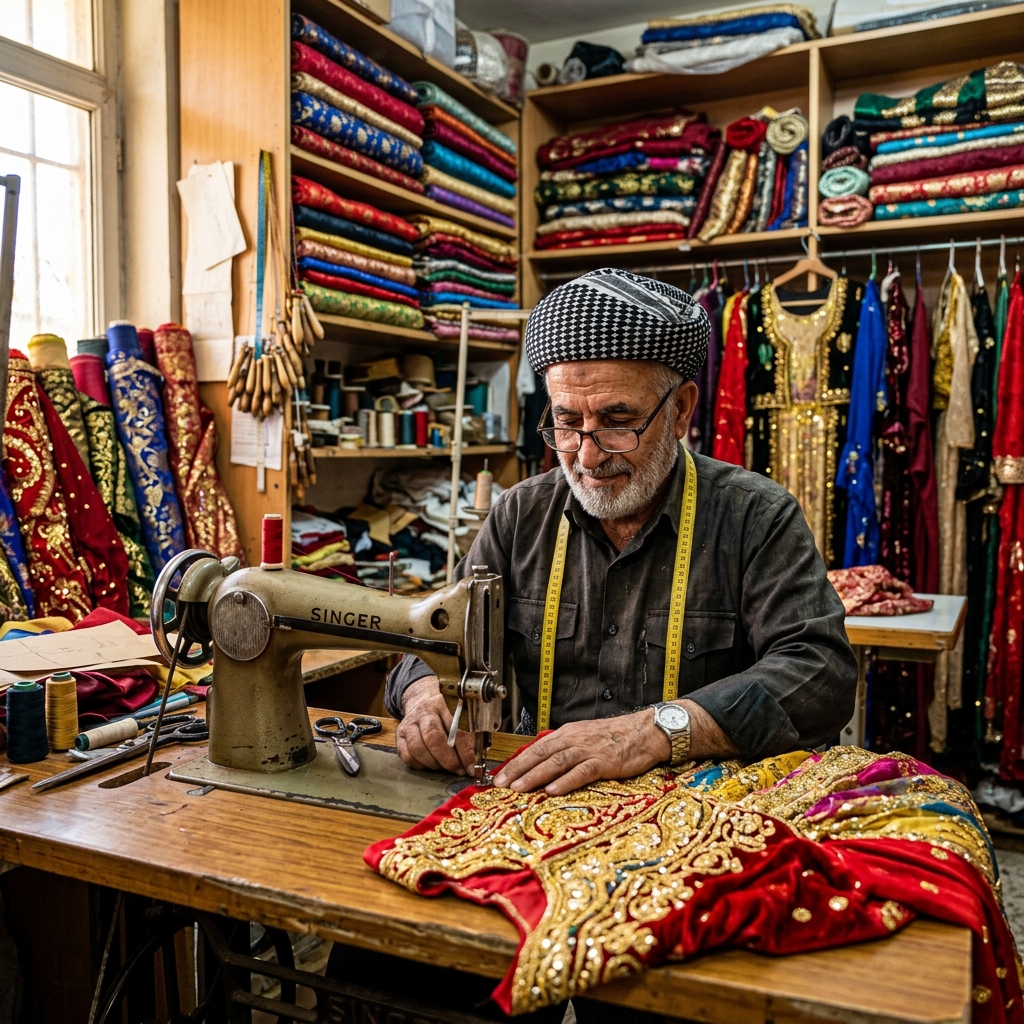
Kurdish traditional dress is celebrated worldwide as one of the most vibrant, expressive, and aesthetically regal national costumes in existence. The Kurdish tailor and dressmaker (Xeyat) is the master artisan who brings this dazzling visual heritage to life. Every cut of cloth, flowing silhouette, and shimmering gold embroidery stitch is deeply inspired by the kaleidoscopic colors of springtime in the Zagros mountains—blazing wild red poppies, sunny yellow narcissus, emerald mountain moss, and rich sapphire skies. Every region of Kurdistan possesses distinct tailoring nuances: the Hawrami style features delicate hand-stitched sashes, the Badini dress highlights flowing silver coin decorations, and the Sorani style is famed for lavish velvet Kolence vests. Every region of Kurdistan possesses distinct tailoring nuances: the Hawrami style features delicate hand-stitched sashes, the Badini dress highlights flowing silver coin decorations, and the Sorani style is famed for lavish velvet Kolence vests.
02
Intricate Architecture of Women’s Kurdish Robes
Tailoring a woman’s traditional Kurdish dress is a masterclass in multi-layered sartorial elegance. The Xeyat begins with the Kiras—a floor-length flowing dress made from sheer, shimmering fabrics featuring dramatic elongated sleeve extensions called Kawlani, which are tied gracefully behind the back or draped over the arms during traditional line dancing (Govend / Helperkê). Over the Kiras goes the Fewstan or Kawa, complemented by the Kolence—a richly tailored vest of heavy silk velvet hand-embroidered with intricate gold metallic bullion wire (Zardozi), sequins, and faux pearl beading, cinched at the waist with an ornate gold coin belt (Kemar).
03
The Dignity and Craftsmanship of Men’s Şal û Şapik
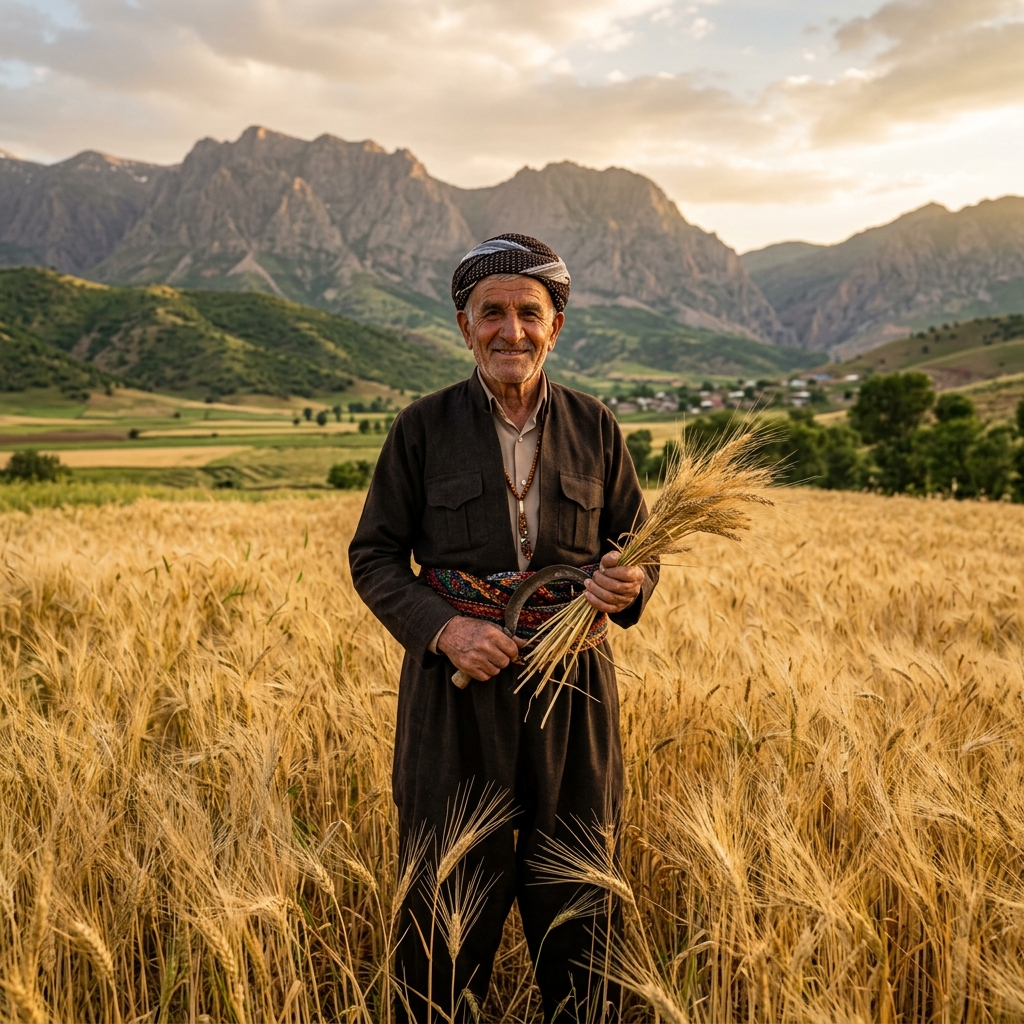
For men, the Xeyat constructs the legendary Şal û Şapik (or Rank û Çoxe in Sorani-speaking regions). Tailored from durable, breathable mountain wool or fine spun twill in dignified earthy tones—tan, walnut brown, olive, and charcoal—the suit features roomy pleated trousers that taper snugly at the ankle, providing effortless mobility for hiking rugged mountain trails and dancing the energetic Govend. Around the waist, the tailor fits a multi-meter woven fabric sash (Şitək or Piştên), which provides strong lumbar support while completing a timeless silhouette of mountain dignity.
04
The Newroz Rush and Global Haute Couture Runways
In the bustling weeks leading up to Newroz (the Kurdish New Year on March 21), tailoring workshops in Erbil, Sulaymani, Duhok, Mahabad, and Diyarbakir operate day and night to fulfill hundreds of thousands of custom orders for families preparing to celebrate on mountain slopes. Today, visionary young Kurdish fashion designers are taking ancestral embroidery techniques and flowing silhouettes to international fashion weeks in Paris, London, and Milan, proving that Kurdish couture is a thriving, timeless global art form. Master tailors also craft traditional felt vests (Kepenek), ceremonial headdresses (Klaw û Cemedanî), and bespoke Newroz capes, keeping ancestral textile arts vibrant while training young apprentices in delicate needlework and pattern drafting. Master tailors also craft traditional felt vests (Kepenek), ceremonial headdresses (Klaw û Cemedanî), and bespoke Newroz capes, keeping ancestral textile arts vibrant while training young apprentices in delicate needlework and pattern drafting.