The Kurdish Language & Dialects
An Indo-European tongue of ancient antiquity belonging to the Northwestern Iranian subfamily, spoken by over 40 million people across Kurdistan and the global diaspora with rich literary traditions in multiple scripts.
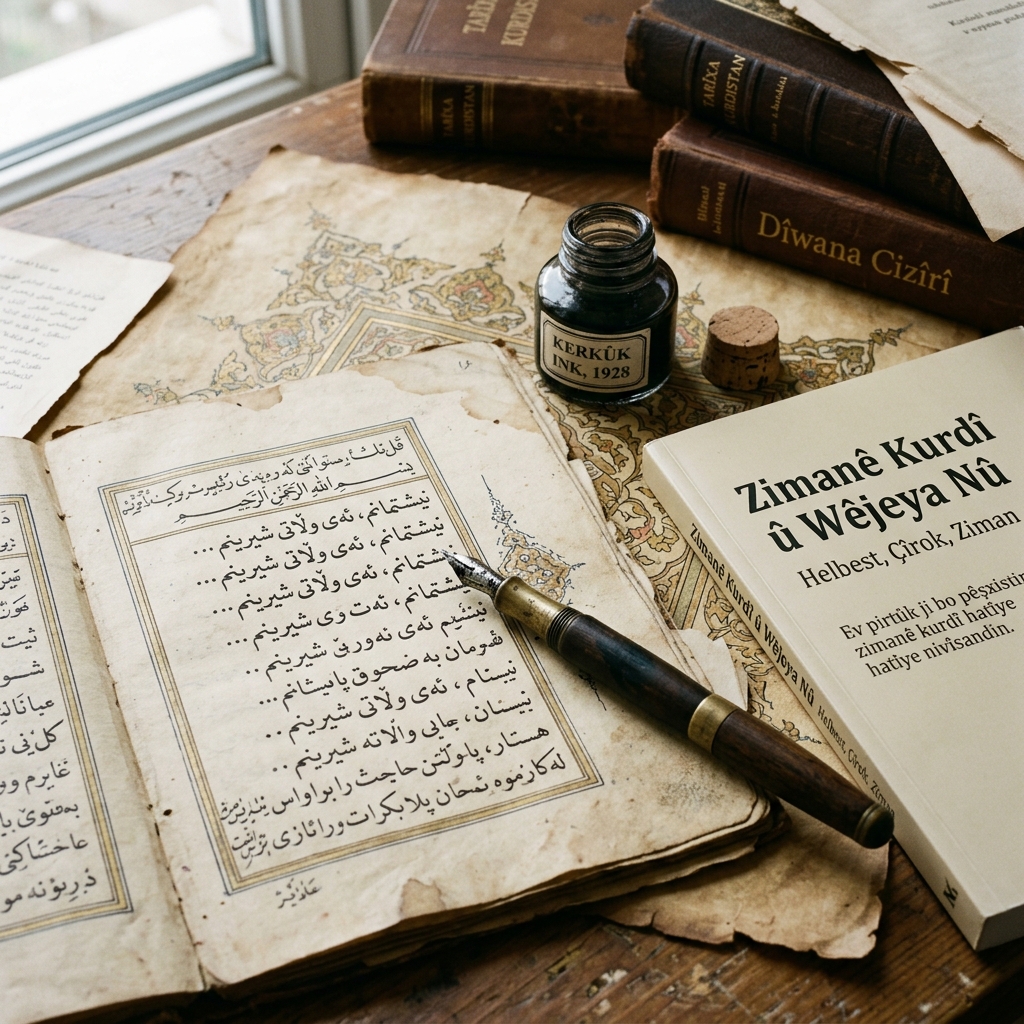
The Living Soul of Kurdish Identity
Despite centuries of geopolitical divisions, state-sponsored linguistic bans, and assimilationist policies, the Kurdish language has survived and flourished. From classical 16th-century poetic divans to modern digital computational linguistics, Kurdish is the indelible vessel of the Kurdish soul.
The Major Kurdish Dialects
Kurdish dialectology forms a continuum of closely interrelated branches, each rich in vocabulary, poetry, and geographic character.
Kurmanji (Kurmancî)
The most widely spoken Kurdish dialect, used by over 60% of Kurds across Northern Kurdistan (Bakur), Western Kurdistan (Rojava), the Badinan region of Iraqi Kurdistan (including Duhok Governorate), and Caucasian diaspora communities. Explore Kurdish History for classical literary roots.
— Our language is our identity.
Sorani (Soranî)
The official standard language of the Kurdistan Regional Government (KRG), extensively used in Erbil (Hewlêr), Sulaymani, Kirkuk, and Iranian Kurdistan (Rojhilat/Mukriyan) with rich media and publishing.
— Kurdistan is our beautiful, beloved homeland.
Zazaki (Kirmanckî)
An archaic and deeply expressive dialect spoken primarily in the mountainous provinces of Dersim, Elazığ, Bingöl, and Diyarbakır, preserving ancient Indo-European phonology. Read more in Kurdish Folklore & Stories.
— Our language stands for brotherhood for all.
Gorani / Hewrami & Kelhori
The dialect of classical Kurdish mystical poetry and sacred Yarsan texts, spoken in the scenic Hawraman mountains, Kermanshah, Ilam, and Halabja Governorate. Explore Kurdish Music & Dengbêj.
— Hawraman is the paradise of clouds.
The Kurdish Alphabets
Two standardized scripts are utilized today, both perfectly tailored to represent all unique Kurdish vowels and consonants.
Hawar Latin Alphabet
31 LettersCreated in 1932 by linguist and statesman Prince Celadet Alî Bedirxan in the seminal magazine Hawar in Damascus. It uses modified Latin characters to represent Kurdish phonemes with extreme phonetic precision.
Sorani Kurdish Script
34 LettersAn adapted right-to-left Perso-Arabic alphabet modified with mandatory distinct vowel markers (ە, ێ, ۆ, ڵ, ڕ, ڤ), making every written word phonetically unambiguous and easy to pronounce.
Essential Kurdish Phrases
Learn core greetings, etiquette, and daily expressions in Kurmanji and Sorani.
| English Concept | Kurmanji (Hawar Latin) | Sorani (Script) | Pronunciation & Etiquette |
|---|---|---|---|
| Hello / Good Day | Silav / Rojbaş | سڵاو / ڕۆژباش | See-lav / Rozh-bash (Universal polite greeting) |
| Welcome | Bi xêr hatî | بە خێر بێیت | Bikher hatee (Addressed to incoming guests) |
| How are you? | Tu çawa yî? / Hûn çawa nin? | چۆنیت؟ / چۆنن؟ | Too chawa yee? / Choneet? |
| I am well, thank you | Ez baş im, spas | باشم، زۆر سوپاس | Ez bash im, spas / Bashim, zor spas |
| Thank you very much | Gelek spas / Destxweş | زۆر سوپاس / دەست خۆش | Gelek spas / Dast khosh (Bless your hands) |
| Peace be with you | Aştî û azadî | ئاشتی و ئازادی | Ashtee u azadee (Peace and freedom) |
| Goodbye | Bi xatirê te / Bimîne di xêrê de | خواحافیز / بە هیوای باشی | Khwahafiz / Bi khatire te |
Kurdish Words Behind the Culture
Language is the indelible vehicle of Kurdish culture. Discover how terminology for Family, Gastronomy, Traditional Clothing, Sacred Nature, and Newroz varies across Kurmanji, Sorani, Hawrami, Zazaki, and Southern Kurdish dialects.