March 21 — The Kurdish Spring Equinox & National Day
نەورۆزتان پیرۆز بێت — Cejna Newrozê Pîroz Be!

NEWROZ in Kurdistan

2,726 years of unbroken Kurdish history, mountaintop bonfires, radiant traditional dresses, and the immortal dance of freedom. Welcome to the national rebirth of the Kurdish people.

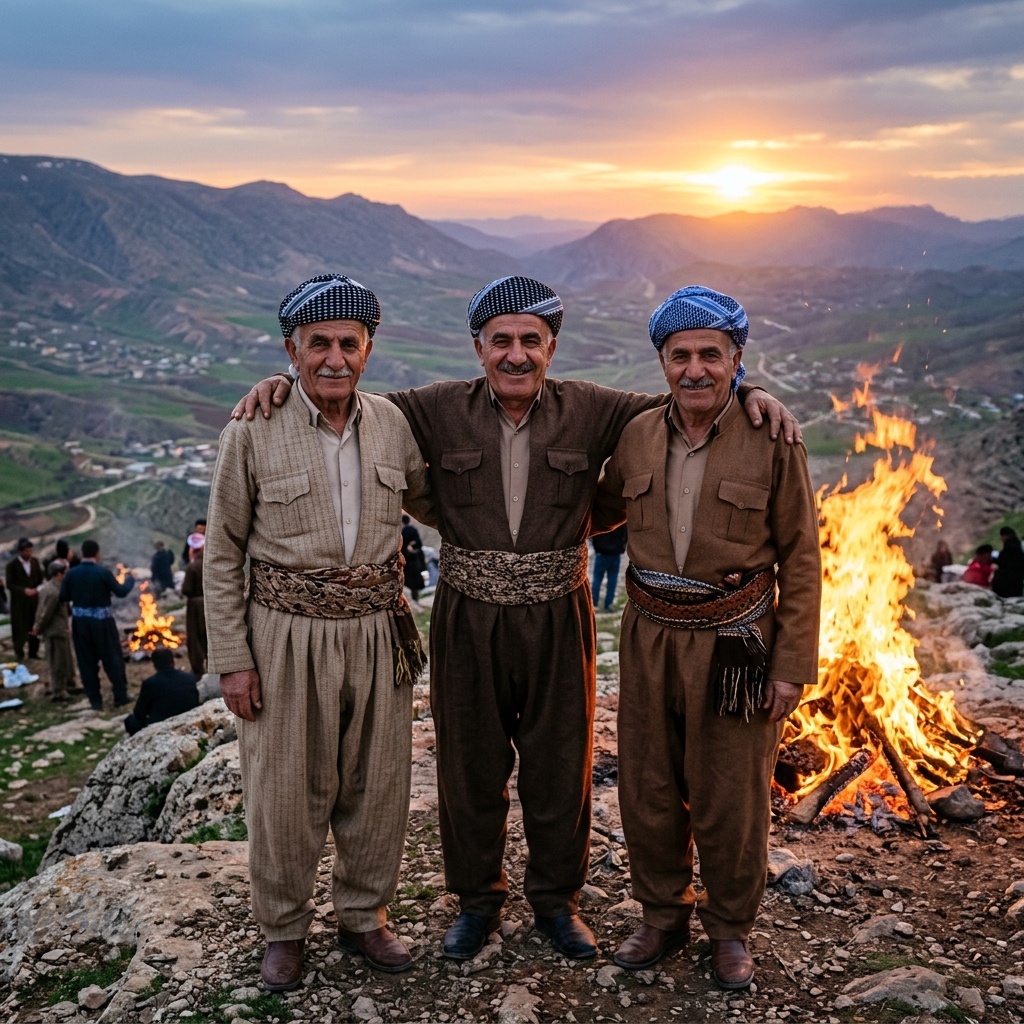
Agirê Newrozê (Sacred Bonfire)
Symbol of purification, warmth, light triumphing over darkness, and defiant freedom.
Kawey Hesinkar (Kawa the Blacksmith)
The legendary hero who overthrew the tyrant Zahhak in 612 BCE and lit the mountaintop signal fires.
Gula Nêrgiz (Wild Daffodil)
The golden spring flower blooming in the Zagros mountains, pinned to traditional dresses and lapels.
Govend & Hilperkê (Linked Circle Dance)
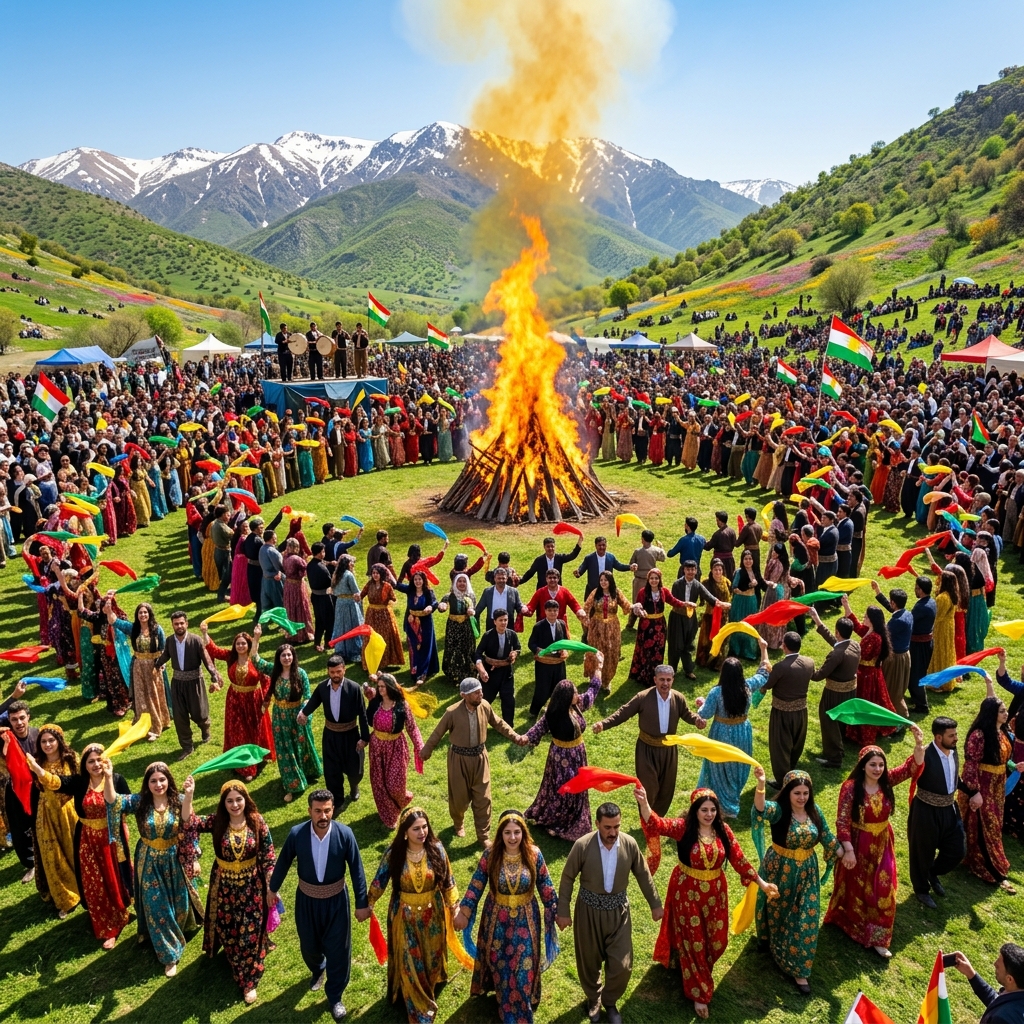
Thousands of dancers holding pinkies and shoulders around roaring fires, moving in solar harmony.
Alay Kurdistan (Flag of Kurdistan)
The 21-ray golden sun emblem representing the 21st of March (Newroz Day) against red, white, and green.
Cil û Bergî Kurdî (Traditional Attire)
Dazzling silk Kiras with gold coin belts for women, and tailored woolen Şal û Şapik for men.
612 BCE Liberation & Rebirth

The Legend of Kawa the Blacksmith

How a brave blacksmith’s hammer and a mountaintop fire broke centuries of tyranny and ignited the birth of the Kurdish nation.

The Epic Legend of Kawa the Blacksmith & The Birth of Newroz

داستانی کاوەی ئاسنگەر و زوحاکی ستەمکار
The story of Newroz is rooted in the eternal triumph of freedom over tyranny and light over darkness. According to Kurdish mythology and historical epics (chronicled in the Shahnama and ancient Kurdish folklore), the Zagros mountain lands were enslaved by an evil tyrant king named Zahhak (Dehak). Two voracious serpents grew from Zahhak's shoulders, and to appease them, the tyrant's guards sacrificed two young Kurdish men every day. A skilled blacksmith named Kawa had already lost several of his sons to the tyrant's brutality. When his last remaining child was sentenced to death, Kawa refused to surrender. He forged iron weapons, swords, and axes in secret. On the eve of March 20–21 in 612 BCE, Kawa raised his blacksmith's leather apron upon a spear as a banner of revolution (the historical Derafsh Kaviani) and led the young survivors in a daring assault upon Zahhak's castle. With a mighty strike of his blacksmith hammer, Kawa slew the tyrant. To signal the victory and liberation to all the distant mountain tribes, Kawa and his comrades climbed to the highest peak of Mount Zagros and lit a massive roaring bonfire. Seeing the sacred fire blazing across the horizons, millions of Kurds emerged from hiding, lit their own fires on every hillside, and danced hand-in-hand in grand circles. The arrival of spring, the blooming of the first yellow daffodils (Nêrgiz), and the birth of a free nation thus became forever united as Newroz (New Day).

Pillar of Kurdish Heritage

Commemorates liberation from tyranny in 612 BCE (Foundation of the Mede Empire).

Pillar of Kurdish Heritage

Mountaintop fire was the original communication network signaling freedom across Zagros peaks.

Pillar of Kurdish Heritage

March 21 aligns precisely with the astronomical Spring Equinox (Day & Night equal in length).

Pillar of Kurdish Heritage

Kurdish calendar begins its year 1 with Kawa’s revolution (Current year 2726).

Year 2726
Current Kurdish Solar Calendar Year
Living Folk Attire

Traditional Kurdish Clothes for Newroz

Wearing brand-new, vibrant traditional Kurdish clothes (Cil û Bergî Kurdî) is a sacred cornerstone of Newroz. Every village, town, and diaspora community blossoms in dazzling colors that echo the wildflowers of Kurdistan.

Kurdish Women Traditional Clothes Newroz
Shimmering Silk & 21k Gold

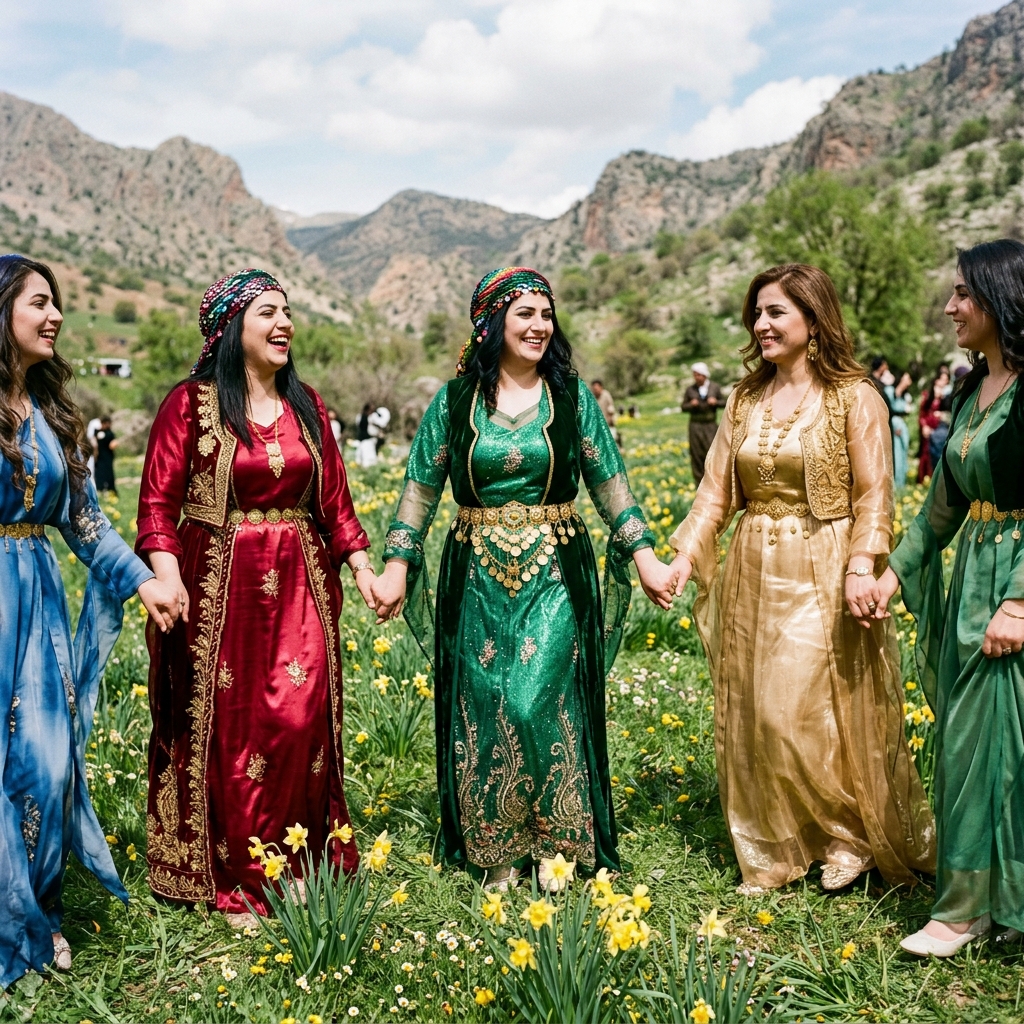
Traditional Kurdish Women’s Newroz Attire (Cil û Bergî Jinan)

Kurdish women’s Newroz dresses are world-renowned for their opulent fabrics, shimmering metallic threads, gold coin jewelry, and dramatic flowing silhouettes that catch the wind during mountain circle dances.

Emerald Green (Kesk)

The lush blooming valleys, spring rebirth, and agriculture of Kurdistan.

Bright Red (Sor)

The sacred Newroz fire, passion, courage, and historical resilience.

Golden Yellow (Zerd)

The 21 rays of the Kurdish sun, warm sunlight, and daffodil blossoms.

Pure White (Spî)

Peace, mountain snowcaps, purity, and fraternal unity.

Kiras (کراس — The Flowing Silk Gown)
Chiffon, sheer georgette, metallic lame, or sequined lace with gold and silver embroidery.
A floor-length flowing dress characterized by dramatic elongated pointed sleeves called "Lavendî" or "Feqyanê". During the Govend circle dance, women tie or wrap these flowing sleeves around their wrists or wave them gracefully to accentuate rhythmic motions.
Hêlek / Kawa / Silk (هێلەک و کەتان — Embroidered Velvet Vest)
Heavy royal velvet, brocade, or satin embroidered with intricate gold zari bullion.
A tailored, sleeveless or short-sleeved vest worn snugly over the sheer Kiras. Adorned with elaborate floral motifs, golden braidings, and faux or genuine gemstones matching the dress tones.
Pênas / Kamarbandi Zêr (کەمەربەندی زێڕ — Gold & Silver Coin Belt)
Solid 21-karat Kurdish gold or hand-hammered filigree sterling silver.
An iconic wide ornamental belt crafted from interlocking links and dangling antique coins (Lîre). It is worn cinched around the waist, jingling melodically with every step of the Hilperkê dance.
Kofî & Leçik (کۆفی و لەچک — Royal Coin Headdress & Veil)
Velvet skullcap mounted with rows of gold coins, draped with translucent sequin-fringed silk.
A traditional cylindrical headpiece framed with cascading gold medallions along the forehead, topped with a delicate multi-colored sheer veil that floats during dance steps.
Şelwar / Jêr-kiras (شەڵوار — Satin Under-Trousers)
Pure silk, satin, or breathable cotton.
Loose, tapered under-trousers worn beneath the translucent Kiras, color-coordinated with the vest and dress accents for modesty and warmth in the breezy mountain air.
Gerdanî & Bazn (گەردانی و بازن — Layered Necklaces & Bangles)
Layered gold mesh chains, amber beads (Kehriba), and heavy Kurdish coin necklaces.
Grand multi-tiered chest ornaments and wrist cuffs that represent familial heritage and festive celebration.
Kurdish Men Traditional Clothes Şal û Şapik
Handwoven Mountain Wool

Traditional Kurdish Men’s Newroz Suit (Şal û Şapik / Cilî Kurdî)

Kurdish men’s traditional Newroz clothing is tailored for rugged mountain mobility, warmth, and dignified poise. Woven from natural goat hair and fine wool, it is among the most distinctive masculine folk costumes in the world.

Badinan (Duhok / Zakho / Akre)

Şal û Şapik with signature red-and-white Cemadanî and wide ankle cuffs.

Soran (Erbil / Sulaymaniyah / Kirkuk)

Ranka û Çoxa in earthy brown, olive, and charcoal with broad floral Pushtên.

Hawraman (Halabja / Mariwan / Paveh)

Woven Ferencî felt vests, tight-waisted suits, and authentic handmade Klash.

Mukriyan (Mahabad / Bokan / Piranshahr)

Crisp tailored suits with multi-layered sashes and distinctively angled Cemadanî.

Bakur & Rojava (Amed / Botan / Qamishlo)

Embroidered vest overlays, silk sashes, and tasseled shoulder wraps.

Şal û Şapik / Ranka û Çoxa (شال و شەپک — Woolen Two-Piece Suit)
Natural hand-spun goat down (Merez), camel wool, or fine twill.
Comprises baggy, pleated drop-crotch trousers (Ranka) designed for agile mountain marching and high-kick dances, paired with a tailored, high-collar waist-length jacket (Çoxa).
Pushtên / Şalî Pişt (پشتێن — Patterned Waistband Sash)
Handwoven patterned wool or jacquard silk measuring 5 to 7 meters in length.
An elaborate long sash wrapped tightly several times around the waist. It supports the spine during strenuous dances, keeps the body warm, and creates an imposing, heroic silhouette.
Cemadanî / Kefiye & Pêç (جەمەدانی — Checked Headwrap)
Hand-tied pure cotton with hand-knotted tassel fringes.
The legendary Kurdish headdress wrapped around a conical skullcap (Klaw). Distinctive regional styles include the red-and-white check of Badinan, black-and-white of Soran/Mukriyan, and white-fringed of Hawraman.
Klash (کڵاش — Hawrami White Handcrafted Footwear)
UNESCO-registered 100% natural compressed cloth soles with hand-crocheted pure cotton tops.
World-famous breathable footwear made entirely by hand in the Hawraman mountains. Extremely flexible and lightweight, making it the supreme choice for hours of tireless Govend dancing on mountain terrain.
Torchlight & Bonfires

Newroz Celebrations Across All Kurdistan

From the 100,000 torchbearers of Akre to the million-strong gatherings in Amed and the terraced roofs of Sine — see how Kurdistan lights the night.

Akre (Aqrah) — The Global Capital of Newroz Global Cultural Phenomenon

Akre (Aqrah) — The Global Capital of Newroz

ئاکرێ — پایتەختی نەورۆزی جیهانی
Southern Kurdistan (Bashur / Duhok Governorate)

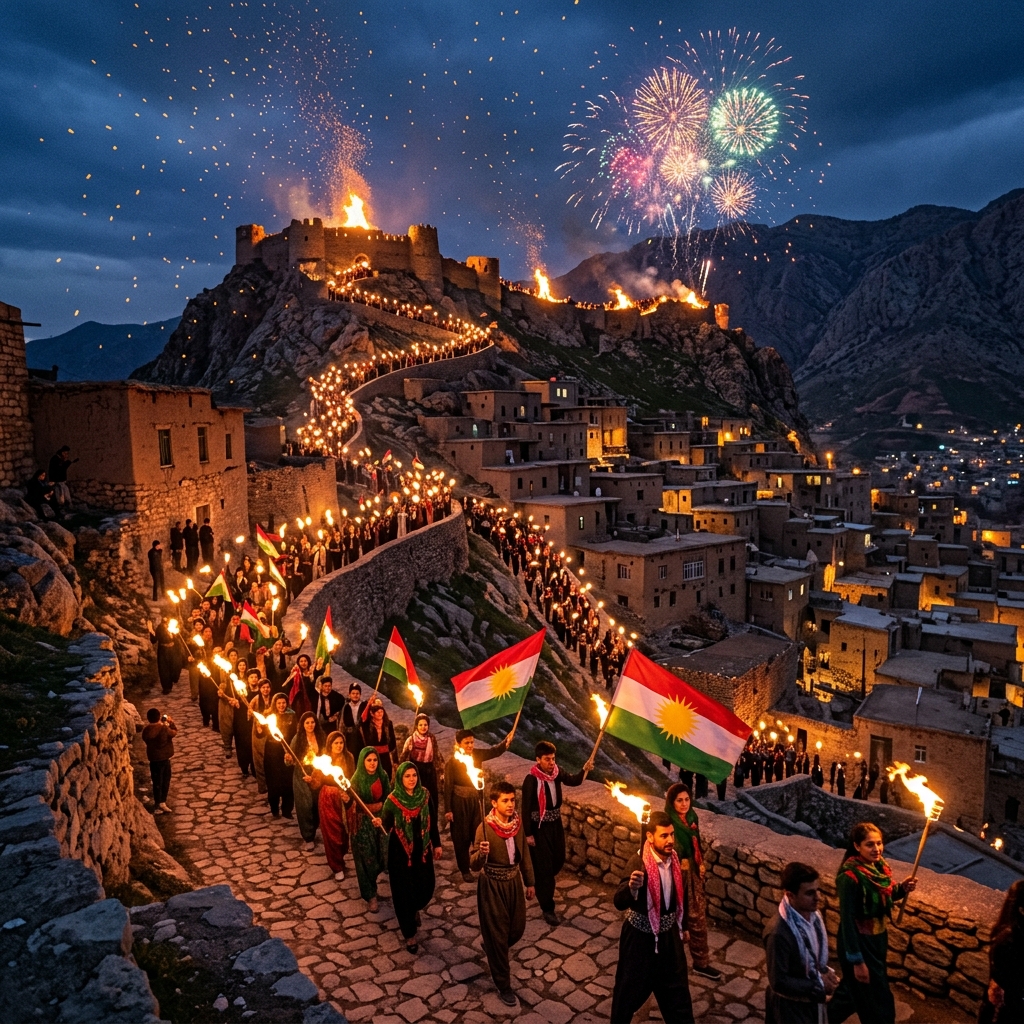
Akre is universally recognized as the beating heart of Newroz. At twilight on March 20, over 100,000 Kurdish youths wearing traditional clothes ignite giant oil-soaked torches and scale the vertical cliffs of Mount Sere Gire and the ancient Akre Citadel. Looking like a living dragon of golden flame, the procession culminates in lighting the mountain summit bonfire alongside synchronized fireworks that illuminate the entire valley.

Key Highlights: 100,000+ torchbearers, 1,000 ancient stone citadel stairs, massive 50m summit fire, breathtaking fireworks.
Diyarbakir (Amed) — The Mega Gathering of Unity Largest Gathering on Earth

Diyarbakir (Amed) — The Mega Gathering of Unity

ئامەد — گەورەترین مەیدانی نەورۆز
Northern Kurdistan (Bakur)

Every year on March 21, over one million people assemble in Amed’s colossal Newroz Park. Clad in vibrant traditional clothes, the crowd forms the largest simultaneous circle dance in the world around the towering central bonfire, chanting songs of brotherhood, freedom, and cultural resilience.

Key Highlights: Over 1 Million people at Newroz Park, massive peace bonfire, Dengbêj choir performances, vibrant sea of national colors.
Sanandaj (Sine) & Palangan — Terraced Village Fire Cascades UNESCO Living Heritage

Sanandaj (Sine) & Palangan — Terraced Village Fire Cascades

سنە و پاڵنگان — ئاهەنگی سەربانی گوندەکان
Eastern Kurdistan (Rojhelat / Kurdistan Province)

In the historic city of Sine and the dramatic vertical village of Palangan, thousands gather across cascading rooftops where one family’s roof is another’s courtyard. Defiant and joyful, women in sparkling silk dresses lead the Helperkê dance holding torch fire aloft as giant Daf drums reverberate across the Zagros canyons.

Key Highlights: Terraced stone rooftops, Hawrami Daf & Dohol orchestras, torchlight cascades down vertical gorge cliffs.
Qamishlo, Kobani & Rojava — Olive Grove Picnics & Songs Solidarity & Spring Rebirth

Qamishlo, Kobani & Rojava — Olive Grove Picnics & Songs

قامیشلۆ و کۆبانێ — نەورۆزی بەرخۆدان و ژیان
Western Kurdistan (Rojava)

Across the fertile plains of Rojava, Newroz is celebrated with deep communal solidarity. Families gather in blooming meadows and olive groves to feast on Dolma and homemade pastries, while artists and poets recite verses honoring Kawa the Blacksmith and the resilience of the Kurdish soul.

Key Highlights: Family Seyran feasts in blooming olive orchards, youth folk troupes, Newroz poetry recitals, central square bonfires.
Sulaymaniyah & Erbil Citadel — Fires of Mount Goyzha & Hawler Citadel Citadel & Mountain Splendor

Sulaymaniyah & Erbil Citadel — Fires of Mount Goyzha & Hawler Citadel

سلێمانی و قەڵای هەولێر
Southern Kurdistan (Bashur)

In Sulaymani, torchbearers climb the steep ridge of Mount Goyzha to illuminate the night sky overlooking the cultural capital. In Erbil (Hawler), the 6,000-year-old Citadel is bathed in golden light as dignitaries, artists, and families gather in the main square to ignite the royal Newroz flame.

Key Highlights: Torch run up Mount Goyzha, Erbil 6,000-year-old Citadel light show, street festivals on Salim Street and Shanadar Park.
Worldwide Kurdish Diaspora — London, Cologne, Stockholm, Nashville Global Cultural Ambassador

Worldwide Kurdish Diaspora — London, Cologne, Stockholm, Nashville

ڕەوەندی کوردی لە ئەوروپا و ئەمریکا
Global Diaspora (Europe, North America, Australia)

Across Europe and North America, hundreds of thousands of diaspora Kurds gather in major city squares and concert halls to celebrate Newroz with live pop concerts, Govend dancing in traditional clothes, and food bazaars sharing Kurdish gastronomy with international friends.

Key Highlights: Huge cultural festivals in Trafalgar Square, Cologne Arenas, Stockholm Central, and Nashville "Little Kurdistan".
The Solar Circle

Govend & Hilperkê: The Dance of Newroz

The Kurdish Govend (or Hilperkê) is more than a dance; it is a synchronized physical meditation of communal equality, military discipline, and solar celebration. Men and women link pinky fingers or shoulders, moving counter-clockwise in an unbroken circle symbolizing the continuous cycle of nature and planetary movement around the sun.

Pan-Kurdish Newroz Govend Dance

Unbroken Unity Around the Sacred Bonfire

Kurdish circle dancing is a living expression of solidarity. Men and women link pinkies or lock shoulders, moving in harmony to the thunderous pulse of the Dohol drum and the shrill mountain melody of the Zurna.

The Serçopî (سەرچۆپی — Lead Dancer)

The dancer at the rightmost head of the line holds a vibrant silk handkerchief (Desmal). The Serçopî dictates the tempo, signals directional changes, and executes acrobatic leaps and foot stomps while waving the handkerchief in rhythmic arcs above the dancers' heads.

Geryan (گەڕیان — The Flowing Solar Stride)

Slow to Moderate (85–100 BPM)
All Kurdistan / Sulaymaniyah, Sine, Erbil

The foundational Newroz dance. Dancers step gracefully rightward with subtle shoulder sways, building up internal collective rhythm before transitioning into faster movements.

Çepkî (چەپکی — The Clapping Stomp)

Lively & Fast (115–130 BPM)
Bakur / Diyarbakir, Van, Botan

Characterized by synchronized hand-clapping and sharp lateral foot stamps toward the center of the fire circle, echoing warrior celebrations.

Şêxanî (شێخانی — The Sacred Alpine Rhythm)

Dynamic 2/4 Measure (105–120 BPM)
Badinan / Duhok, Akre, Zakho

A fast-paced mountain dance with rapid footwork crosses, heel-taps, and rhythmic shoulder-to-shoulder bounces popular during Newroz torch processions.

Sê-pê (سێ پێ — The Triple-Step Leap)

High-Energy & Explosive (130–145 BPM)
Urmia, Mukriyan, Hakkari

Consists of three rapid consecutive steps followed by a synchronized forward kick and floor stomp, demanding immense stamina and unity.

Koçerî (کۆچەری — The Nomadic Gallop)

Fiery & Intense (140–160 BPM)
Botan, Dersim, Rojava

A high-speed pastoral dance mimicking the galloping of mountain horses and agility of nomadic shepherds across high Zagros pastures.

National Hymns & Poems

Immortal Songs & Anthems of Newroz

The timeless poems of Pîremêrd, Dildar, and Cigerxwîn sung by millions around the sacred Newroz fire with bilingual lyrics and translations.

The Universal Kurdish New Year Anthem

Emrojî Salî Tazeye Newroze Hâteve (ئەمڕۆژی ساڵی تازەیە نەورۆزە هاتەوە)

Poet: Pîremêrd (Tawfeeq Mahmoud Hamza, 1867–1950) • Iconic Performance: Hassan Zirak, Mazhar Khaleqi, Nasir Rezazi • Year: 1940 (Original Poem) / 1958 (Classic Recording)
دەقی کوردی (Original Kurdish Verses)
ئەمڕۆژی ساڵی تازەیە، نەورۆزە هاتەوە جەژنێکی کۆنی کوردە بە خۆشی و بە هاتەوە چەند ساڵ گوڵی هیوای ئێمە پێپەست بوو تاکو پار هەر خوێنی لاوەکان بوو گوڵی ئاڵی نەوبەهار ئەو ڕەنگە سوورە بوو کە لە ئاسۆی بڵندی کورد مژدەی بەهاری هێنا بە سەرکەوتنی گەورە نەورۆز بوو ئاگرێکی وەهای خستە جەرگەوە لاوان بە عەشق دەچوون بە بەرەوپیری مەرگەوە ئەوا ڕۆژهەڵات لە بەندەنی بەرزەوە دیارە تیشکی پەڕیوی کاوە گەیاندییە هەزارە دەسا ئەی هاوڕێیان کات و وەختی هۆشیارییە سەرکەوتن و ئومێد، بۆ گەلی کورد یارییە!
English Poetic Translation
Today is the new year, Newroz has returned once more! An ancient festival of the Kurds, returning with joy and triumph! For so many years our blossom of hope was trampled until yesterday, It was only the blood of our youths that blossomed like the crimson flowers of early spring! It was that fiery crimson red upon the high horizons of the Kurds, That brought the glad tidings of spring with a glorious victory! It was Newroz that cast such a sacred fire into our hearts, That our brave youths marched with ardent love into the face of death! Behold! The radiant dawn appears over the high peaks of the mountains, The soaring rays of Kawa's torch have reached tens of thousands! Arise then, companions! The hour of awakening is here, Victory, hope, and glory belong forever to the Kurdish nation!
Official National Anthem

Ey Reqîb (ئەی ڕەقیب — The Kurdish National Anthem)

Poet: Dildar (Younis Rauf, 1918–1948) • Iconic Performance: Sung by all Kurds / Choir of Kurdistan • Year: 1938 (Written in Prison) / 1946 (Adopted by Mahabad Republic)
دەقی کوردی (Original Kurdish Verses)
ئەی ڕەقیب هەر ماوە قەومی کورد زمان نایشکێنێ دانەری تۆپی زەمان کەس نەڵێ کورد مردووە، کورد زیندووە زیندووە قەت نانەوێ ئاڵاکەمان لاوی کورد هەستاوە سەرپێ وەک دلێر تا بە خوێن نەخشی بکا تاجی ژیان ئێمە ڕۆڵەی میدیا و کەیخوسرەوین دینمان، ئایینمان هەر نیشتمان
English Poetic Translation
O enemy! The Kurdish-speaking nation endures forever, No artillery or cannons of the ages can ever break our spirit! Let no one say the Kurds are dead; the Kurds are alive! Alive we stand, and our flag shall never be lowered! The Kurdish youth has risen to his feet like a fearless lion, To engrave the crown of life with his own lifeblood! We are the children of the Medes and Cyaxares, Our faith and our creed is forever Kurdistan!
Classical Folk Masterpiece

Newroz Hat (نەورۆز هات — Spring & Rebirth)

Poet: Folk / Lyrical Tradition of Mukriyan • Iconic Performance: Mohammad Mamle • Year: 1965
دەقی کوردی (Original Kurdish Verses)
نەورۆز هات و بەهار هات، گوڵ و گوڵزار هات سەوزە و چیمەن و ڕێحان لە سەر کێوان دیار هات مەستی بەهار بووین و دڵخۆش بە دیداری یار خۆشە ژیان لە باوەشی کێو و دەشتی نیشتمان
English Poetic Translation
Newroz has arrived and spring has returned; the flowers and gardens blossom! Verdant grass, sweet basil, and meadows shine across the high mountain crests! We are intoxicated by the beauty of spring and blessed by the sight of our beloved, How wondrous is life in the loving embrace of our homeland's mountains and plains!
Epic Resistance Hymn

Kawa Hesinkar (کاوەی ئاسنگەر — Kawa the Blacksmith)

Poet: Cigerxwîn (1903–1984) • Iconic Performance: Şivan Perwer • Year: 1976
دەقی کوردی (Original Kurdish Verses)
Kawayê Hesinkar ez im, agirê Newrozê pêxist Li ser lûtkeyên Çiyayê Zagrosê min azadî nivîsî Rabe gelê min, cejna te ye, Newroz e îro Ji zilm û zordariyê rizgar bûye Kurdistana zêrîn!
English Poetic Translation
I am Kawa the Blacksmith, who ignited the sacred fire of Newroz! Upon the soaring pinnacles of Mount Zagros, I inscribed the name of Freedom! Arise, my people! Today is your festival; today is Newroz! Golden Kurdistan has been liberated forever from oppression and tyranny!
Seyran & Hospitality

Newroz Rituals & Spring Feasts

داب و نەریت و خواردنە بەتامەکانی جەژنی نەورۆز

Agirê Newrozê (Lighting & Jumping Over the Sacred Fire)

At sunset on March 20, families and communities gather around roaring bonfires on hilltops and village squares. Jumping over the flames symbolizes burning away winter sluggishness, illness, and despair, welcoming vibrant vitality and good fortune for the new year.

Seyran (The Great Spring Nature Picnic)

On March 21 and the days following, millions of Kurds leave cities for the green valleys, waterfalls, and mountain meadows (Seyran). Carpets are laid out on wildflower fields, music echoes from car speakers and Daf drums, and open-air Govend dances continue from sunrise to sunset.

Picking Wild Nêrgiz (Daffodils) & Mountain Herbs

Children and elders forage the slopes for wild blooming yellow daffodils (Nêrgiz) and fresh mountain delicacies such as Kenger (mountain thistle), Rêwas (wild wild rhubarb), and Tûreke (wild greens) for fresh spring salads.

Wearing Brand-New Kurdish Clothes

Every family member wears tailor-made or freshly sewn traditional outfits. Tailors across Kurdistan work day and night throughout February and March preparing hundreds of thousands of Kiras and Şal û Şapik suits.

Iconic Dishes of the Newroz Picnic (Seyran)

Newroz Feast King

Kurdish Yaprax / Dolma (یاپراخ — Stuffed Grape Leaves & Vegetables)

The supreme centerpiece of the Newroz picnic. Giant bubbling pots layered with spiced rice, ground lamb, garlic, sumac, stuffed grape leaves, onions, bell peppers, zucchini, and tender lamb ribs, flipped upside-down onto massive communal trays outdoors.

Celebration Specialty

Kurdish Spiced Biryani (بریانی کوردی)

Fragrant saffron and golden basmati rice layered with toasted golden vermicelli, tender chunks of lamb or chicken, roasted almonds, golden raisins, boiled eggs, and sweet peas.

Artisanal Bread

Kulêre & Nanî Tîrî (کولێرە و نانی تیری — Fresh Mountain Breads)

Paper-thin flatbreads baked over outdoor dome ovens (Saj) and savory herb-stuffed pastries baked fresh over hot charcoal.

Hospitality Symbol

Kurdish Chai with Cardamom (چای کوردەواری)

Deep amber Ceylon tea brewed in double samovars over mountain wood embers, infused with fragrant cardamom pods, served in tulip glasses throughout the day.

Share a Kurdish Newroz Blessing

Send authentic Kurdish New Year greetings to friends, family, and loved ones across the world.

نەورۆزتان پیرۆز بێت! هیوای ساڵێکی پڕ لە ئاشتی، تەندروستی و سەرکەوتن بۆ ئێوە و گشت گەلی کورد!