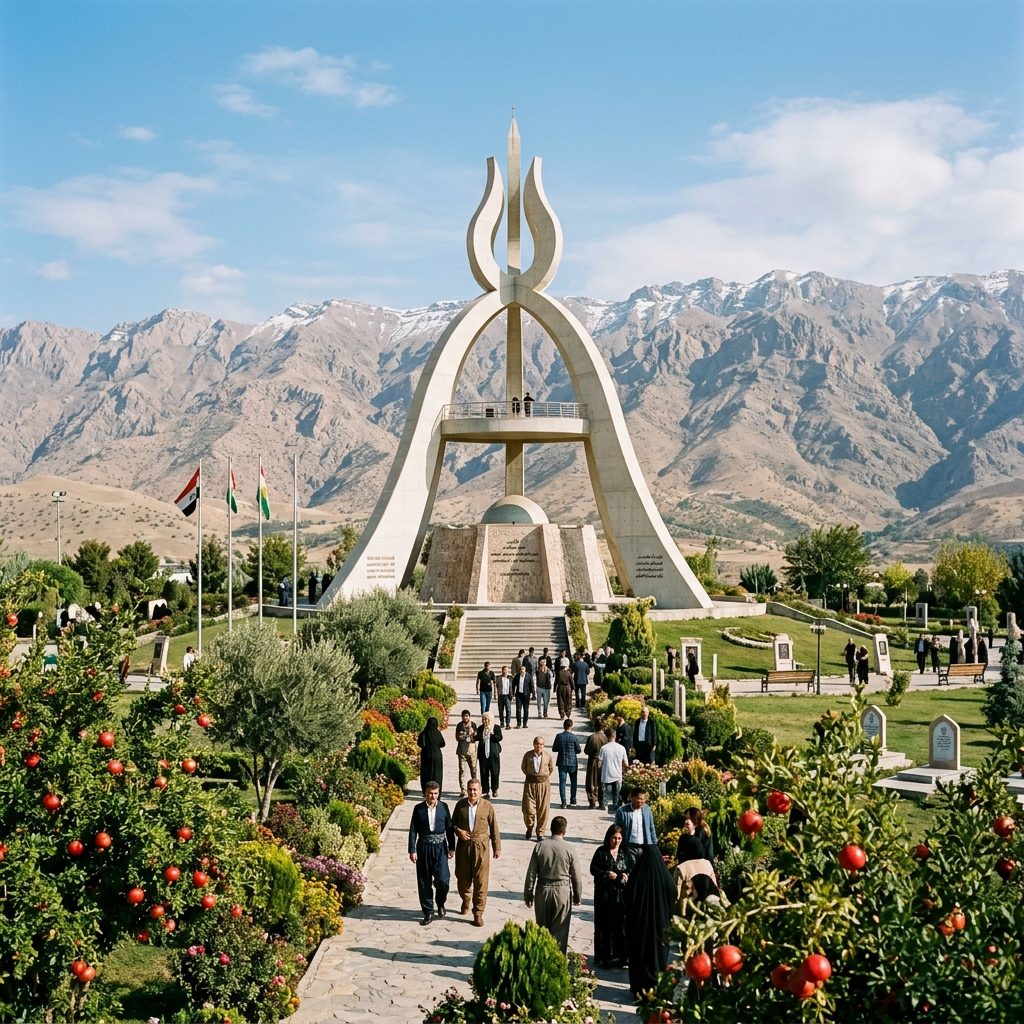
Halabja, City of Peace
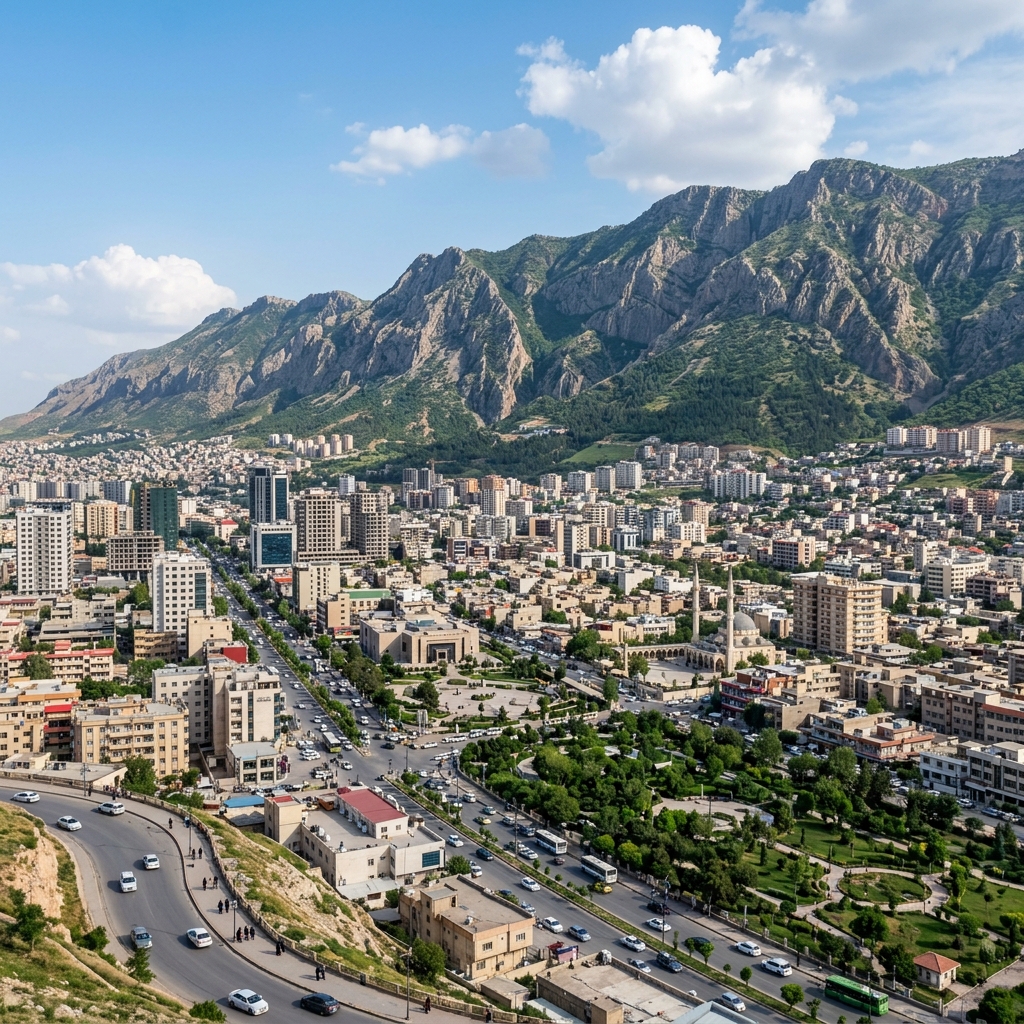
In the Shahrizor plain beneath the towering Hawraman mountain range.
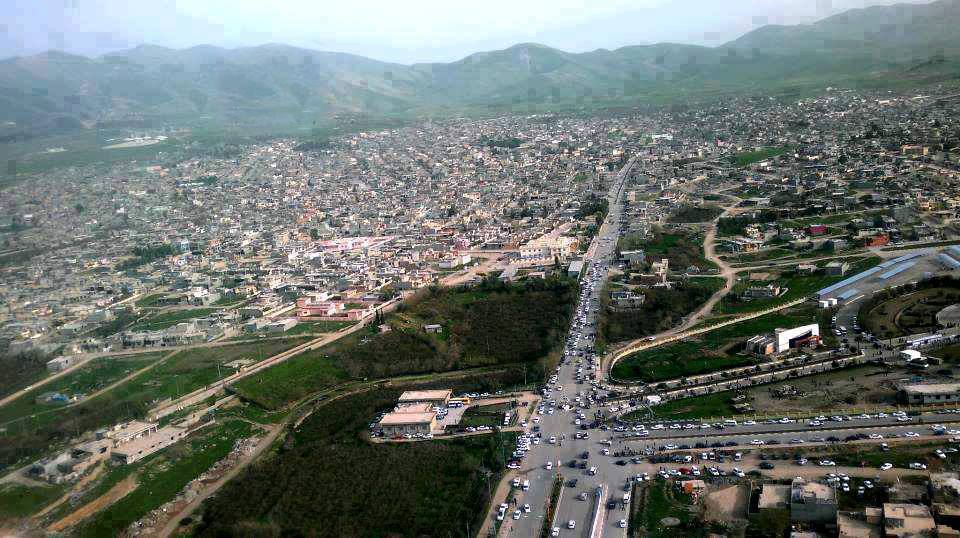
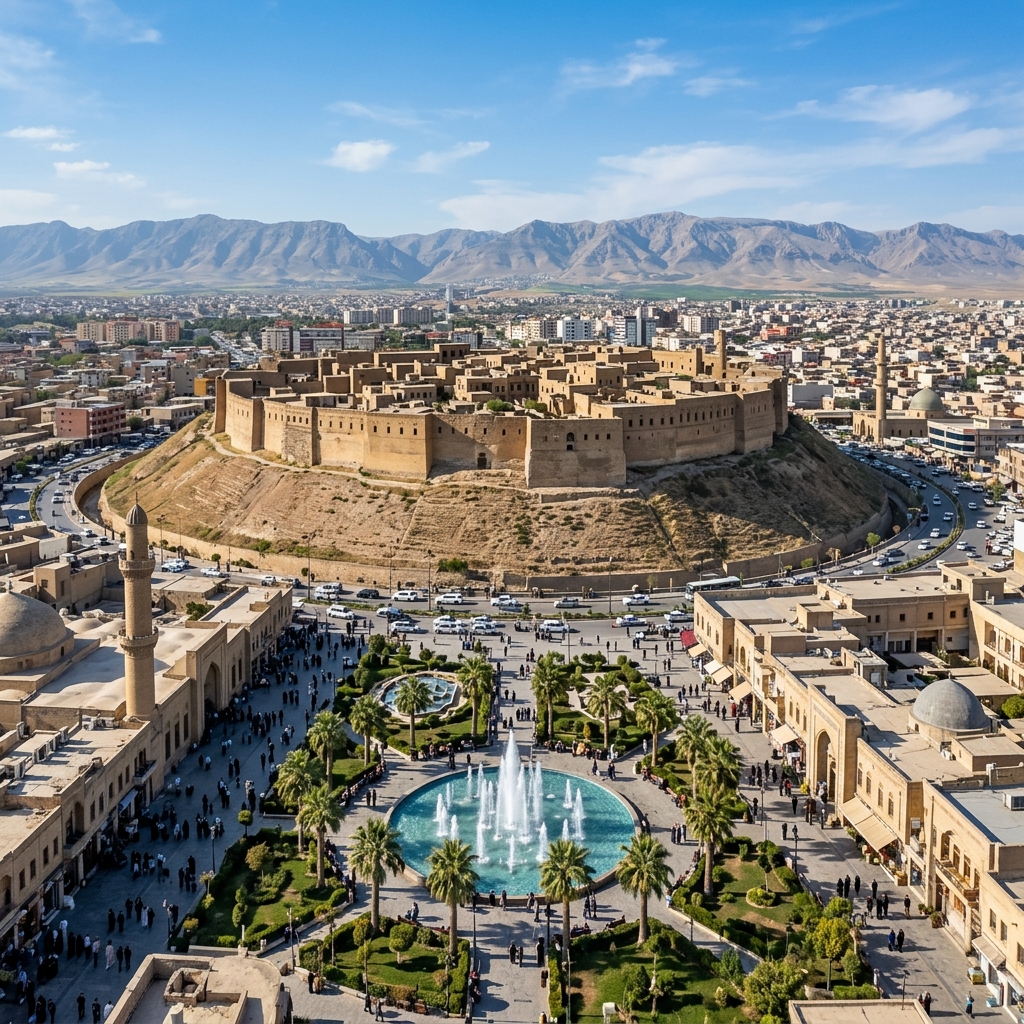
Halabja Centre
A symbol of Kurdish resilience and remembrance of the 1988 tragedy.
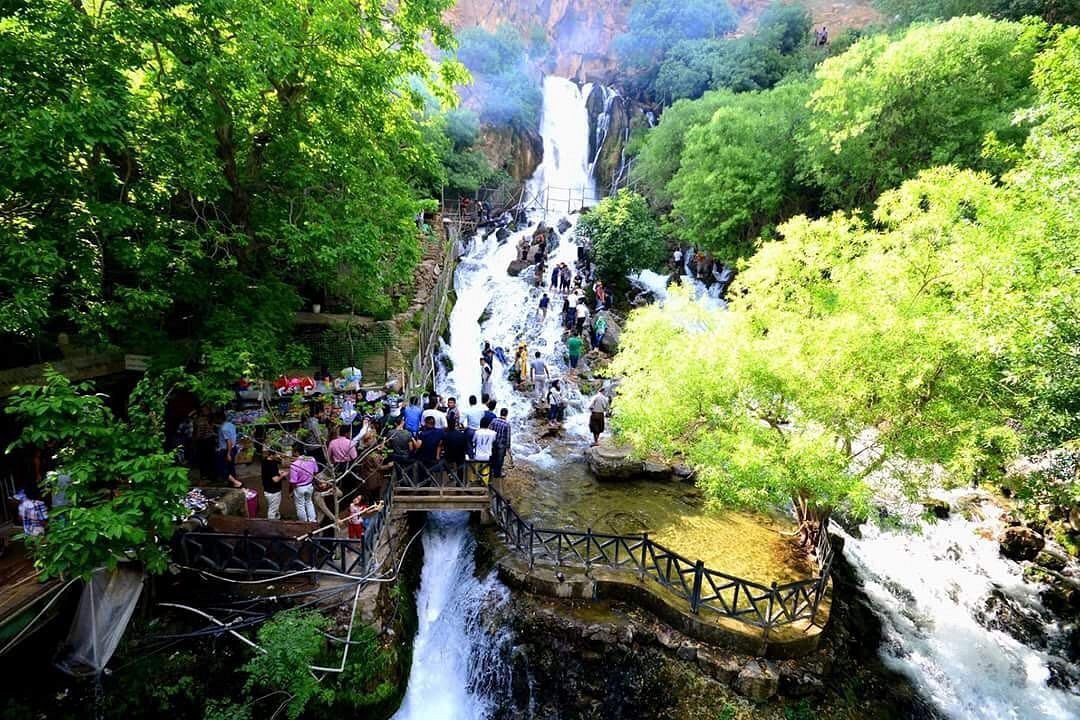
Ahmad Awa Waterfall
Crystal mountain waterfalls and cool streams loved by summer visitors.
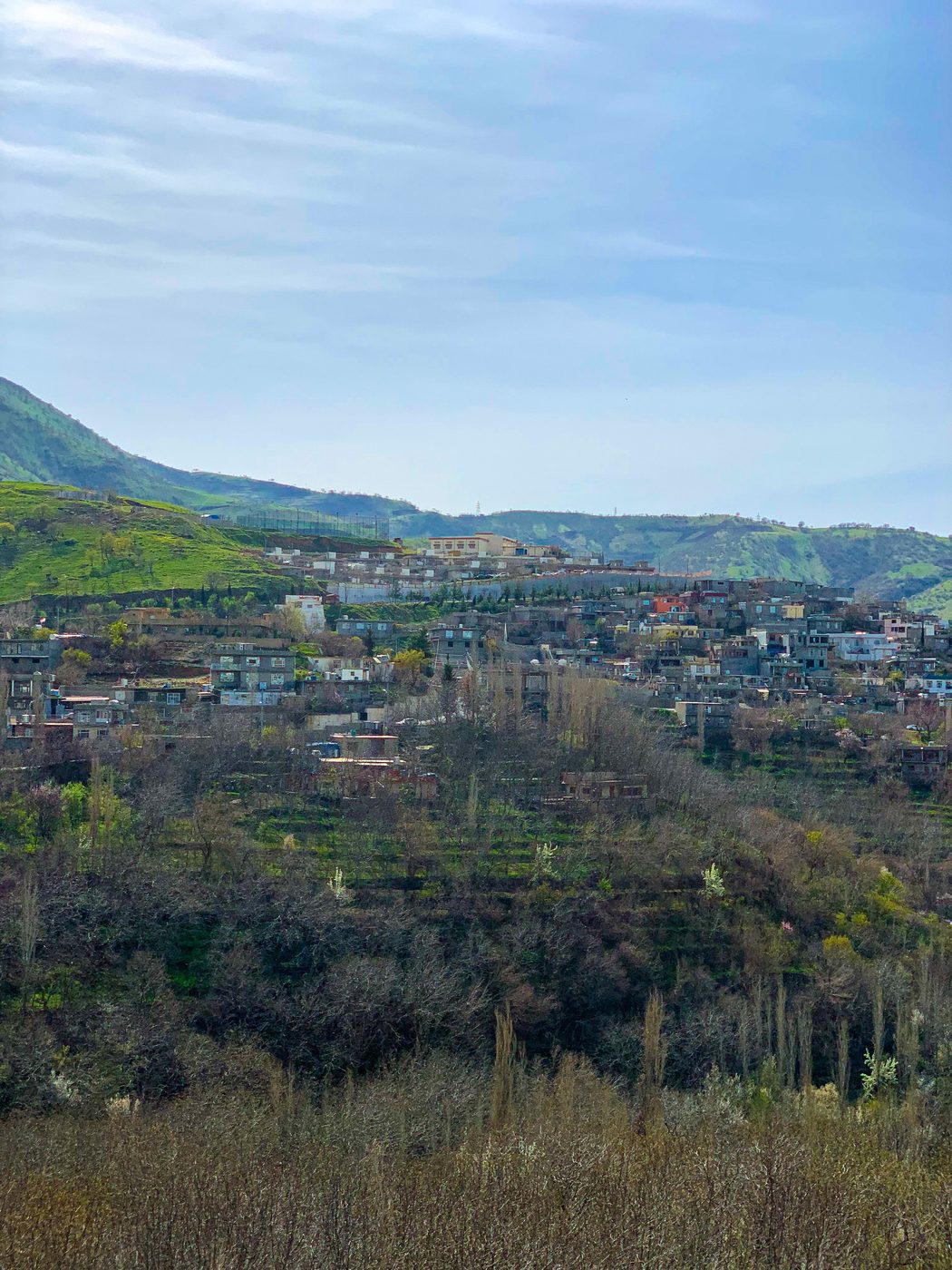
Byara
A Hawraman mountain town known for its Sufi heritage and scenery.
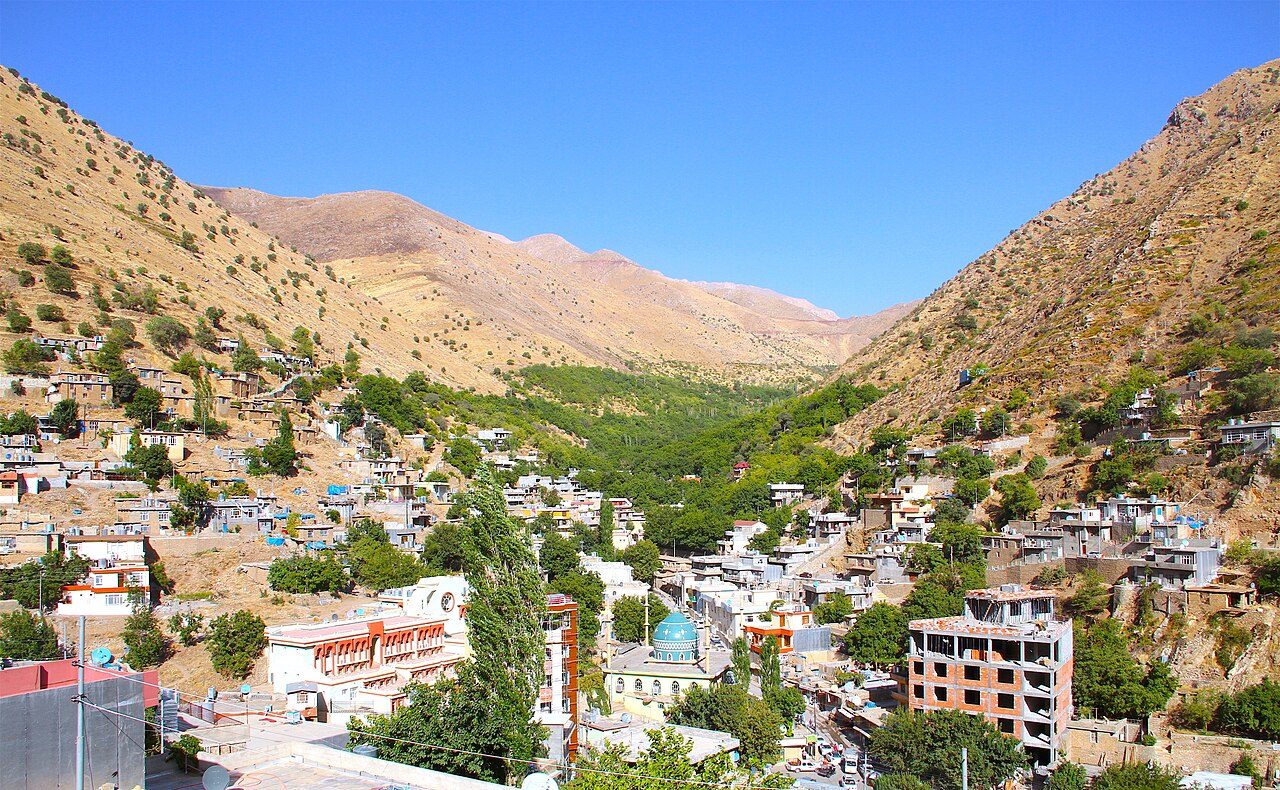
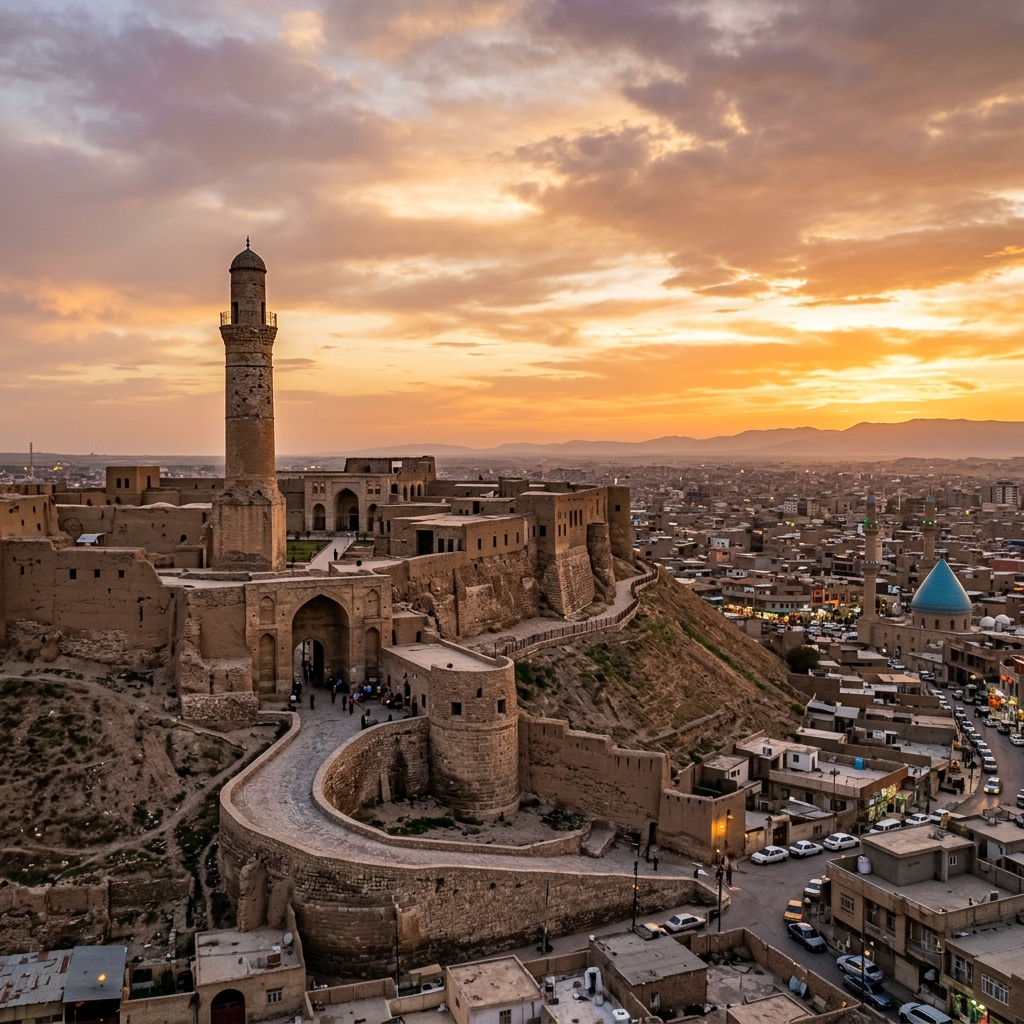
Tawella
A historic mountain settlement on the Hawraman route.
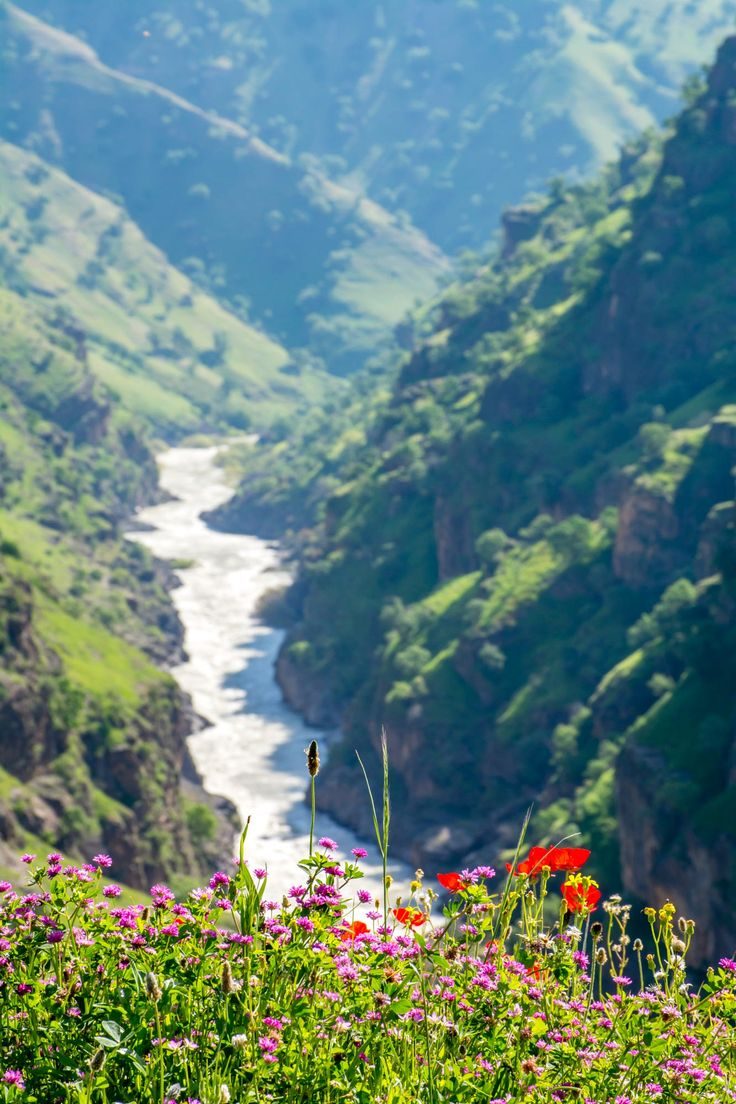
Sirwan
River and farmland landscapes along the Sirwan valley.
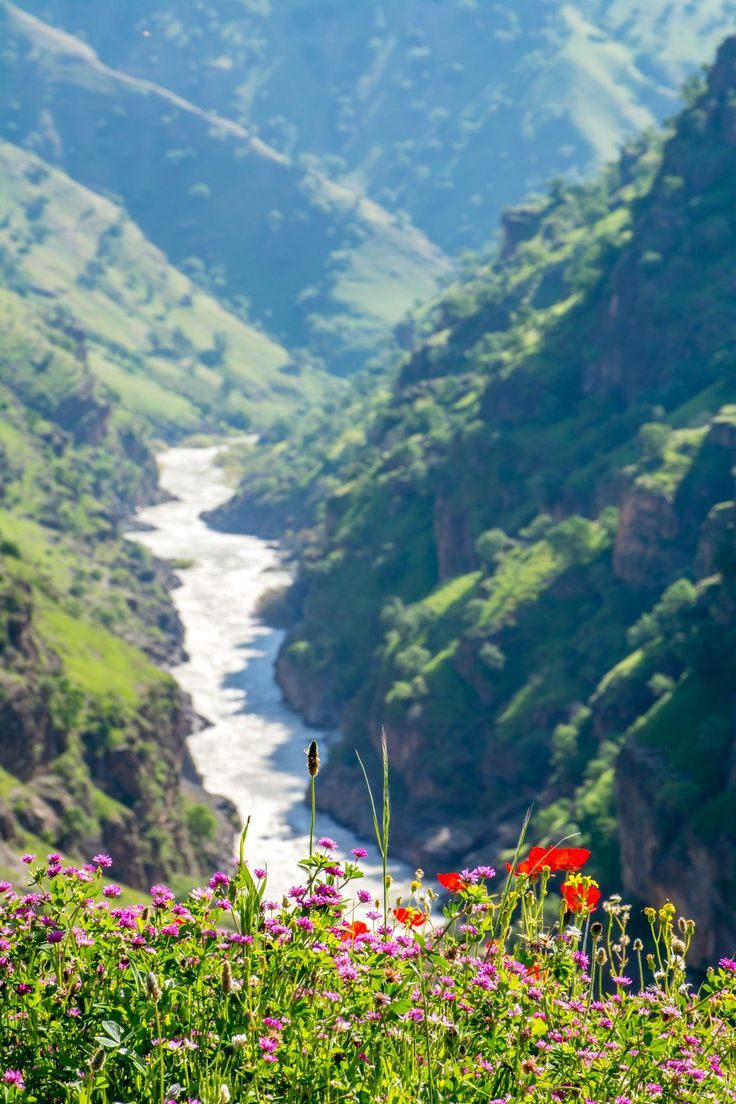
Chinar Village
A traditional village among orchards and plane trees.
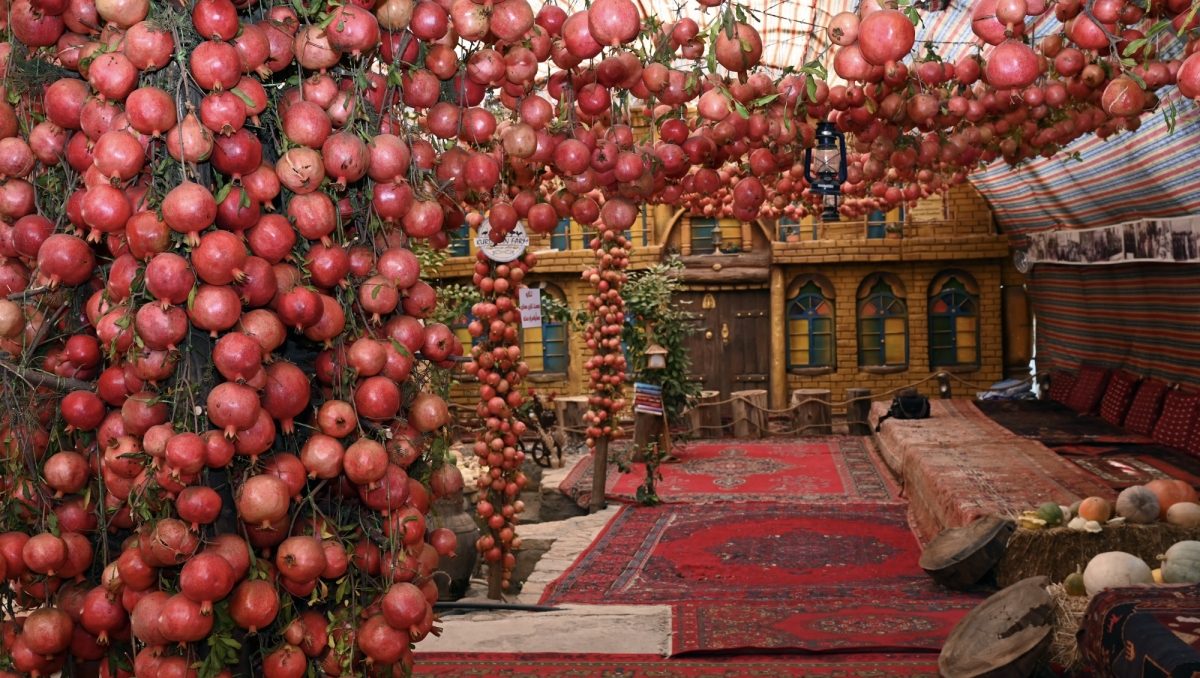
Zmiyer Village
A quiet highland village with rural Kurdish architecture.
Halabja Governorate
City of Peace, Resilience, Pomegranates & Hawraman Heritage
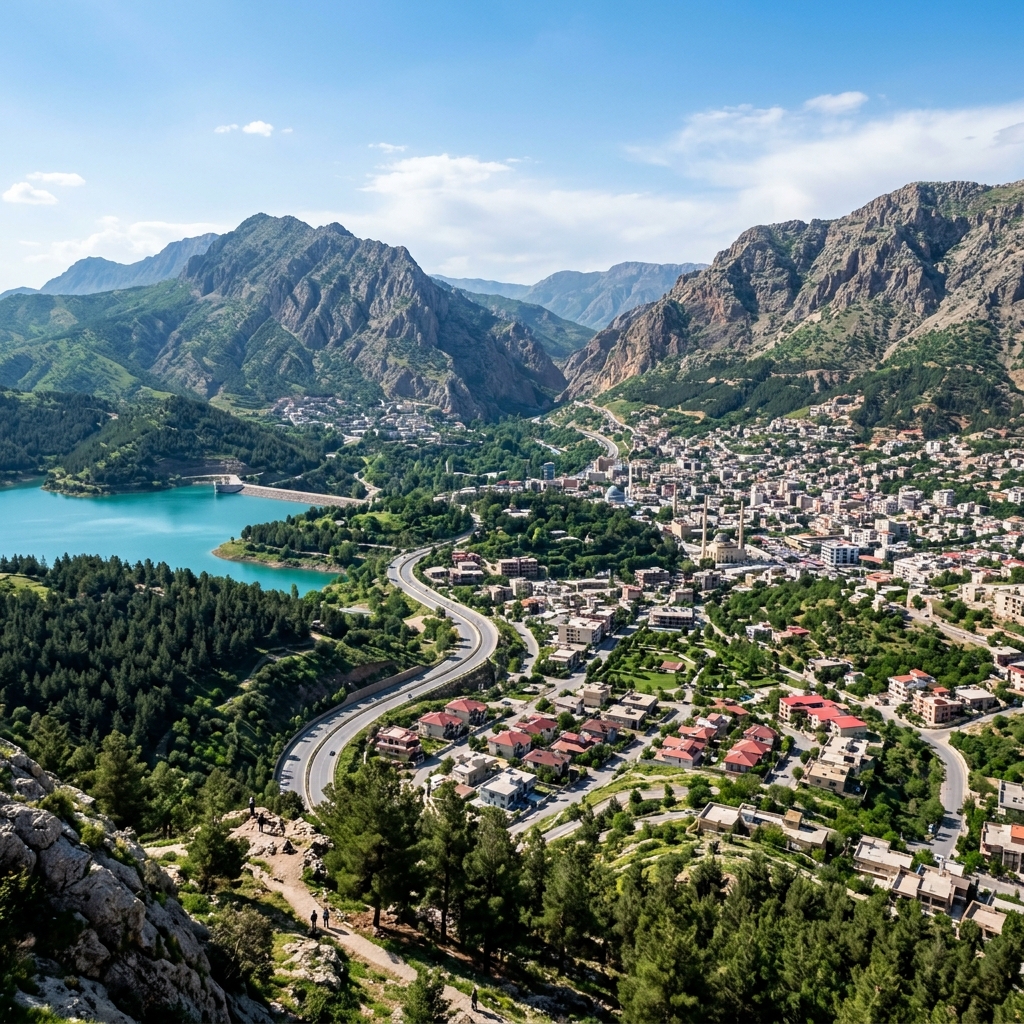
Halabja (Helebce) is the officially recognized 4th Governorate of the Kurdistan Region, located in the lush Shahrizor plain beneath the towering peaks of the Hawraman mountain range. Famous globally as an enduring symbol of Kurdish resilience and peace following the tragic chemical attack of March 16, 1988, Halabja is equally celebrated for its world-famous sweet pomegranates, rich literary heritage (Goran, Mewlewi), crystal mountain waterfalls at Ahmad Awa/Zalim, and UNESCO-listed Hawrami terraced villages.
History & Heritage of Halabja
Explore the unbroken chronological lineage, ancient civilizations, medieval emirates, and modern renaissance of Halabja.
Settled by Jaf Principality, Governed by Lady Adela Khanum (Khan-i Bahadur)
Commonly believed to derive from Kurdish/Persian 'Heleb-ce' ('Aleppo the Lesser/Little'), coined by Ottoman and Persian silk-road merchants who compared its verdant orchards and flowing spring waters to the gardens of Aleppo.
Hawraman Mountain Pass Gate, Sirwan River Portal, and the Zalm Spring Gateway.
Ottoman Salname provincial registers of 1889; British administrative dispatches by Major E. B. Soane (1912); Kurdistan Regional Government Council of Ministers Resolution No. 2870 (13 March 2014).
The Fertile Basin of Sharazoor & Ancient Bakr Awa
Halabja sits in the southern fertile crescent of the historic Sharazoor plain beneath the rugged slopes of the Zagros Mountains and Mount Shameran. The basin has supported agricultural civilization since the Neolithic era. Just outside Halabja rises Bakr Awa, an imposing 40-meter-high archaeological tell excavated by international missions, revealing continuous occupation levels spanning the Early Bronze Age, Hurrian, Kassite, Neo-Assyrian, and Islamic periods. Medieval Islamic geographers such as Ibn Hawqal and Yaqut al-Hamawi praised the Sharazoor region for its pure mountain waters, pomegranate orchards, and fortified settlements.
Excavations at Bakr Awa directed by the University of Heidelberg Archaeological Mission; Bronze Age cuneiform cylinder seals and painted Hurrian pottery; medieval accounts in *Kitab Surat al-Ard* by 10th-century geographer Ibn Hawqal.
Adela Khanum: The Renowned "Lady of Halabja"
In the late 19th and early 20th centuries, Halabja gained international fame under the progressive and formidable leadership of Lady Adela Khanum (born into the noble Ardalan royal family of Senna and married to Osman Pasha Jaff). Known as the 'uncrowned Queen of Sharazoor', Adela Khanum constructed magnificent Persian-style residential palaces, established regular tribunals of arbitration and courts of justice, built municipal prisons, and founded modern schools. British political officer Major Ely Bannister Soane visited Halabja in disguise and described her as a ruler of extraordinary courage and administrative genius, leading the British Empire to confer upon her the prestigious title of *Khan Bahadur*.
Major E.B. Soane's published account in *To Mesopotamia and Kurdistan in Disguise* (London, 1912); original British Foreign and Commonwealth Office citations awarding the title *Khan Bahadur* (1919); preserved stone architectural remnants of Adela Khanum's residential palace in Halabja.
Mawlawi, Ahmad Mukhtar Jaff & The Soul of Hawrami Verse
Halabja and the majestic surrounding peaks of Hawraman served as the sacred incubator for classical Kurdish Sufi mysticism and romantic lyricism. The great poet Mawlawi Abdul Rahim Tawagozi (1806–1882 CE) composed his immortal mystical verse in the Hawrami (Gorani) literary language, capturing the divine spirit of nature and the sorrow of love. Halabja also nurtured legendary poets such as Ahmad Mukhtar Jaff (1898–1935 CE), whose progressive verses championed educational enlightenment and the political emancipation of the Kurdish nation.
Original 19th-century manuscript Divans of Mawlawi Tawagozi; the preserved home and tomb of Ahmad Mukhtar Jaff in Halabja; archival literary anthologies published by the Kurdish Academy of Sciences.
16 March 1988: The Chemical Attack & Indomitable Spirit
On the tragic morning of March 16, 1988, in the final stages of the Iran-Iraq War, Iraqi Ba'athist warplanes dropped lethal chemical munitions (mustard gas, sarin, tabun, and VX nerve agents) on the residential neighborhoods of Halabja. Within hours, over 5,000 innocent Kurdish civilians—mostly women and children—were martyred, and more than 10,000 were permanently blinded or disabled. The horrifying images captured by courageous international photojournalists shocked the moral conscience of the world. The image of Omar Khawar shielding his infant child became the universal symbol of Kurdish suffering, resilience, and the relentless quest for human rights and justice.
UN Security Council Official Reports (Resolutions 612 and 620); photographic archives by Kaveh Golestan; ruling of the Supreme Iraqi Criminal Tribunal (March 1, 2010) classifying the attack as an act of genocide; international chemical weapons casing fragments preserved at the Halabja Memorial Museum.
Official 4th Governorate of Kurdistan & The City of Peace
On March 13, 2014, the Kurdistan Regional Government officially signed the decree establishing Halabja as the fourth independent governorate of the Kurdistan Region, followed by federal legislative confirmation. The city has undergone a peaceful, determined renaissance: the founding of the University of Halabja (fostering specialized faculties of humanities, agriculture, and toxicology), the construction of modern public hospitals, the development of pomegranate agro-industries, and the international peace delegations welcomed annually at the Halabja Monument.
Kurdistan Regional Government Executive Decree of 13 March 2014; Iraqi Federal Cabinet Decision No. 421; official founding charter of the University of Halabja; the Halabja Memorial Peace Museum welcoming hundreds of foreign diplomatic delegations.
Famous People & Historical Icons of Halabja
Discover the visionaries, statesmen, classic poets, and philosophers whose lives, ideas, and achievements defined Halabja.
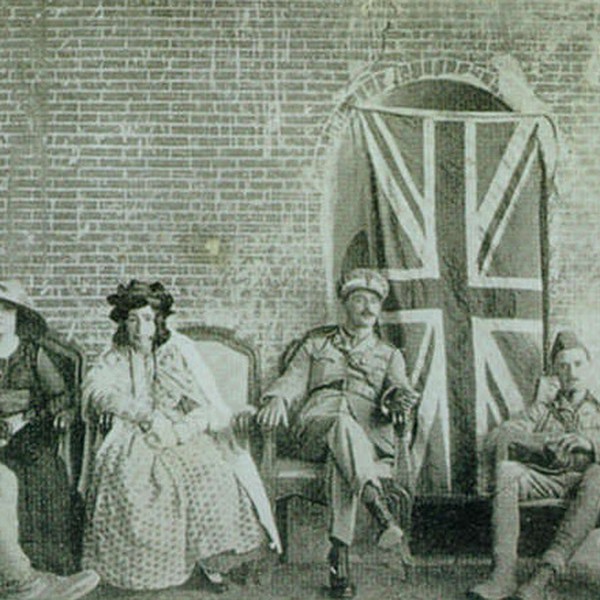 1847–1924 CE
Lady Adela Khanum (Khan-i Bahadur)
Revered Kurdish female ruler of Halabja from the prominent Ardalan and Jaf dynasties; established modern courts, built palaces, prisons, and public markets; awarded the royal British title Khan-i Bahadur for her exemplary governance and saving British soldiers during WWI.
Justice in the court and prosperity in the fields are the only true ornaments of a woman who governs.
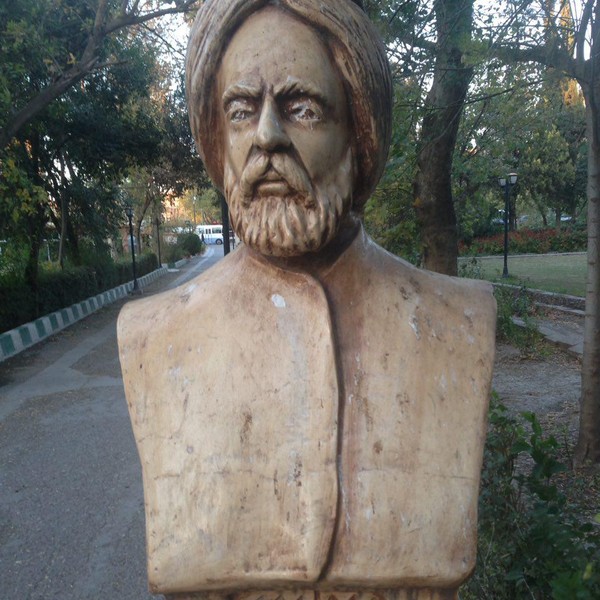 1806–1882 CE
Mawlawi Tawagozi
Supreme Sufi poet who wrote in the Hawrami dialect; celebrated across Kurdistan for deep spiritual metaphysics, exquisite allegorical nature poetry, and haunting elegies for his beloved wife Anbar Khatun.
Look how the mountain mists wrap the crags in prayer; in every blossom of the pomegranate tree, the secret of divine beauty unfolds.
1875–1918 CE
Tahir Beg Jaf
Son of Lady Adela and Osman Pasha Jaf; refined Kurdish lyrical poet who spoke English, Persian, and Turkish, blending classical aesthetics with patriotic calls for civic unity and modernization.
May the breeze carry the scent of Halabja’s gardens to the traveler, reminding them that true nobility is found in service to one’s land.
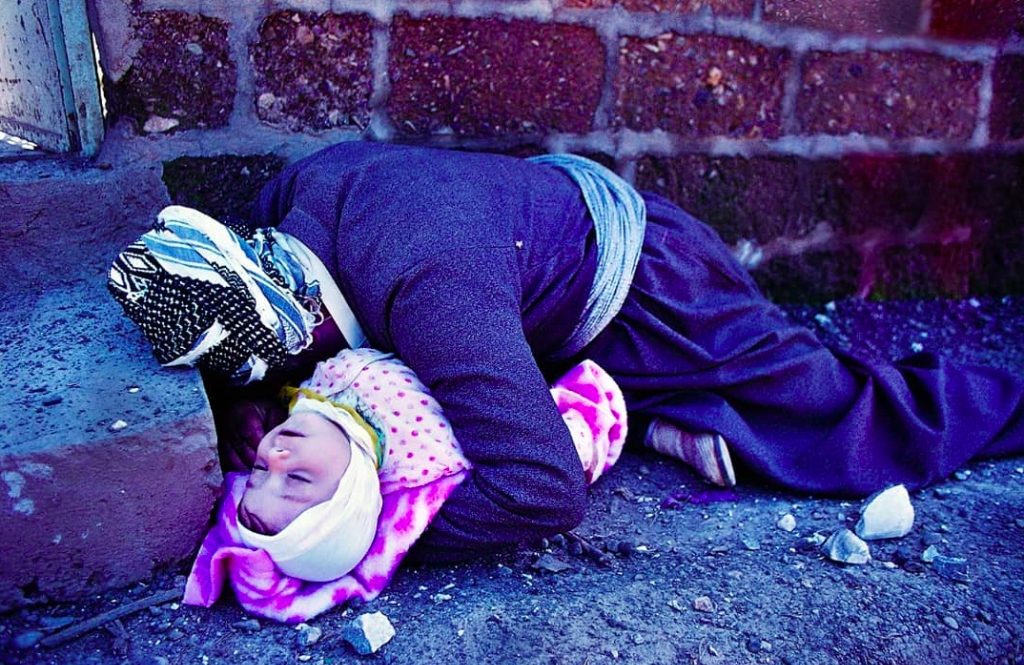 1934–1988 CE
Omar Khawar
A peaceful civic worker in Halabja immortalized worldwide when he was photographed by photojournalists collapsed on his doorstep, shielding his infant son Karwan with his own body during the 16 March 1988 chemical attack.
I will shield you with my heartbeat until my last breath; no toxic cloud shall take away the innocence of our children.
Historic Quarters & Neighborhoods of Halabja
Explore the ancient residential quarters, artisan guilds, and historic market centers that preserve the architectural memory of Halabja.
Qasre Quarter
Centered around the historic stone palace, council chambers, and formal gardens constructed by Lady Adela Khanum.
Pasha Quarter
Established by Osman Pasha Jaf; home to prominent tribal dignitaries, literary salons, and traditional stone mansions.
Piramakrun Quarter
Artisan and residential quarter known for hand-carved wooden tools, Hawrami klsh weaving, and stone water-conduits.
Kani Ashqan Quarter
Literally 'Spring of the Lovers', famous for cold freshwater streams, pomegranate orchards, and romantic poet gatherings.
The Mystical Pomegranate Orchards & Hawrami Stone Builders
Folklore tells of the legendary pomegranate groves of Halabja, whose fruit was so prized for sweetness that ancient kings ordered baskets wrapped in mountain snow to be delivered to imperial tables. The master stone-masons of the surrounding Hawraman mountains were legendary for building dry-stone terrace villages clinging to steep cliffs without a single drop of mortar.
The Fourth Governorate & Global Capital of Peace
On March 13, 2014, the Kurdistan Regional Government officially proclaimed Halabja as the Fourth Governorate of Iraqi Kurdistan. Today, Halabja is a vibrant symbol of rebirth, boasting the Halabja Memorial Museum, the expanding University of Halabja, thriving pomegranate agro-industries, and international peace delegations.
Civic Offices, Universities & Services in Halabja
Essential directory of governmental directorates, municipal councils (Cancel), flagship universities, tertiary hospitals, banks, and academic institutions in Halabja.
Executive governance center of the 4th Governorate of Kurdistan, directing municipal reconstruction, eco-tourism, and public welfare.
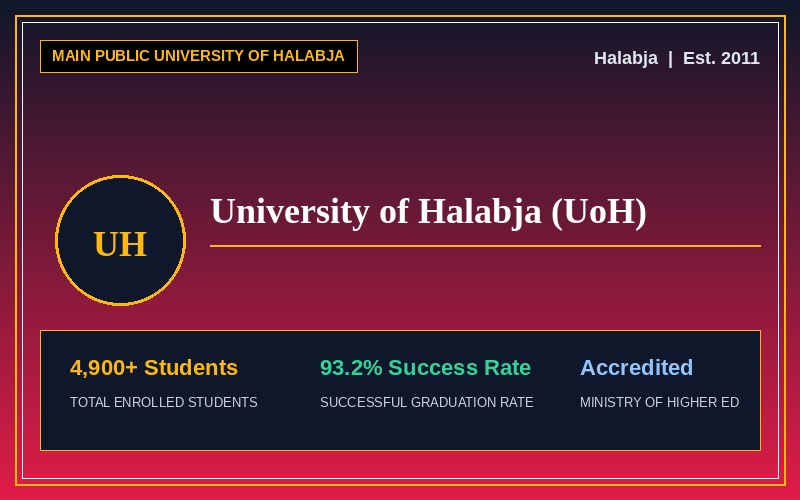
Public university founded in 2011, hosting colleges of Engineering, Law, Physical Education, Basic Education, and Humanities.
The governorate's main healthcare center providing specialized emergency care, surgical theaters, pediatrics, and specialized chemical weapons injury rehabilitation.
Providing personal and business banking accounts, Mastercard issuance, and money remittances in Halabja.
Emergency & Civic Hotlines
24/7 emergency response and civic services across Halabja
Administrative Directory & Localities of Halabja
Comprehensive interactive directory of municipal districts (Qaza), vibrant sub-towns (Nahiya), and picturesque mountain villages across Halabja Governorate.
Districts & Metropolitan Areas قەزاکانی هەڵەبجە
4 Districts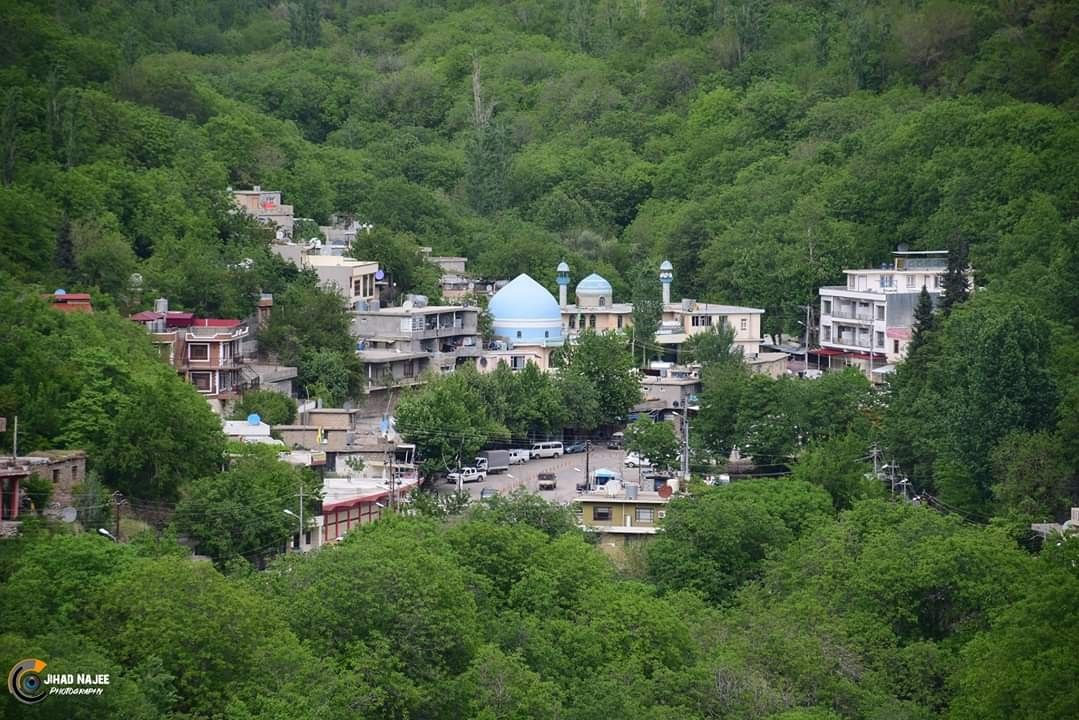 District Photo
Byara (Hawraman) District
The mystical heart of Hawraman, famous for UNESCO World Heritage terraced stone architecture, Naqshbandi Sufi Khanqahs, walnuts, and mountain streams.
District Photo
Halabja Central District
The administrative and cultural center featuring the Halabja Peace & Martyrs Monument, Pomegranate Research Orchards, and vibrant central bazaars.
 District Photo
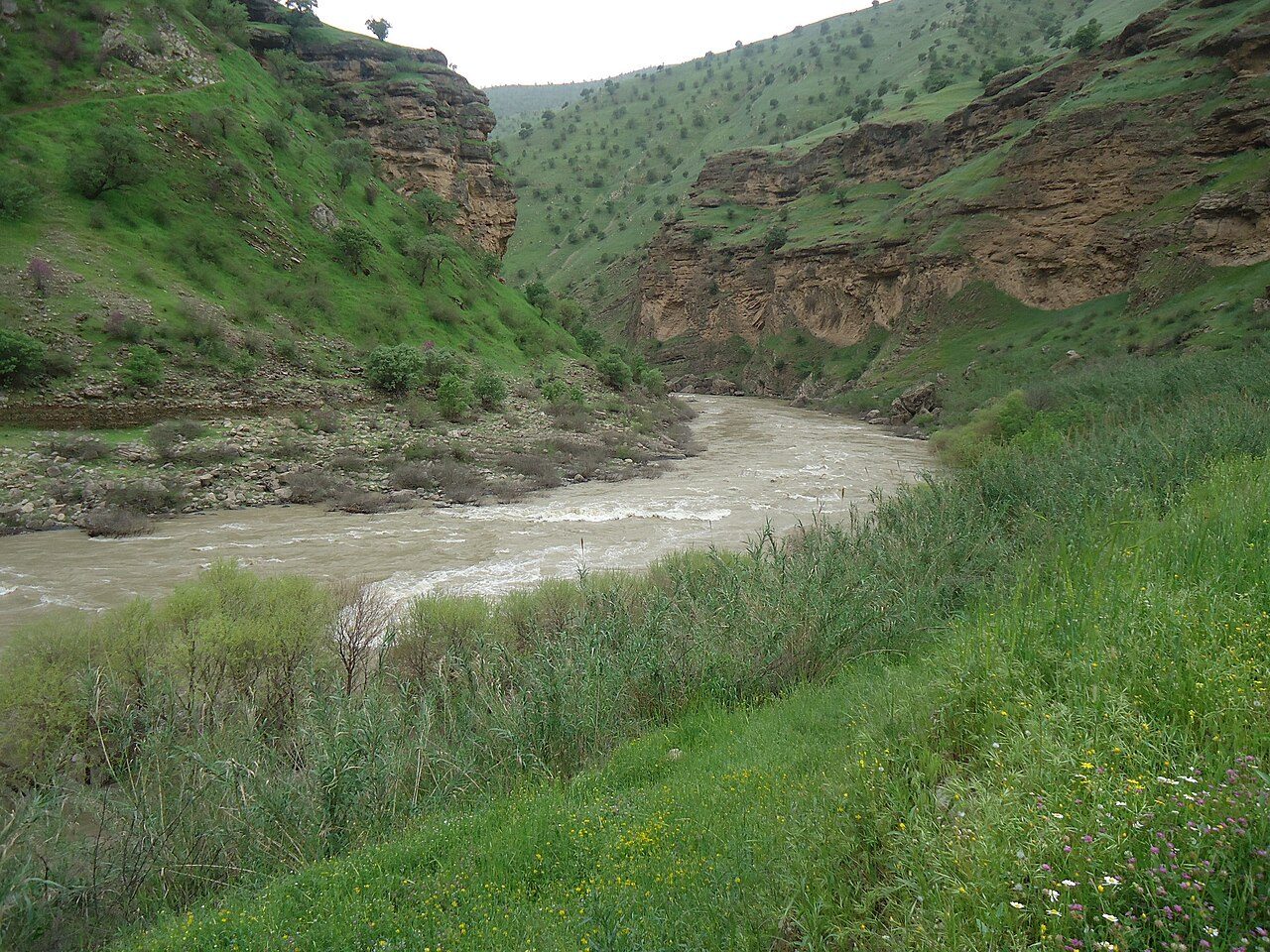
Sirwan District
Fertile river district stretching along the Sirwan River, famous for extensive pomegranate orchards and vegetable gardens.
 District Photo
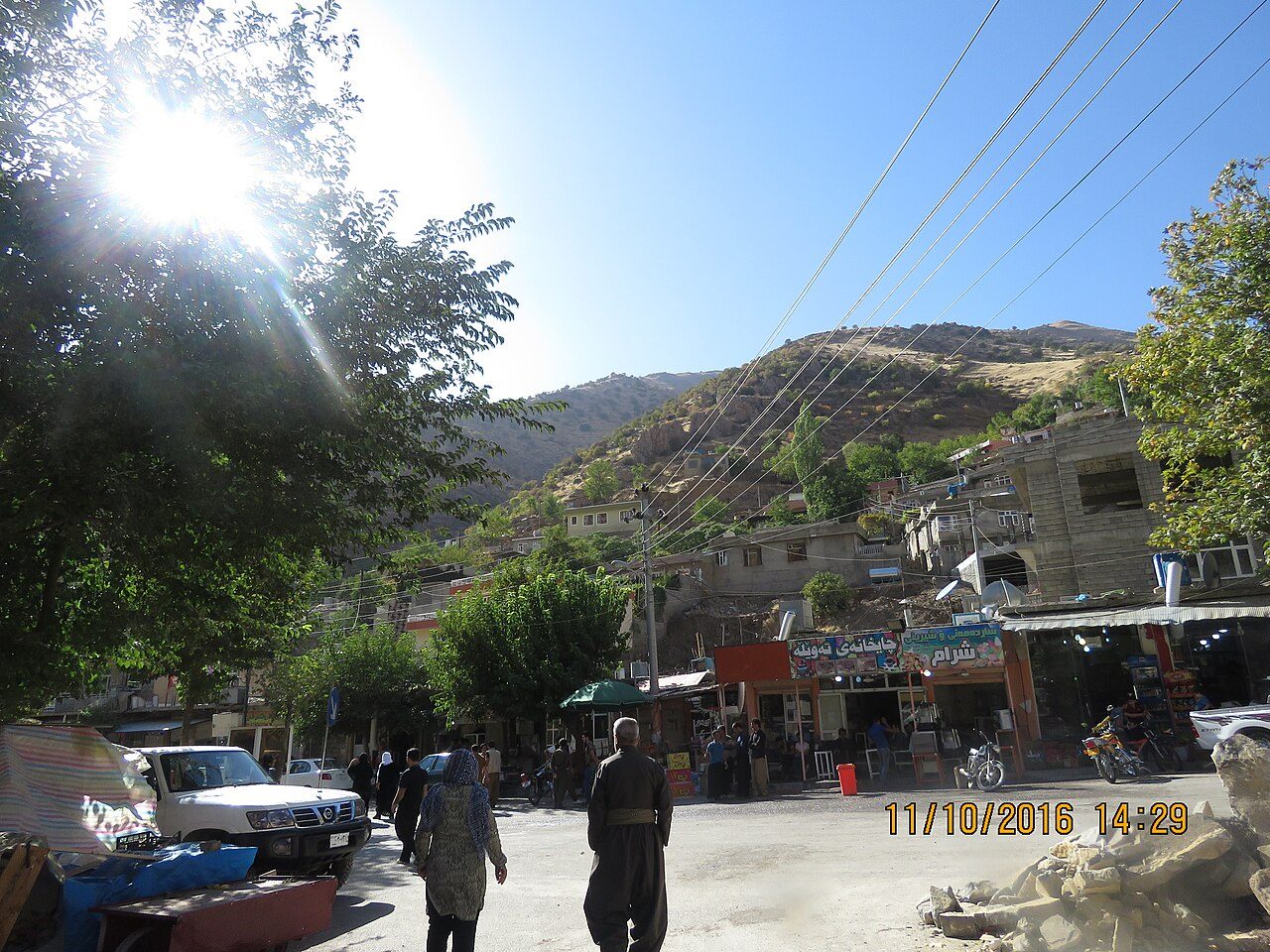
Tawella District
Alpine mountain town world-famous for the craftsmanship of "Klash" (traditional Kurdish handmade white footwear), fresh figs, and mountain streams.
Sub-towns & Localities ناحیەکانی هەڵەبجە
4 Sub-towns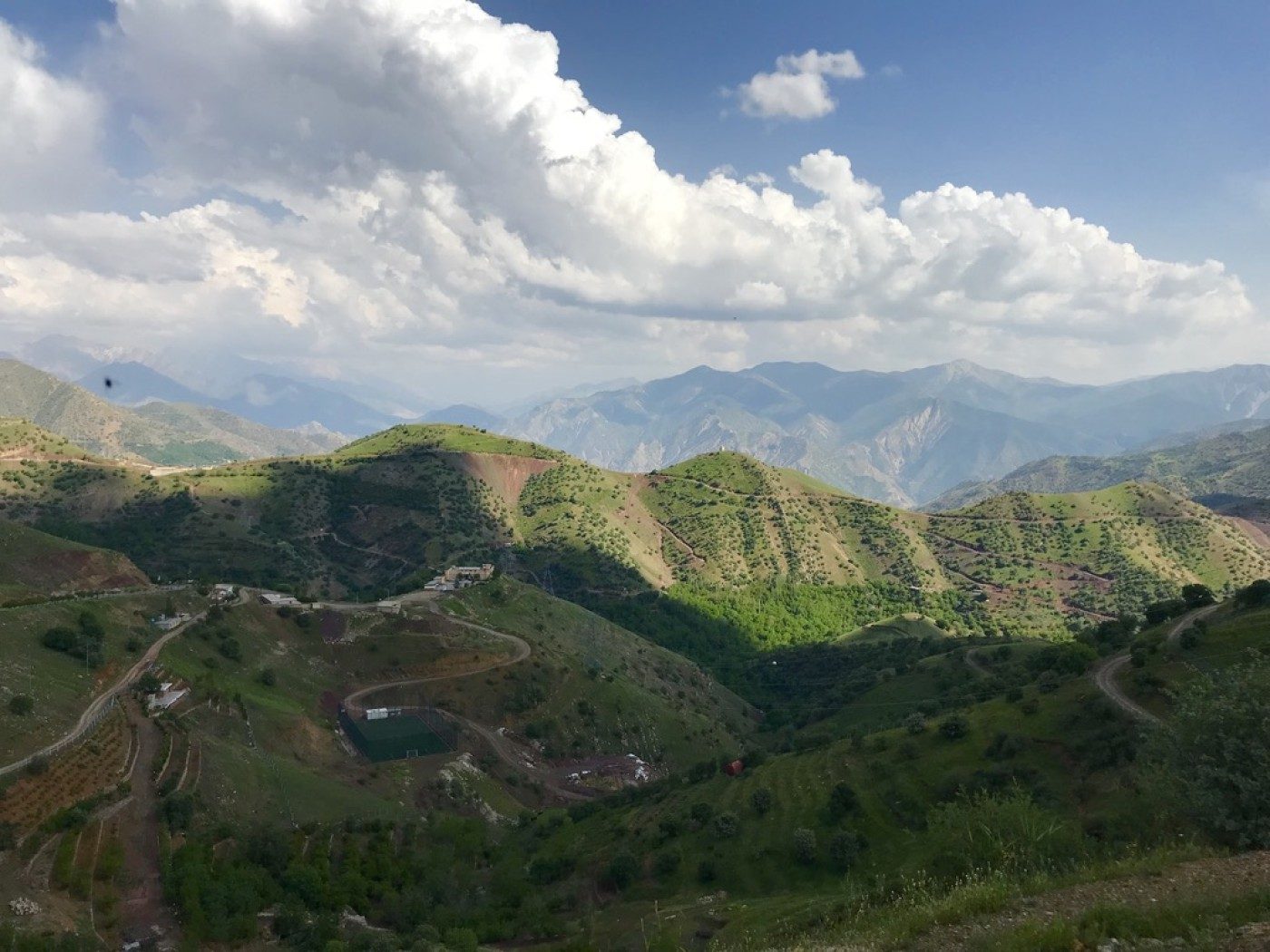 Sub-town Photo
Bamo
Pastoral subdistrict situated beneath Mount Bamo, known for olive groves, wild thyme, and sheep grazing.
Sub-town Photo
Byara
Ancient theological and spiritual town nestled among terraced gardens, producing fine walnuts and medicinal mountain herbs.
Sub-town Photo
Sirwan
Agricultural town in the Sirwan valley known for high-yield pomegranate presses and organic jams.
Sub-town Photo
Tawella
Renowned across Kurdistan as the capital of Klash shoemaking, nestled in a dramatic mountain bowl surrounded by walnut trees.
Featured Mountain Villages & Hamlets گوندەکانی هەڵەبجە
10 Villages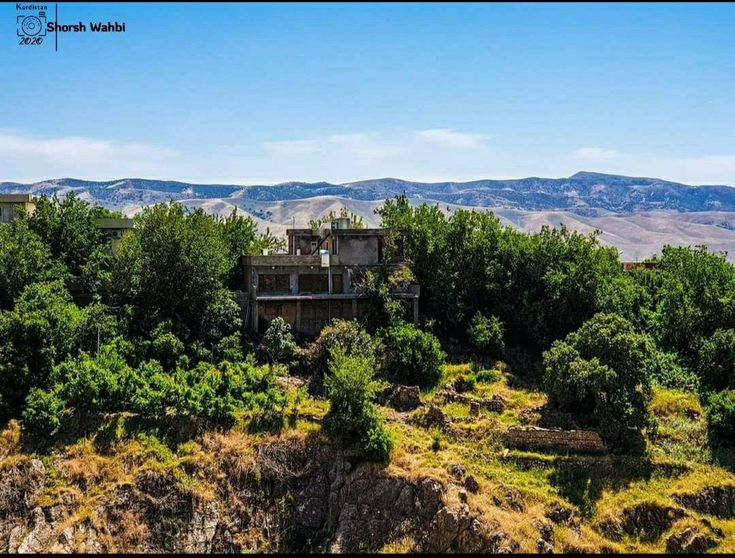 Village Photo
Ababayli Village
Historic village near Halabja celebrated as the home of famous Kurdish poets and writers, surrounded by cold spring waters and vineyards.
Literary Heritage, Spring Wells & Vineyards
Village Photo
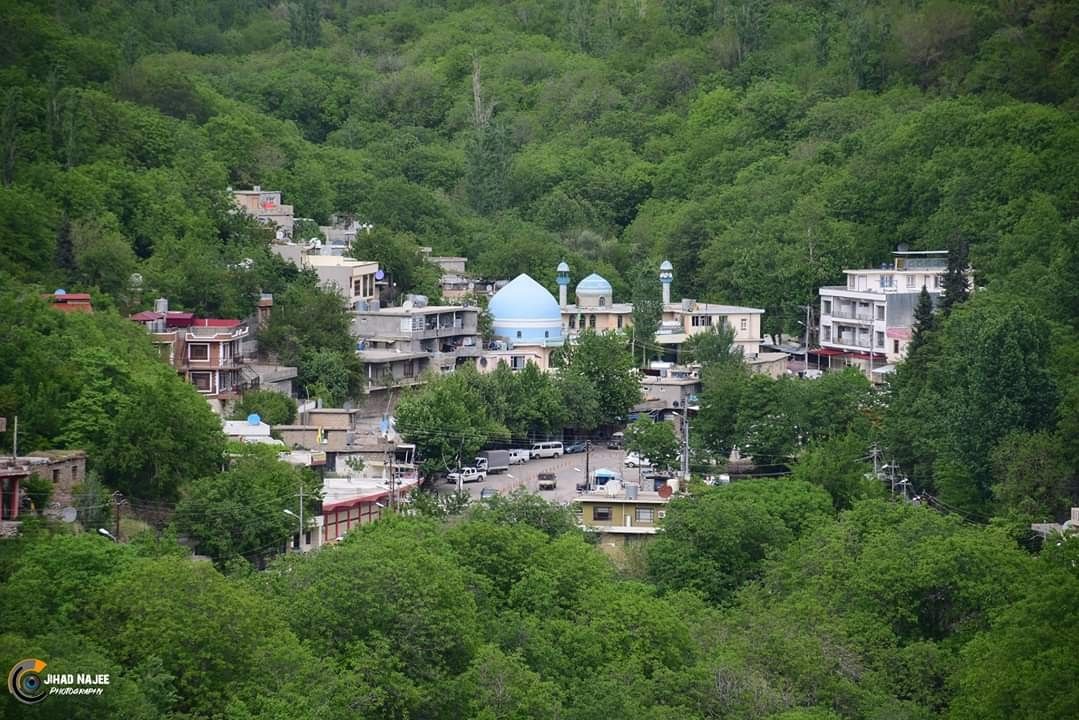
Ahmad Awa / Zalim Waterfall Village
One of Kurdistan's most breathtaking tourist sanctuaries, where crystal-cold mountain waters explode from the mountain caverns of Zalim, creating roaring waterfalls shaded by giant walnuts and pomegranate trees.
Zalim Mountain Waterfall, Walnut Groves & Riverside Dining
 Village Photo
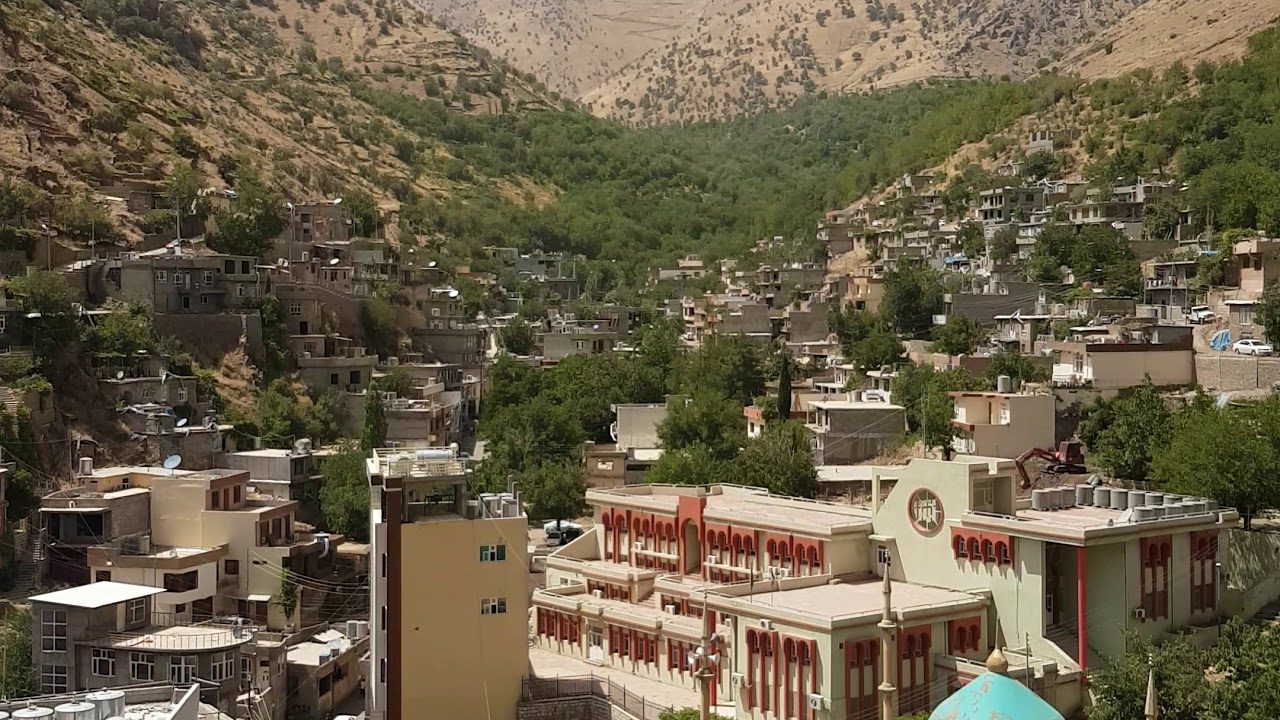
Balkha Village
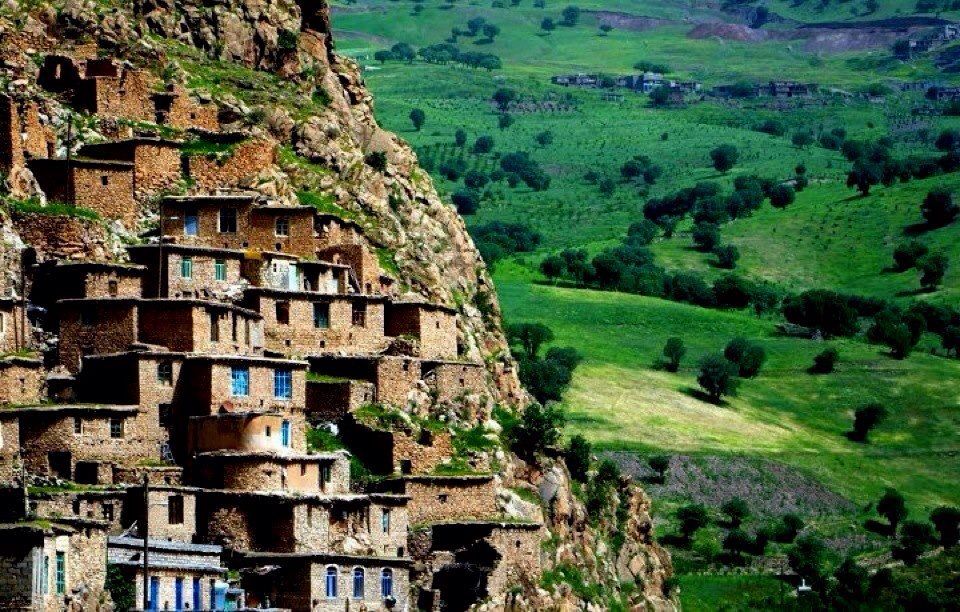
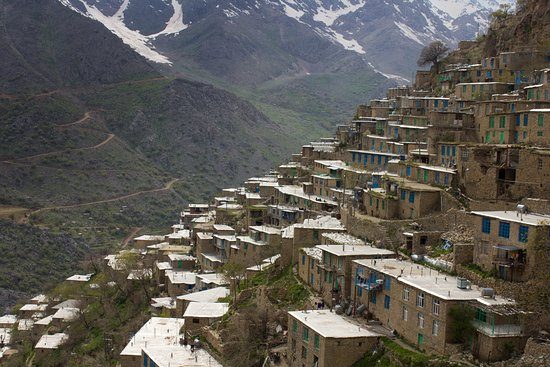
Ancient village where stone houses are built atop one another on 60-degree mountain slopes, with crystal spring channels running between the houses and ancient walnut groves.
Stone Terraces, Mountain Springs & Fresh Figs
 Village Photo
Bana Jare Village
High mountain village above Tawella overlooking the Iranian border ridge with crisp summer air and cold springs.
Mountain Walnuts & Kurdish Herbal Teas
Village Photo
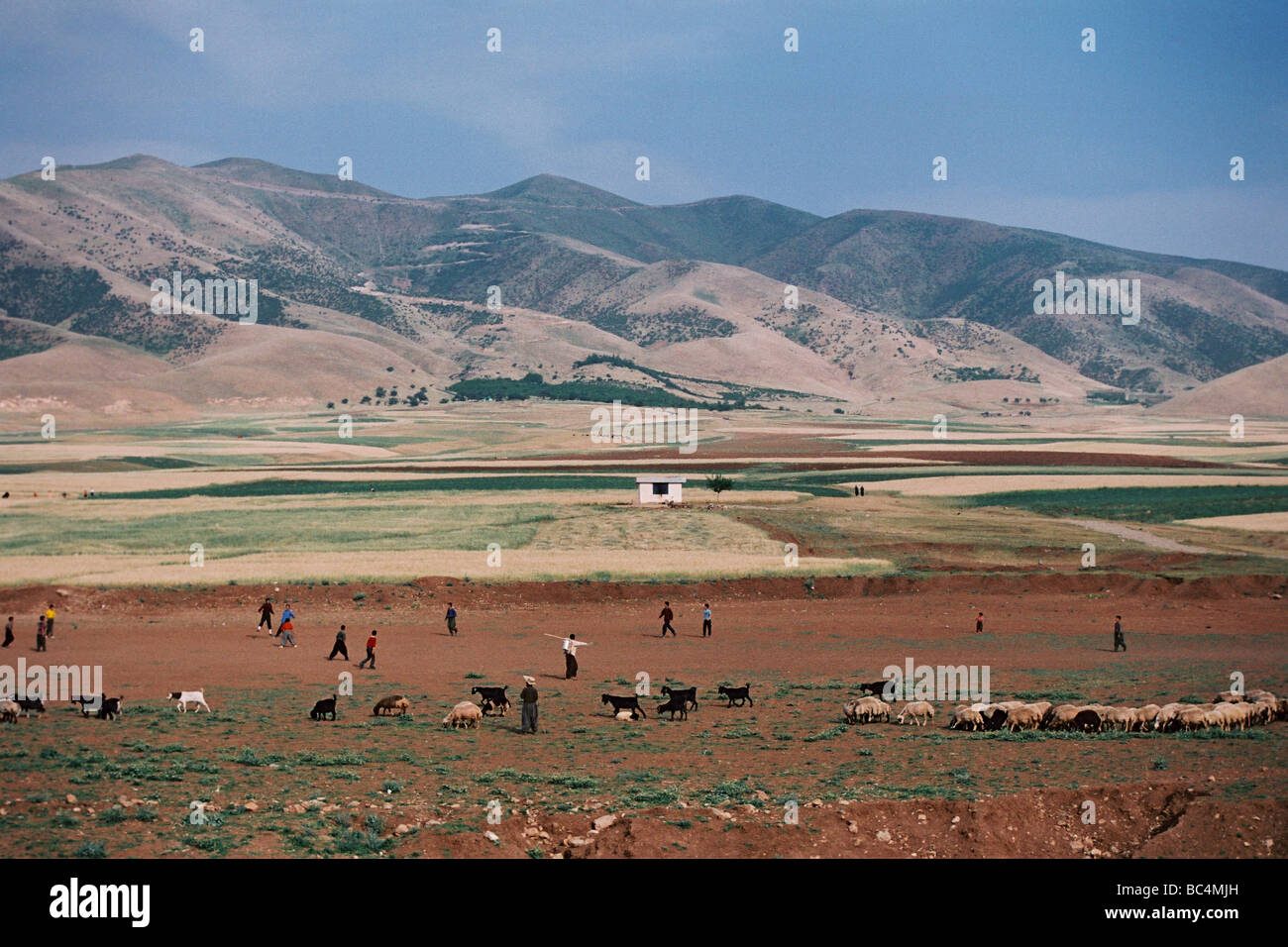
Chinar Village
Peaceful hamlet along the clear tributaries of the Sirwan river with vegetable gardens and fish ponds.
Fresh Spring Fish & Organic Vegetables
 Village Photo
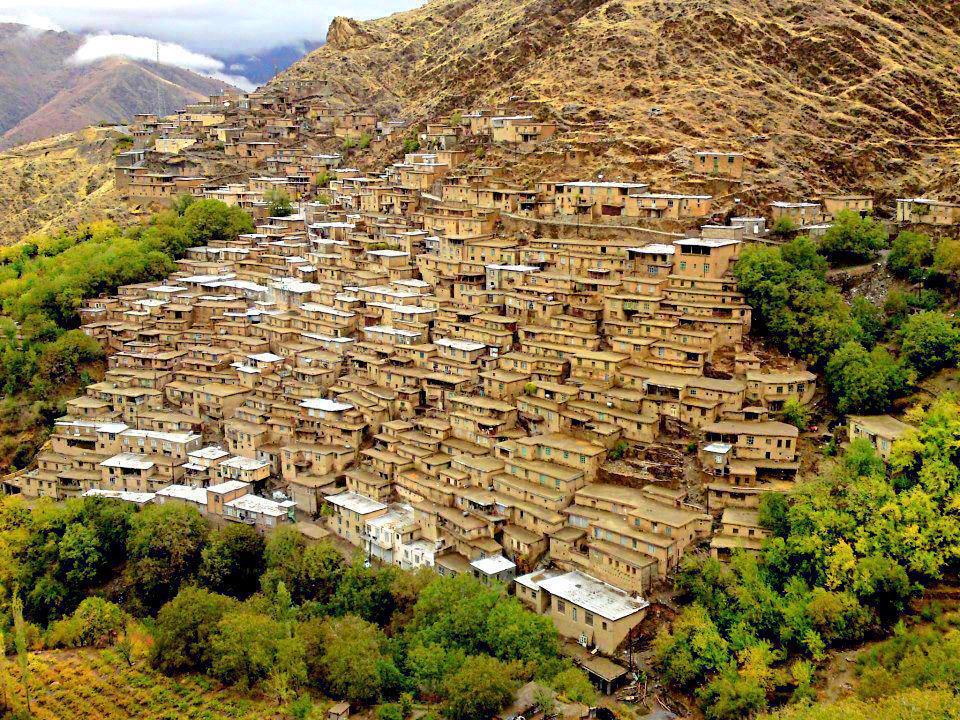
Dara Shesh Village
Picturesque village nestled under the shade of ancient plane trees with crystal streams and wild strawberry patches.
Ancient Plane Trees & Wild Mountain Berries
 Village Photo
Gulp Village
Idyllic Hawrami village celebrated for traditional Siya Chemane singing, stone-walled fruit orchards, and sweet wild figs.
Siya Chemane Kurdish Songs & Sweet Figs
 Village Photo
Hanakal Village
High-altitude village built directly into the sheer granite face of the Hawraman mountains with dramatic winding stone staircases.
Granite Rock Architecture & High Altitude Honey
 Village Photo
Sarkapkan Village
Stone-built hamlet famous for freshwater channels, walnut woodwork crafts, and Kurdish mountain hospitality.
Walnut Wood Carving & Pure Honey
Village Photo
Zmiyer Village
Famous as the source of Kurdistan's sweetest rubies — ruby-red seedless Halabja pomegranates and cold-pressed pomegranate molasses.
Halabja Ruby Pomegranates & Pure Molasses (Rube Henar)
Landmarks & Attractions
Must-see historical sites, mountain resorts, and natural sanctuaries in Halabja Governorate.
Halabja Peace & Martyrs Memorial
Monumental memorial complex dedicated to peace, international solidarity, and remembrance.
Ahmad Awa & Zalim Waterfall
Spectacular natural cascade rushing out of mountain caves into lush walnut forests.
UNESCO Hawraman Cultural Landscape
Ancient stepped stone villages clinging to the mountains with Naqshbandi Sufi heritage.
Tawella & Byara Klash Guilds
Centuries-old artisanal workshops crafting handmade traditional Kurdish white Klash shoes.
Halabja Pomegranate Festival
Annual autumn festival celebrating hundreds of varieties of native Kurdish pomegranates and figs.
Sirwan River Valley
Emerald green river winding through fertile valleys beneath the Shaho mountain peaks.
Universities & Colleges of Halabja
Prominent public universities, technical institutes, and academic centers located in this governorate.

Gastronomy of Halabja
Signature culinary specialties, mountain spices, and local delicacies native to this governorate.
Halabja Pomegranate Stew (Fesenjan / Henar)
Savory chicken or lamb simmered in freshly pressed Halabja pomegranate molasses and ground walnuts.
Hawraman Mountain Walnuts & Honey
Crisp native thin-shelled walnuts paired with pure wild mountain flower honey.
Klash-Makers Wild Fig Jam
Fragrant dark mountain fig preserves flavored with cardamom and sesame.
Interconnected Heritage of Halabja
Explore how Halabja connects to ancient history, traditional culture, architecture, and language in Kurdistan.
Other Governorates of Kurdistan
Continue your journey across all 5 major metropolitan and mountain regions.
No comments yet. Be the first member to start the discussion!