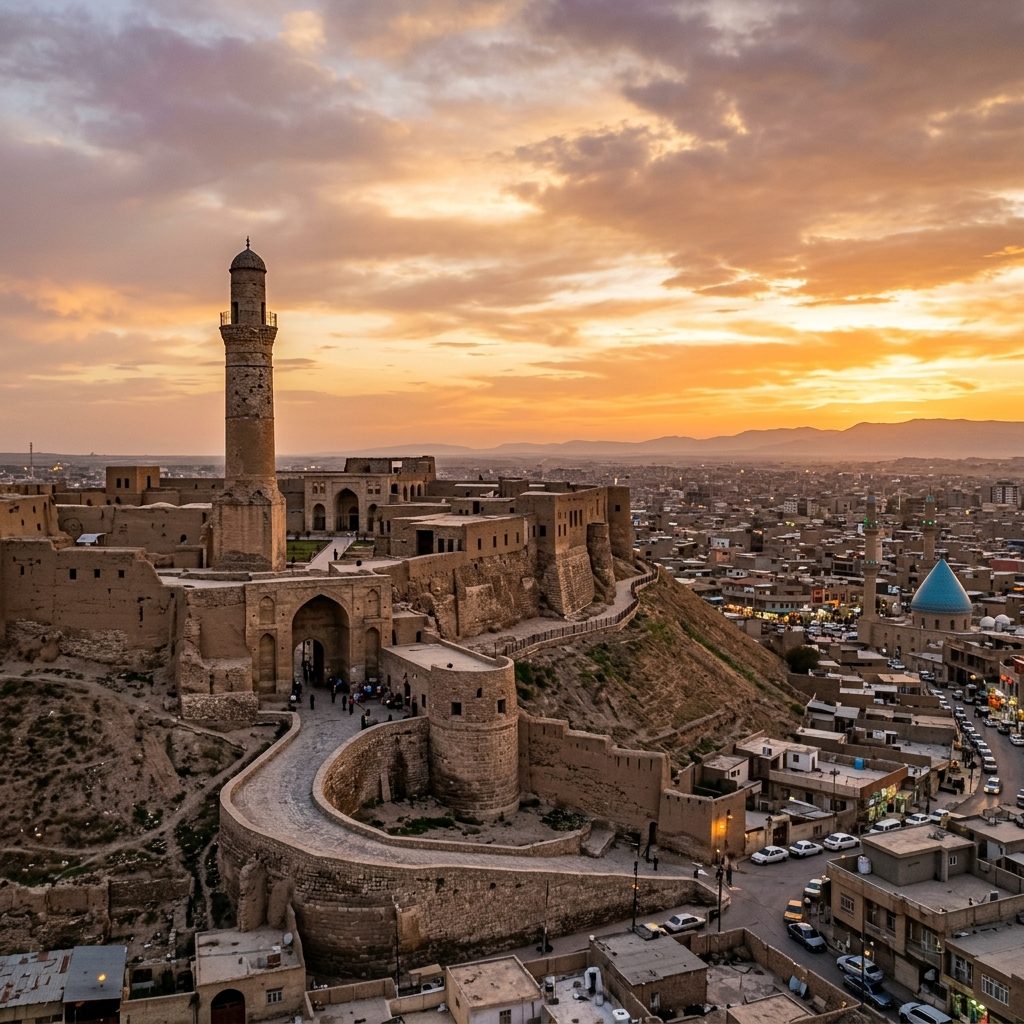
Kirkuk, Multi-Cultural Crossroads
A city of Kurds, Turkmen, Arabs and Assyrians living side by side for centuries.
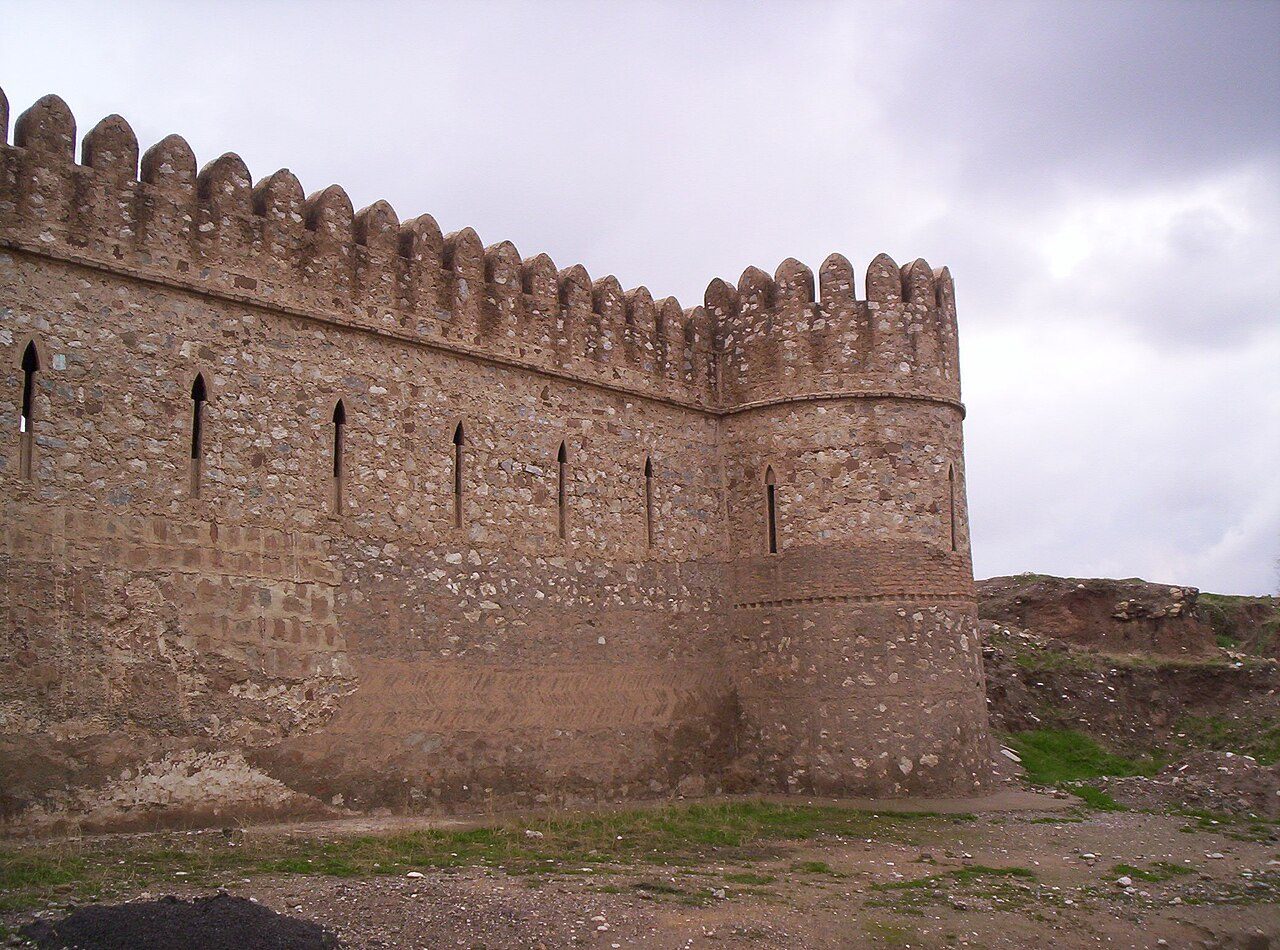
Kirkuk Citadel Area
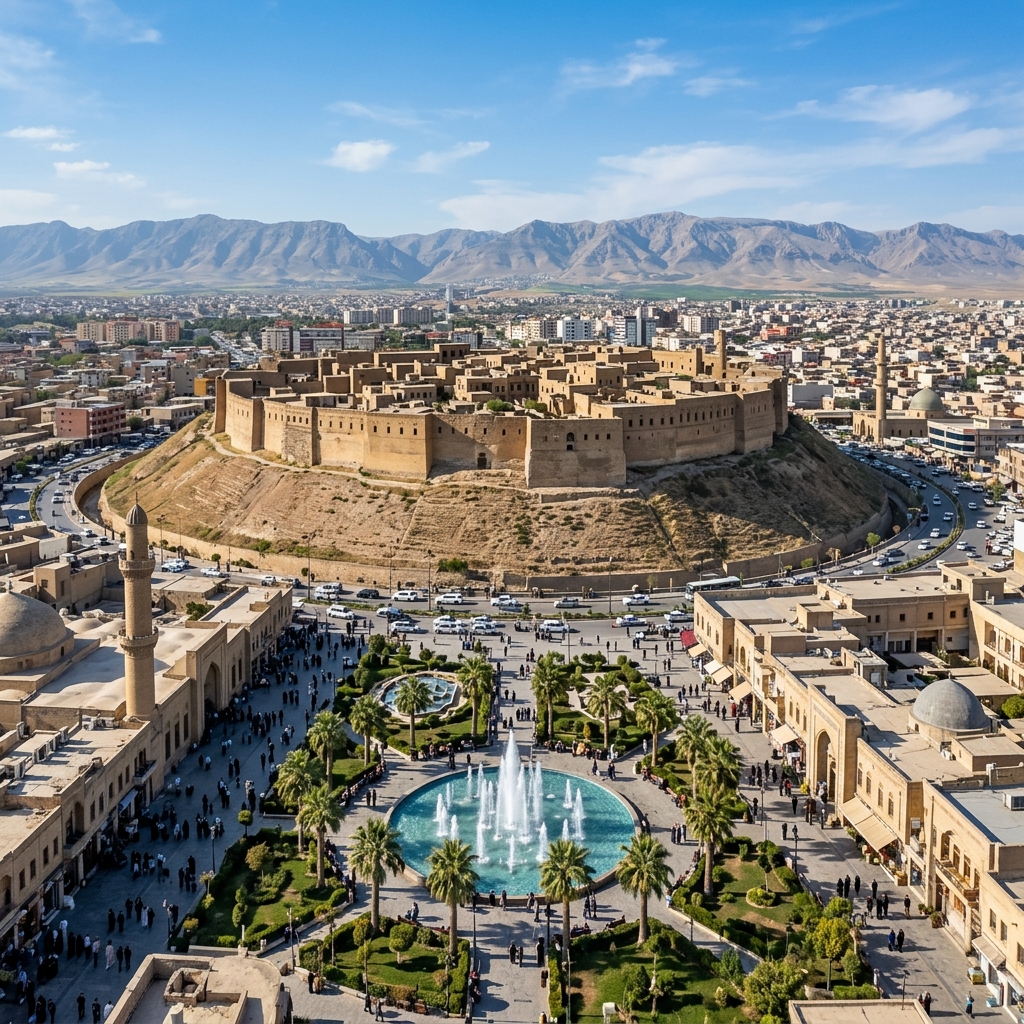
The historic centre around the ancient Qelay Kerkuk citadel above the Khasa River.
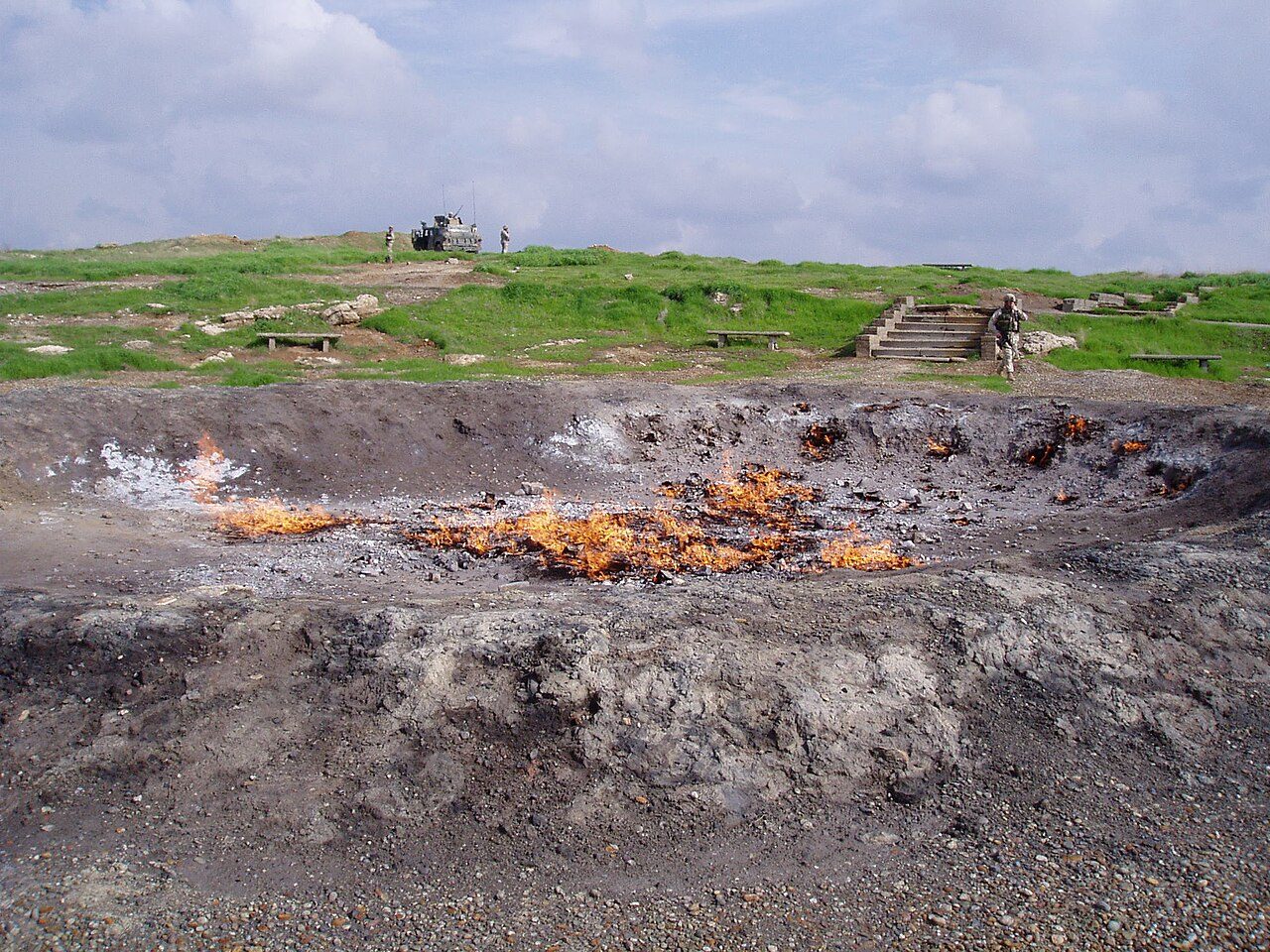
Baba Gurgur Eternal Fire
The legendary natural flames that have burned for thousands of years.
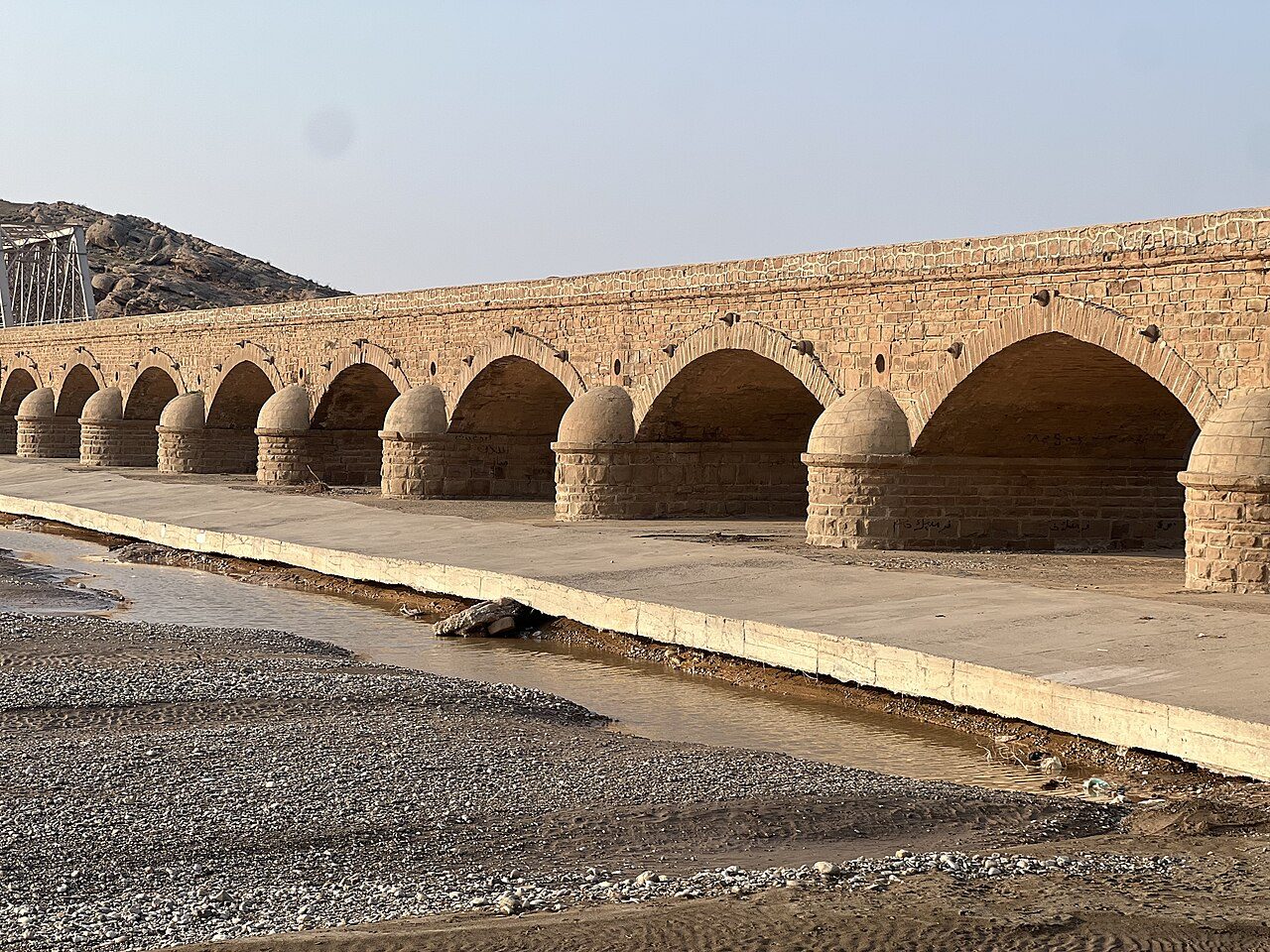
Daquq
A historic southern district on the old trade route.
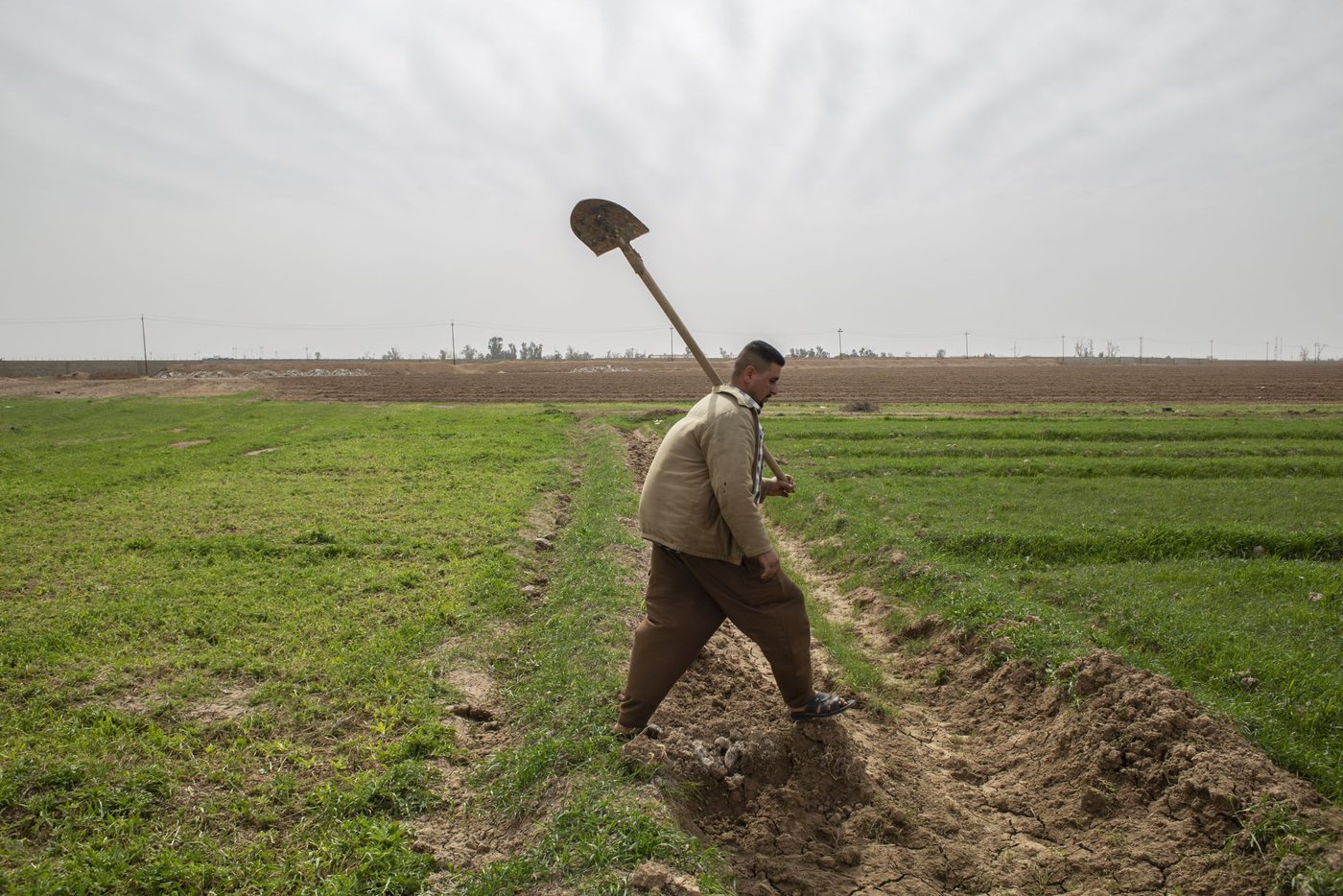
Hawija
A broad agricultural district west of Kirkuk.
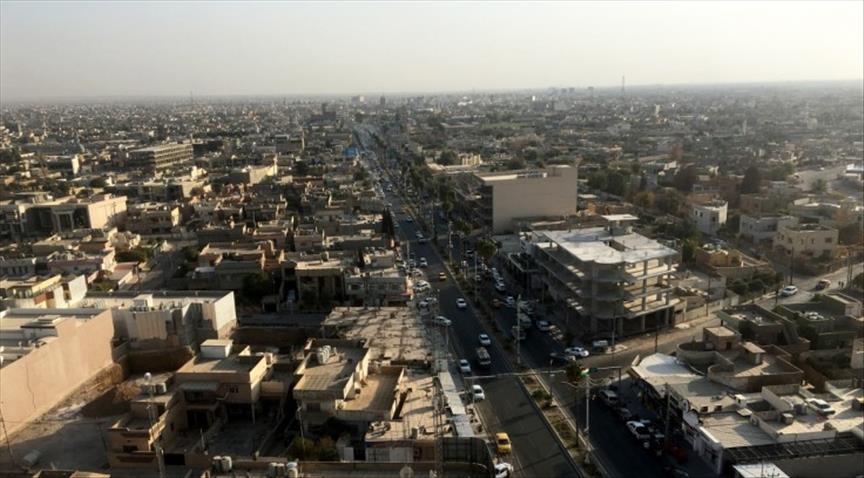
Taza Khurmatu
A town of mixed communities known for its orchards and old quarters.
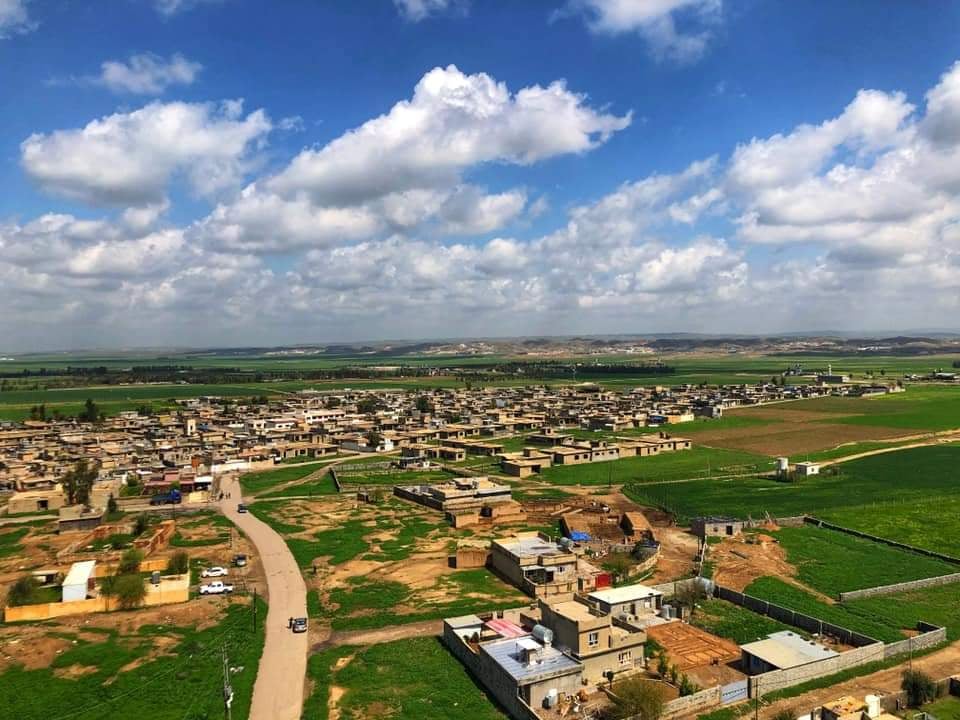
Laylan
A plain settlement with deep historical roots near Kirkuk.
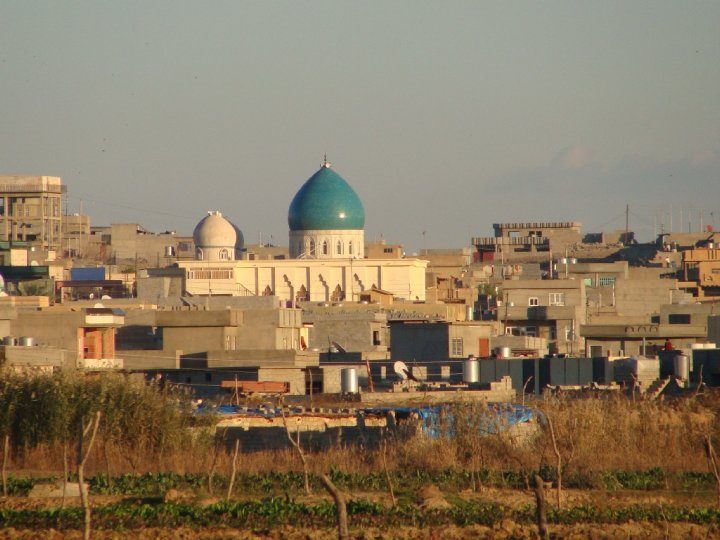
Altun Kupri
The Golden Bridge area on the Little Zab river.
Kirkuk Governorate
The Ancient Citadel, Multi-Cultural Crossroads & Eternal Fire
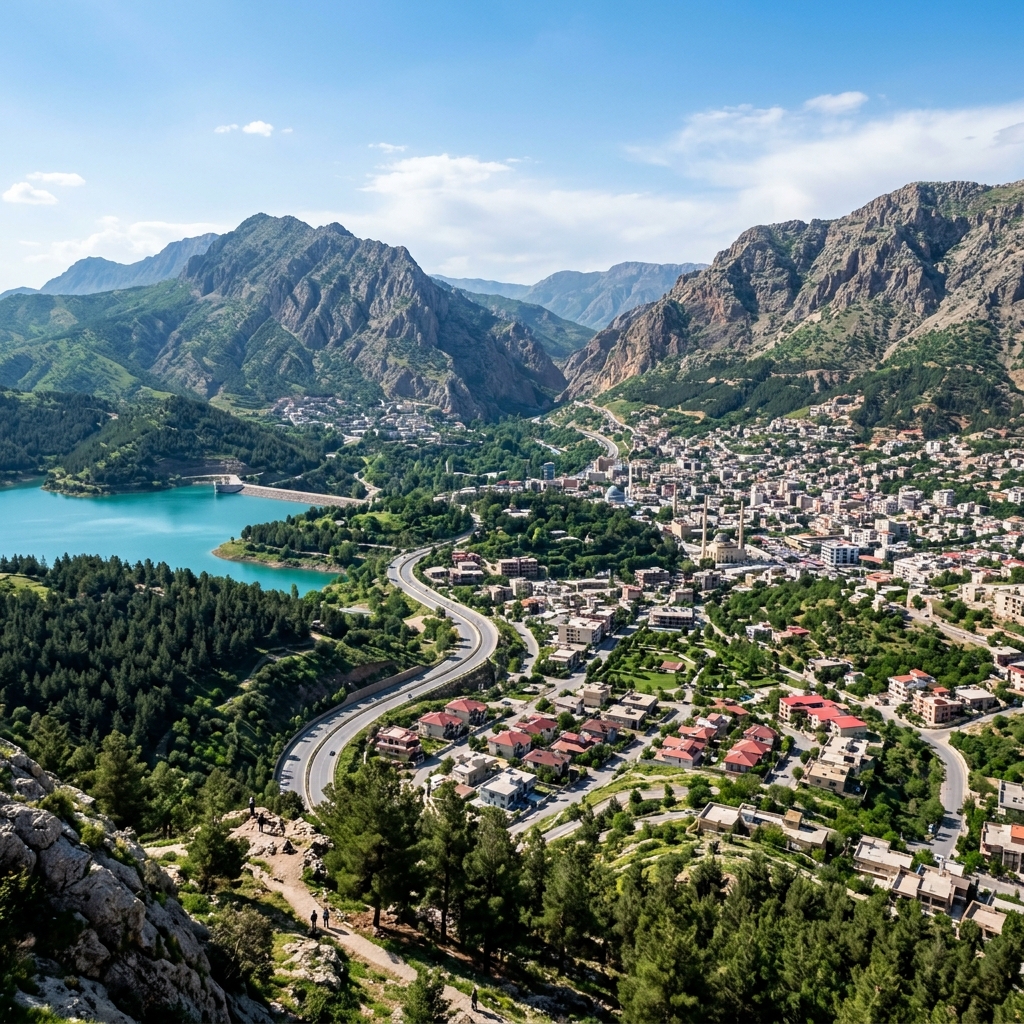
Kirkuk (Kerkûk) is one of the most ancient historical cities in Mesopotamia, having been continuously inhabited for over 4,000 years (ancient Arrapha). Crowned by the massive Kirkuk Citadel (Qelay Kerkûk) overlooking the seasonal Khasa River, the city is also home to the legendary "Eternal Fire" of Baba Gurgur, which has burned naturally for over 2,500 years. Kirkuk stands as a cultural mosaic where Kurds, Turkmen, Arabs, and Assyrians have lived side-by-side for centuries.
History & Heritage of Kirkuk
Explore the unbroken chronological lineage, ancient civilizations, medieval emirates, and modern renaissance of Kirkuk.
Gutian, Hurrian & Babylonian Civilizations, Crowned by Neo-Assyrian Fortifications
Derived from ancient Hurrian/Akkadian 'Arrapha' ('Border Fortress') and later Aramaic/Syriac 'Karkha d'Beth Slokh' ('Citadel of the House of Seleucid'), evolving into the modern name 'Kirkuk'.
Topkapı Gate, Seven Sisters Gate (Yedi Kızlar), Halwayi Gate, and the Jewish Quarter Portal.
Over 5,000 cuneiform clay tablets excavated at Yorghan Tepe (Nuzi); Neo-Assyrian boundary stones (kudurru); Celayirid commemorative inscription on the Blue Dome (1361 CE).
Arrapha: The 4,000-Year Citadel & The Hurrian Empire
Kirkuk originated in the Bronze Age as 'Arrapha' (Arrapkha), a powerhouse city-state of the ancient Hurrians and later a major province of the Mitanni and Neo-Assyrian empires. The historic Kirkuk Citadel (*Qelay Kerkûk*) stands atop a massive 40-meter-high artificial archaeological tell that has been fortified continuously for over four millennia. Just southwest of Kirkuk lies Yorghan Tepe, site of the ancient Hurrian city of Nuzi, where archaeologists excavated over 5,000 cuneiform clay tablets providing the world's most comprehensive legal, familial, and social portrait of the Hurrian civilization.
The Nuzi Cuneiform Tablets (Harvard Semitic Museum, Oriental Institute Chicago, and Iraq Museum collections); monumental defensive brick substructures of Kirkuk Citadel mound; Middle Assyrian administrative contracts identifying the governor of Arrapha.
Baba Gurgur: The 2,500-Year Eternal Fire of Antiquity
Located just north of the city lies Baba Gurgur ('Father of Fires'), a natural gas seep whose fiery vents have burned day and night without interruption for more than 2,500 years. Ancient classical historians, including Herodotus and Greek biographer Plutarch, chronicled how Alexander the Great visited the site in 331 BCE and was mesmerized by a continuous lake of fire burning upon the earth. Historically venerated by local pregnant women who prayed for healthy male offspring, Baba Gurgur is also celebrated in biblical tradition as the 'fiery furnace' of King Nebuchadnezzar described in the Book of Daniel.
Historical account of Plutarch (*Life of Alexander*, Chapter 35) describing the boiling naphtha fire near Arbela; biblical accounts in the Book of Daniel (3:19–25); the historic Baba Gurgur Well No. 1 strike (October 14, 1927), which blew a 140-foot gusher and launched the modern Middle Eastern oil industry.
The Tomb of Daniel, Green Mosque & The 365-Shop Qaysari
Kirkuk Citadel served as a shining beacon of inter-religious coexistence. Atop the ancient tell stood the revered Shrine of the Prophet Daniel (Nebi Danyal), the 5th-century Church of the Red Virgin (Mary the Mother of God), Chaldean and Syriac bishoprics, and historic Jewish quarters. At the foot of the Citadel along the Khasa riverbed, master craftsmen erected the great Covered Qaysari Bazaar in 1855, featuring 365 vaulted domed shops (symbolizing the days of the year) divided across 24 alleys (representing the hours of the day), where Kurdish, Turkmen, Arab, and Jewish merchants traded.
The Shrine and Mosque of Nebi Danyal on Kirkuk Citadel; 5th-century architectural foundations of the Church of Um al-Ahzan (Mother of Sorrows); the surviving 365-shop covered vaulted brickwork of the Kirkuk Qaysari Bazaar; Ottoman municipal title deeds (*Tapu*) from the Sanjak of Kirkuk.
The Black Gold Gusher & The Satirical Wit of Raza Talabani
At 3:00 AM on October 14, 1927, petroleum exploration in the Middle East was forever altered when the historic Baba Gurgur Well No. 1 roared to life, spewing over 95,000 barrels of crude oil per day into the sky. Kirkuk instantly became the energy engine of the modern world. Concurrently, Kirkuk nurtured some of Kurdistan's greatest literary and poetic minds, foremost among them the legendary satirical poet Sheikh Raza Talabani (1835–1910), whose incisive verses in Kurdish, Persian, Arabic, and Turkish skewered tyrants and celebrated the Kurdish identity of Kirkuk and the Babans.
Original Iraq Petroleum Company (IPC) operational records and geological drilling logs for Baba Gurgur Well No. 1; the handwritten Divan of Sheikh Raza Talabani; historic railway terminus archives connecting Kirkuk to Baghdad and Mediterranean ports.
The Unbroken Identity: Heart of Kurdistan & Coexistence
Throughout the 20th century, Kirkuk stood as the central pillar of Kurdish national aspirations, famously designated by General Mustafa Barzani as 'The Heart of Kurdistan'. Despite experiencing decades of systematic forced displacement and demographic engineering (*Ta'rib*) under the Ba'athist regime, the city's Kurdish population remained resilient. In 1991, Kirkuk was liberated during the Raperîn; in 2005, its status was enshrined in Article 140 of the Permanent Iraqi Constitution; and between 2014 and 2017, the Peshmerga forces successfully defended Kirkuk and its multi-ethnic citizens from ISIS terror.
Article 140 of the Iraqi Constitution (2005); official property restitution archives of the Commission for the Resolution of Real Property Disputes (CRRPD); UNAMI reports on demographic normalization and human rights restitution in Kirkuk.
Famous People & Historical Icons of Kirkuk
Discover the visionaries, statesmen, classic poets, and philosophers whose lives, ideas, and achievements defined Kirkuk.
 Antiquity (c. 6th Century BCE)
Prophet Daniel & Hananiah
Revered biblical and Quranic figure whose historic shrine and green domed minaret inside the ancient Kirkuk Citadel have served for millennia as a sacred focal point of peaceful coexistence for Muslims, Christians, and Jews alike.
Justice and devotion are like eternal springs; empires crumble into dust, but the truth of the righteous shall endure across generations.
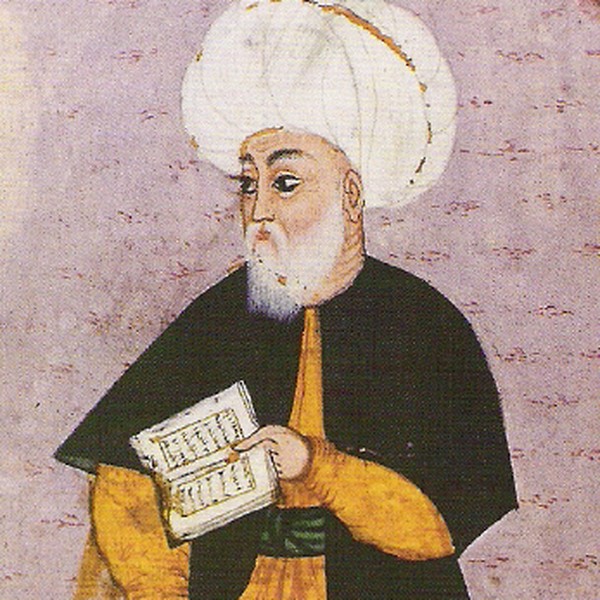 c. 1494–1556 CE
Fuzûlî (Muhammad ibn Suleyman)
One of the greatest classical poets of the Middle East; composed sublime romantic epics, theological treatises, and divans in Azerbaijani Turkish, Persian, and Arabic; revered across Kirkuk for linguistic mastery and tragic love poetry.
Love is the eternal fire that consumes all pretension; without passion, wisdom remains but a cold candle unlit.
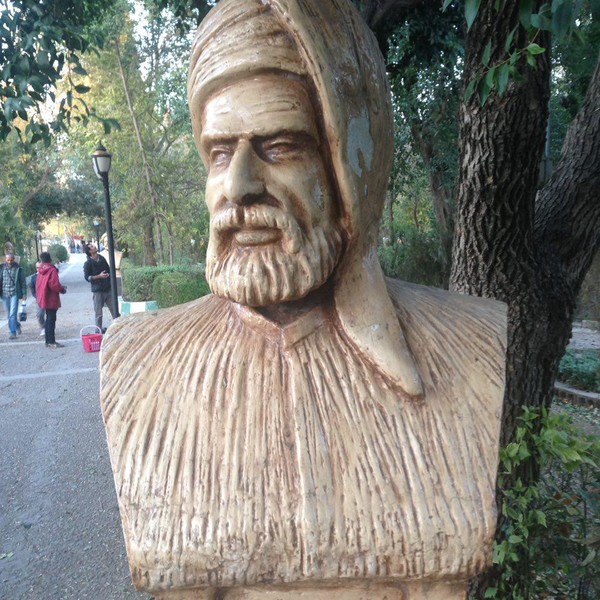 1835–1910 CE
Sheikh Rıza Talabani
Legendary master of biting political satire, philosophical ghazals, and fierce elegies; composed effortlessly in Kurdish, Persian, Arabic, and Turkish, defending popular justice against tyrannical Ottoman governors.
The tongue of the fearless poet cuts deeper than the scimitar of the sultan; power rots, but righteous words outlive the tyrant.
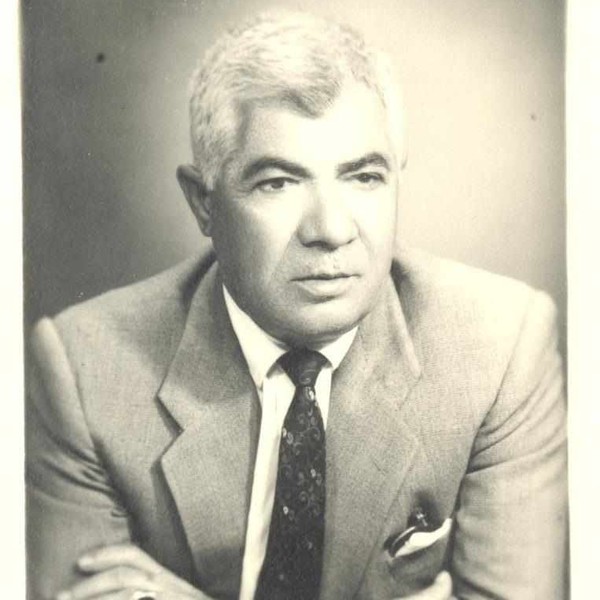 1904–1981 CE
Ali Mardan
Pioneering master of classical Kurdish Maqam; with a profound vocal range, collected, preserved, and recorded over 800 authentic folklore melodies and orchestral suites on Radio Baghdad, rescuing the melodic heritage of Kurdistan.
The Maqam is not merely song; it is the ancestral voice of the mountains, carrying our sorrows and triumphs across the rivers of time.
Historic Quarters & Neighborhoods of Kirkuk
Explore the ancient residential quarters, artisan guilds, and historic market centers that preserve the architectural memory of Kirkuk.
Citadel Quarter (Qal'a)
The 130-foot ancient earthen mound, featuring historic Ottoman timber-balconied Shanashil mansions, ancient churches, and Daniel’s shrine.
Musalla Quarter
Distinguished historic residential quarter north of the Khasa River with imposing stone-carved entrance portals and gardens.
Qaysari & Meydan Quarter
The commercial nucleus of Kirkuk hosting the monumental 365-shop covered vaulted brick bazaar built in 1855.
Tisin Quarter
Ancient southern quarter historically renowned for natural sweet-water springs, date palms, and pastoral tranquility.
The Eternal Flame of Baba Gurgur & King Nimrod
Folklore records that the continuously burning natural fires of Baba Gurgur in Kirkuk have illuminated the desert for over 2,500 years. According to legend, this was the 'fiery furnace' of the Book of Daniel. For centuries, pregnant women and travelers would visit Baba Gurgur, making vows and honoring the eternal flame as a mystical sign of protection and fertility.
The Multicultural Energy Capital
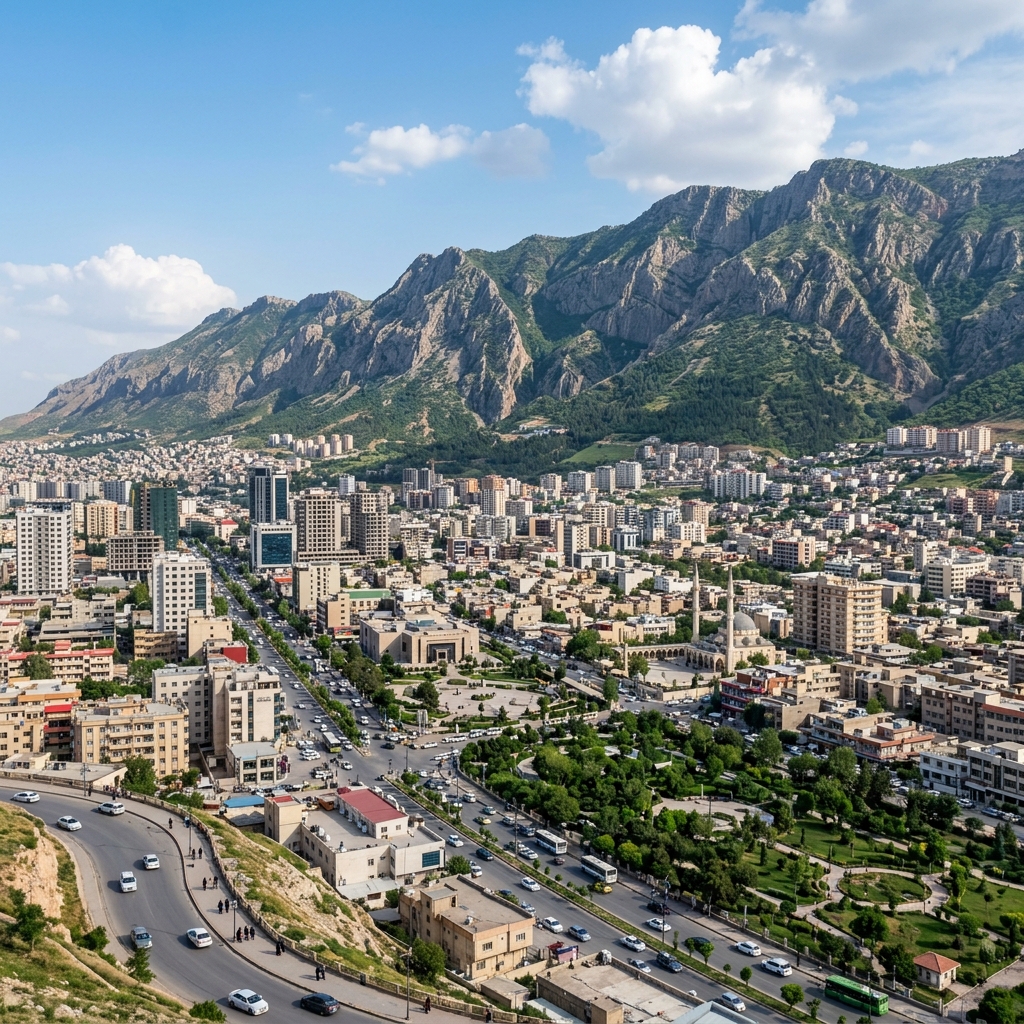
Today, Kirkuk remains a vital cultural and economic crucible where Kurds, Turkmen, Arabs, and Assyrian/Chaldean Christians live side-by-side. The city is a world-class center of petroleum production, home to the expanding University of Kirkuk, modern bridge networks across the seasonal Khasa river, and bustling multi-ethnic markets.
Civic Offices, Universities & Services in Kirkuk
Essential directory of governmental directorates, municipal councils (Cancel), flagship universities, tertiary hospitals, banks, and academic institutions in Kirkuk.
Administrative seat coordinating municipal public services, community co-existence, energy infrastructure, and district affairs.
Comprehensive regional university offering accredited colleges of Medicine, Petroleum Engineering, Science, Law, and Education.
The governorate's main referral hospital equipped with trauma surgery, intensive care, pediatrics, and diagnostic laboratories.
Providing international remittance, corporate letters of credit, and electronic payment solutions in Kirkuk.
Emergency & Civic Hotlines
24/7 emergency response and civic services across Kirkuk
Administrative Directory & Localities of Kirkuk
Comprehensive interactive directory of municipal districts (Qaza), vibrant sub-towns (Nahiya), and picturesque mountain villages across Kirkuk Governorate.
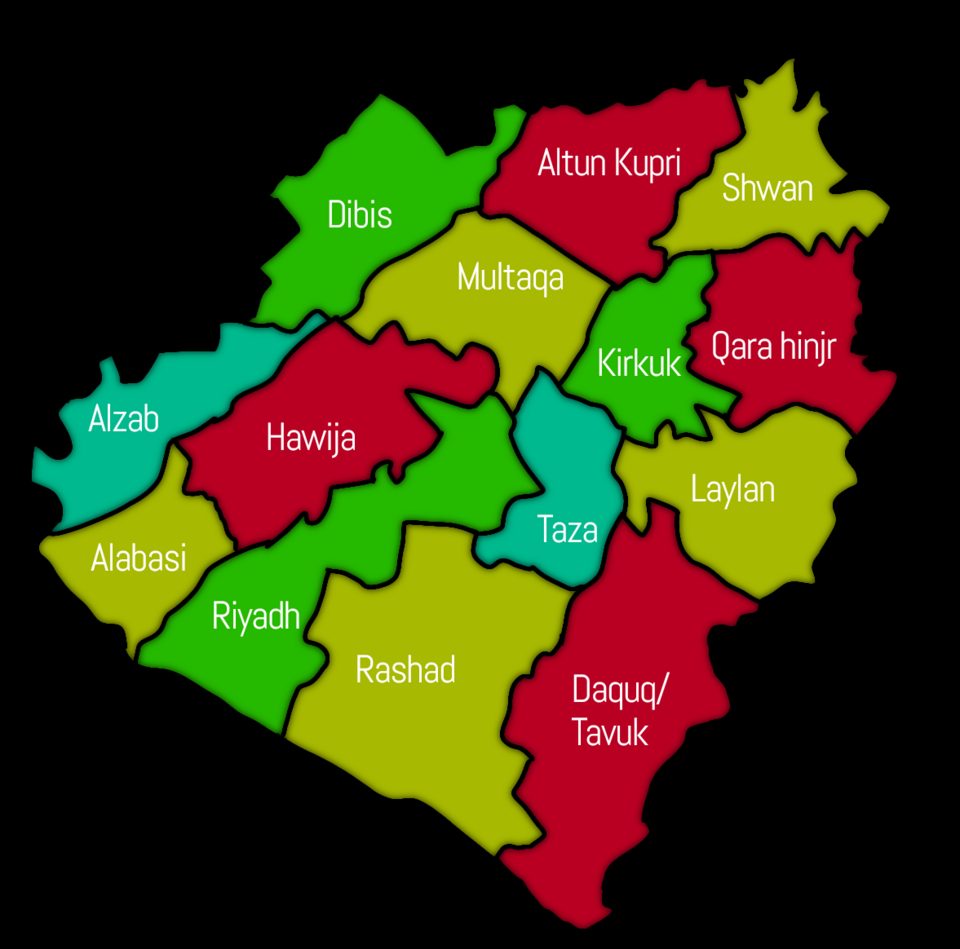
Districts & Metropolitan Areas قەزاکانی کەرکووک
4 Districts
District Photo
Daquq District
Historic southern district famous for the ancient Ottoman stone bridge of Chay Daquq, the sacred shrine of Sultan Saqi, and date palm groves.
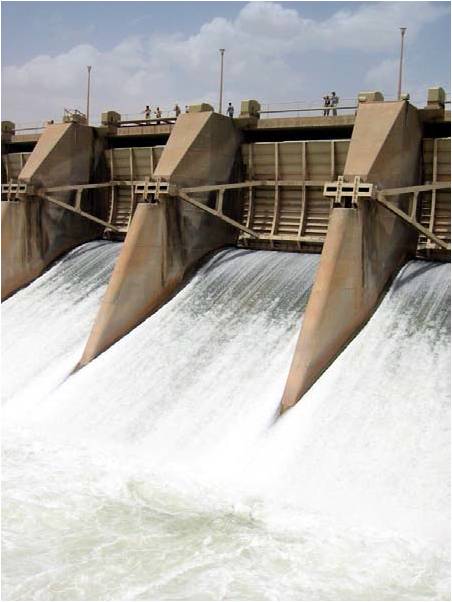 District Photo
Dubiz (Dibis) District
Northwestern district along the Lesser Zab River, home to the Dibis Dam reservoir, hydroelectric power, and agricultural riverlands.
District Photo
Hawija District
Vast southwestern agricultural basin fed by the Hawija Irrigation Project, producing wheat, barley, and cotton.
District Photo
Kirkuk Central District
The historic and commercial heart of the governorate, housing the ancient Citadel, Qaysari Covered Market, Daniel's Tomb, and Baba Gurgur.
Sub-towns & Localities ناحیەکانی کەرکووک
7 Sub-towns
Sub-town Photo
Altun Kupri (Pirde)
Historic island town nestled on the Lesser Zab River halfway between Erbil and Kirkuk, famous for stone bridges and river fish.
Sub-town Photo
Laylan
Agricultural subdistrict southeast of Kirkuk, famous for archaeological mounds dating back to the Sumerian and Hurrian eras.
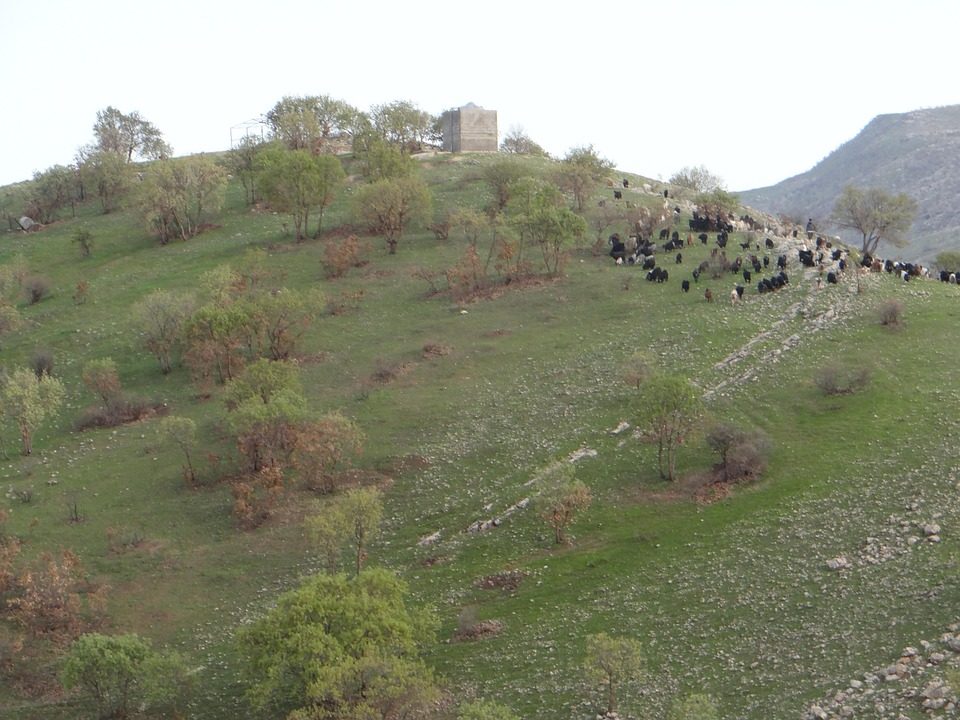 Sub-town Photo
Qara Hanjir
Picturesque sub-town along the highway connecting Kirkuk to Sulaymani, famous for fig orchards and mountain spring waters.
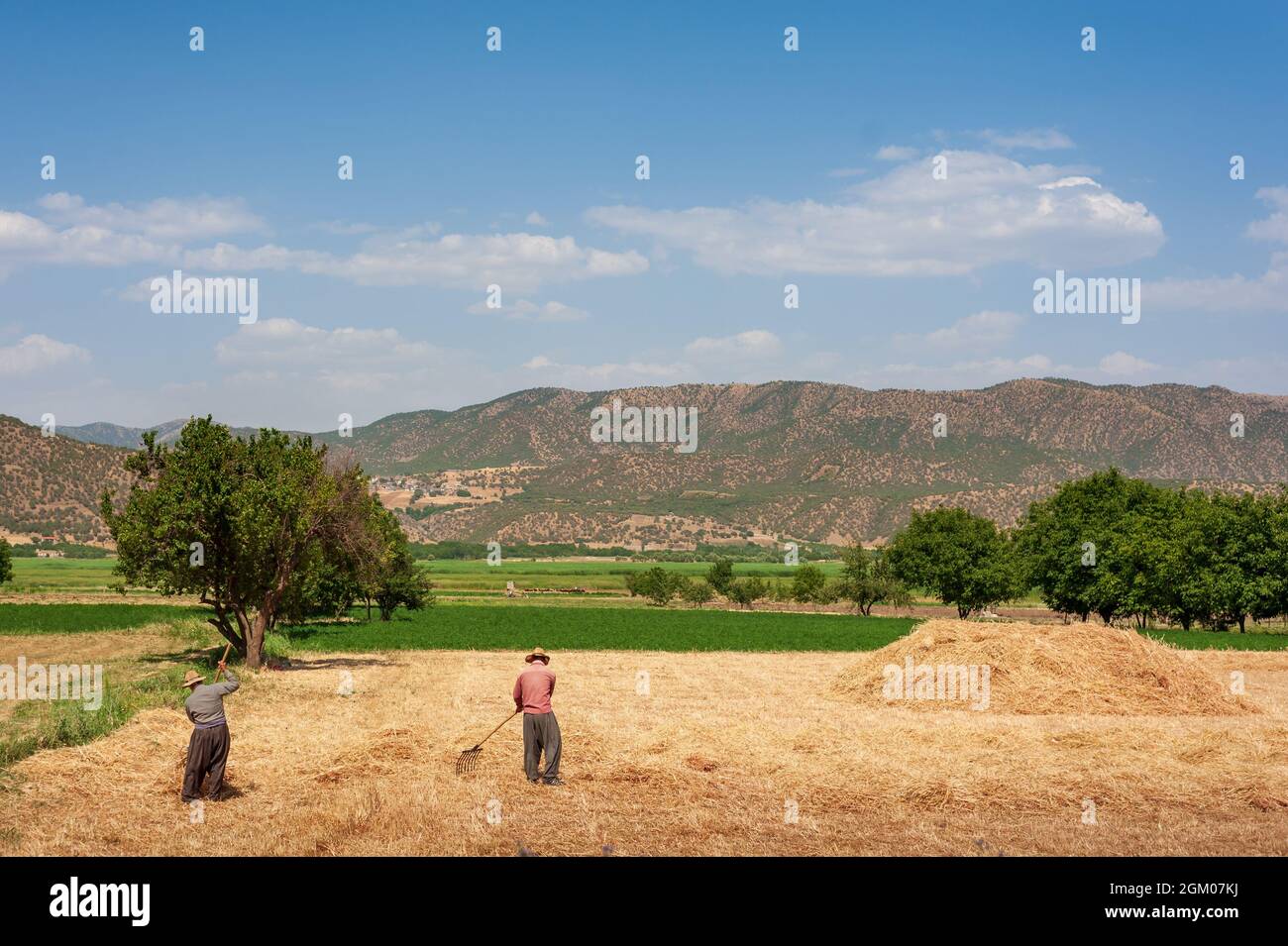 Sub-town Photo
Sargaran
Pastoral Kurdish subdistrict in northern Kirkuk with rolling hills, rich wheat cultivation, and traditional sheep herding.
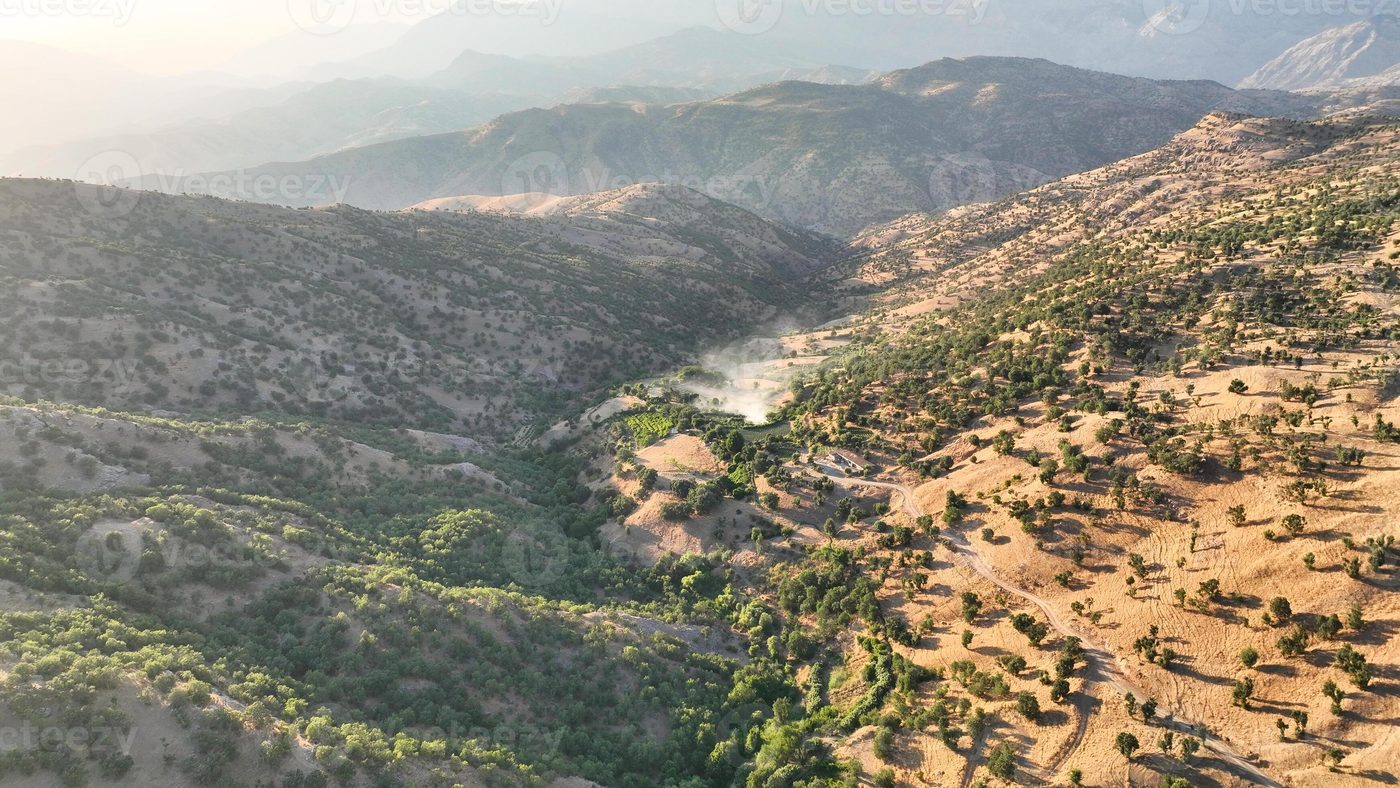 Sub-town Photo
Shwan
Hilly pastoral subdistrict northeast of Kirkuk, famed for Kurdish poetry, sheep farming, wild herbs, and rolling green springtime hills.
Sub-town Photo
Taza Khurmatu
Southern sub-town renowned for lush date palm orchards, market gardens, and clay pottery.
 Sub-town Photo
Yaychi
Western subdistrict connecting Kirkuk to Dubiz, known for grain silos, olive trees, and vegetable farms.
Featured Mountain Villages & Hamlets گوندەکانی کەرکووک
10 Villages
Village Photo
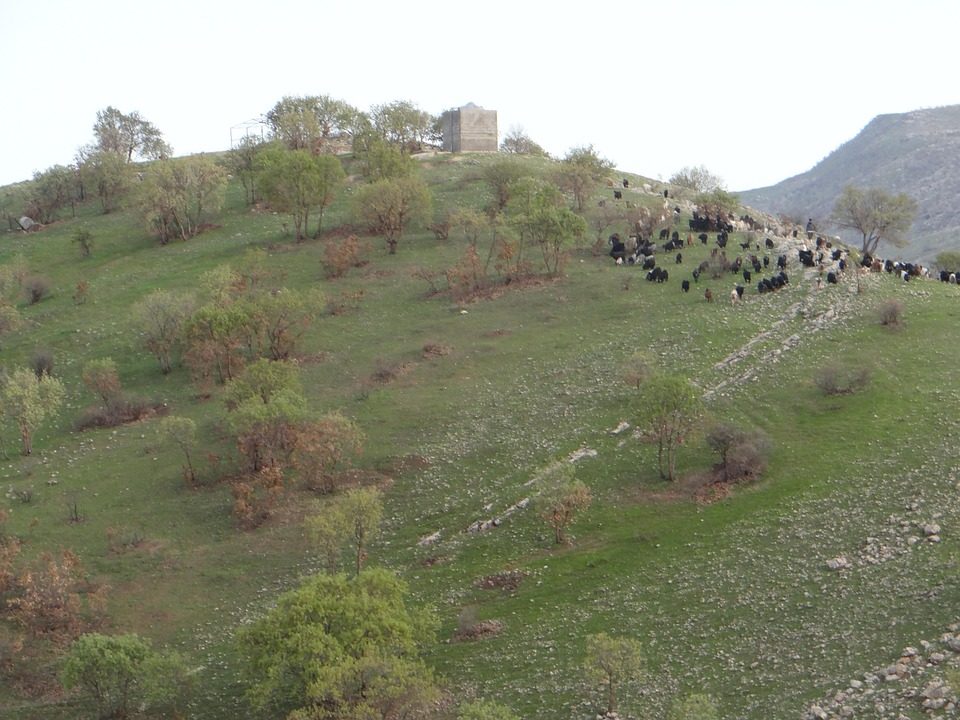
Baba Gurgur Sanctuary
The world-famous "Eternal Fire" site where natural gas flames have burned continuously out of the earth for over two and a half millennia, referenced by ancient Greek historian Herodotus and the Book of Daniel.
Eternal Burning Flames & Ancient Oil Springs
 Village Photo
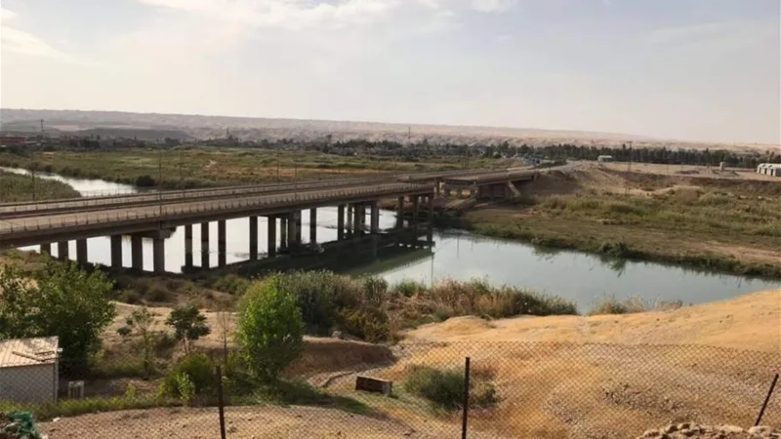
Chiman Village
Scenic village situated along the stream valley towards Sulaymani, filled with willow trees and crystal spring waters.
Fresh Spring Brooks & Shaded Tea Gardens
 Village Photo
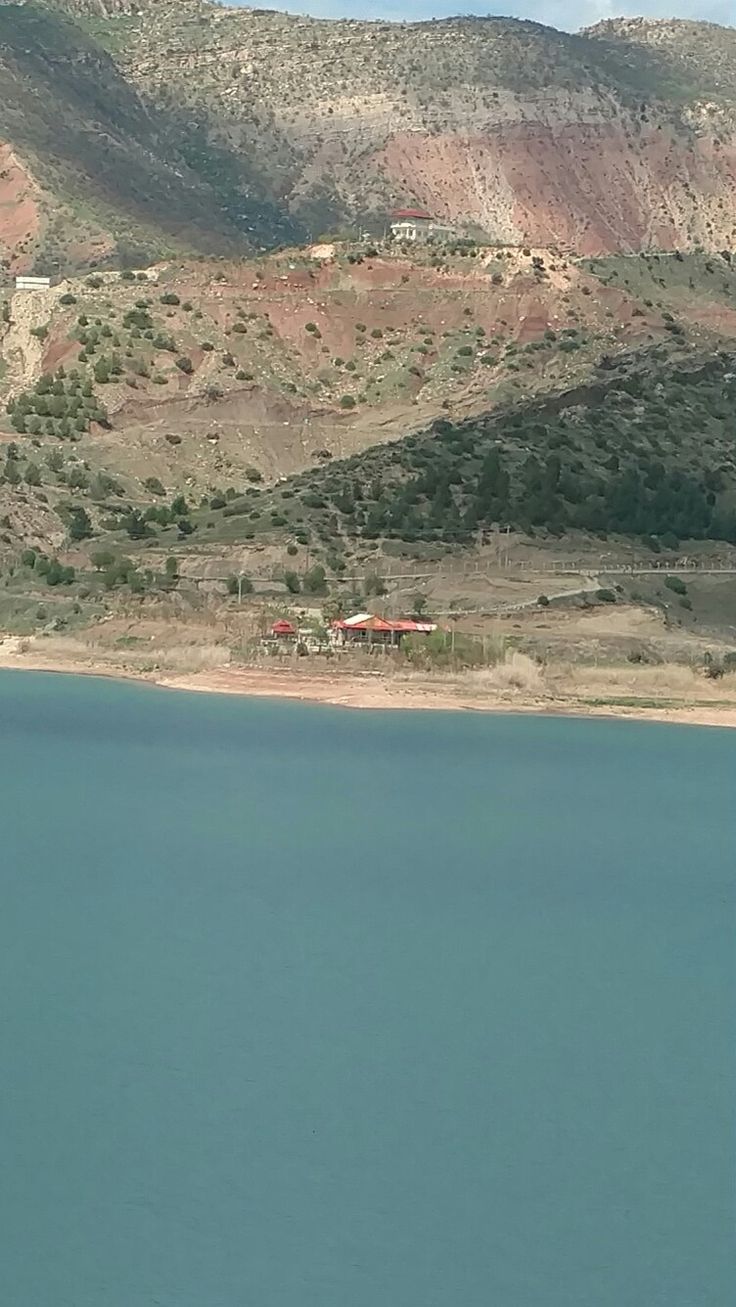
Daraman Village
Lush village nestled near the Lesser Zab River, famous for pomegranate trees, fig groves, and fresh river carp.
Sweet Pomegranates & River Irrigation
 Village Photo
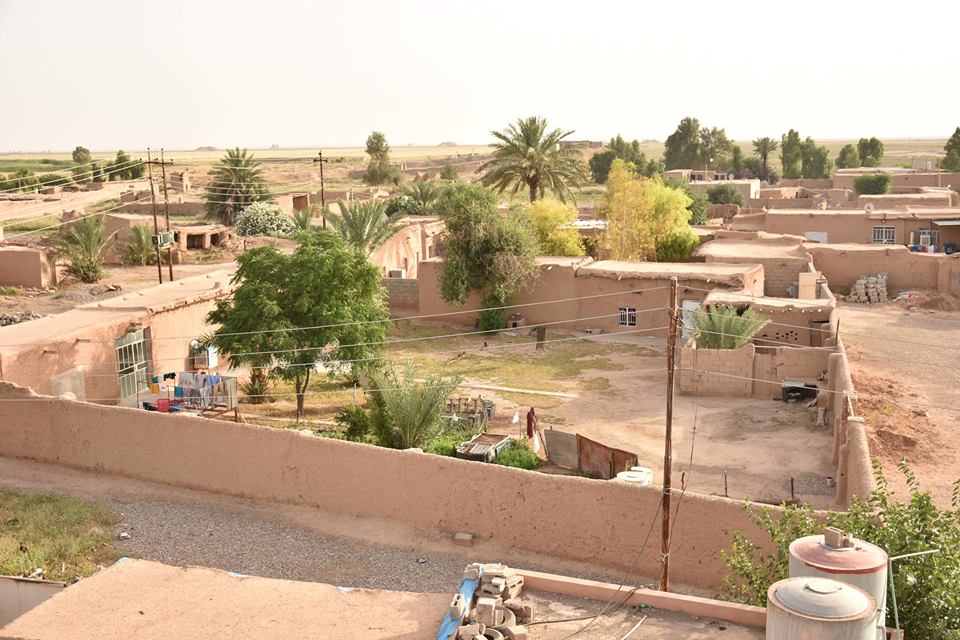
Garmawa Mineral Village
Renowned for natural warm mineral springs believed since antiquity to have therapeutic skin-healing properties.
Natural Warm Mineral Baths & Springs
 Village Photo
Haftaghar Cluster
A famous historical cluster of seven Kurdish agricultural villages in Daquq, renowned for unity, hospitality, and grain production.
Seven Historic Villages & Wheat Cultivation
 Village Photo
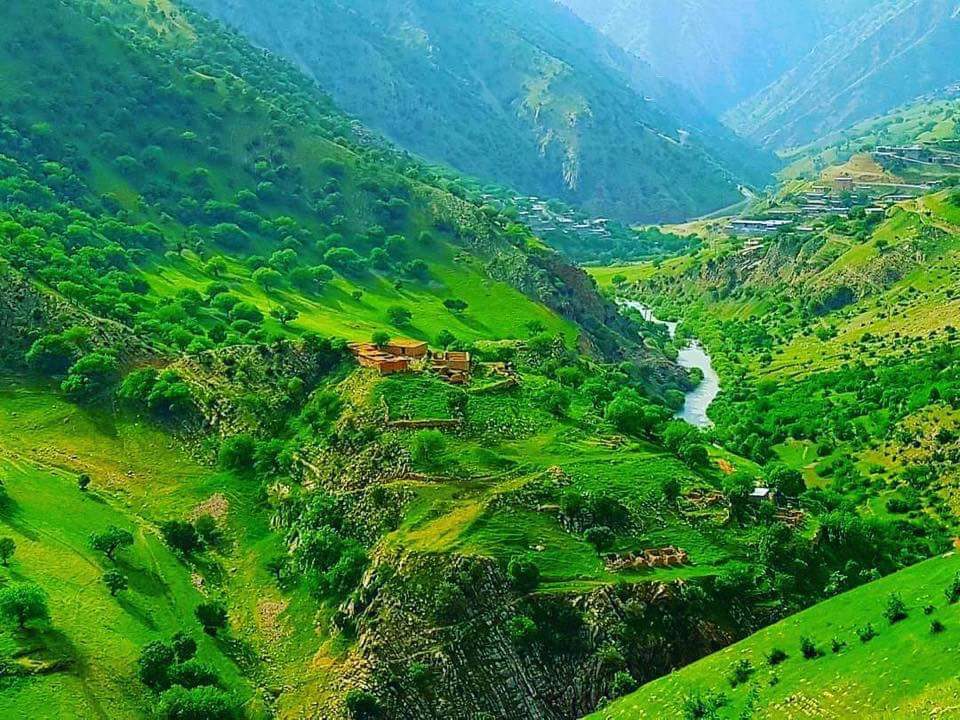
Kani Qadir Village
Traditional mountain-slope village known for dryland wheat farming and sweet wild figs.
Wild Figs & Mountain Grapes
 Village Photo
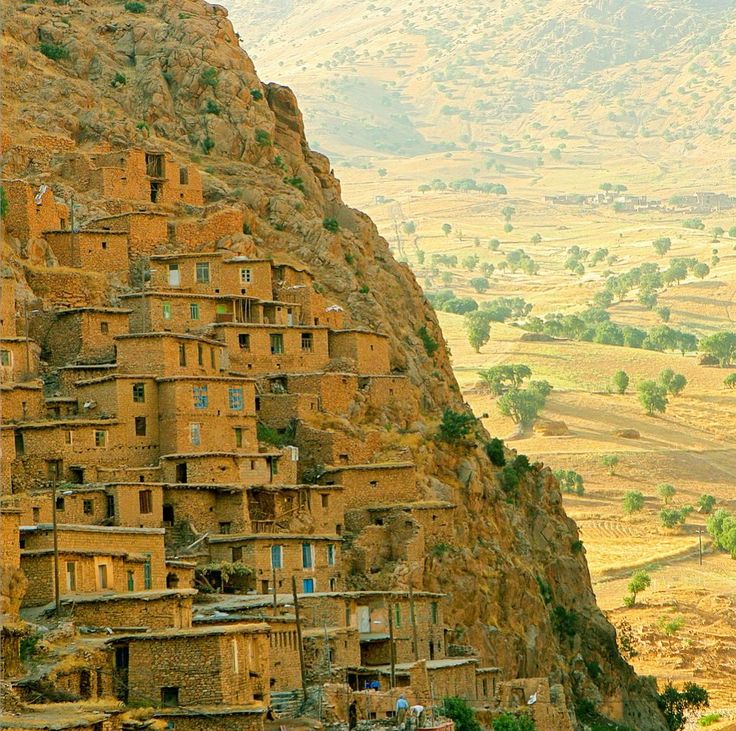
Qutan Village
Picturesque hillside village in Dubiz surrounded by natural pasturelands and ancient stone water cisterns.
Pastoral Lamb Herding & Fresh Mountain Cheese
 Village Photo
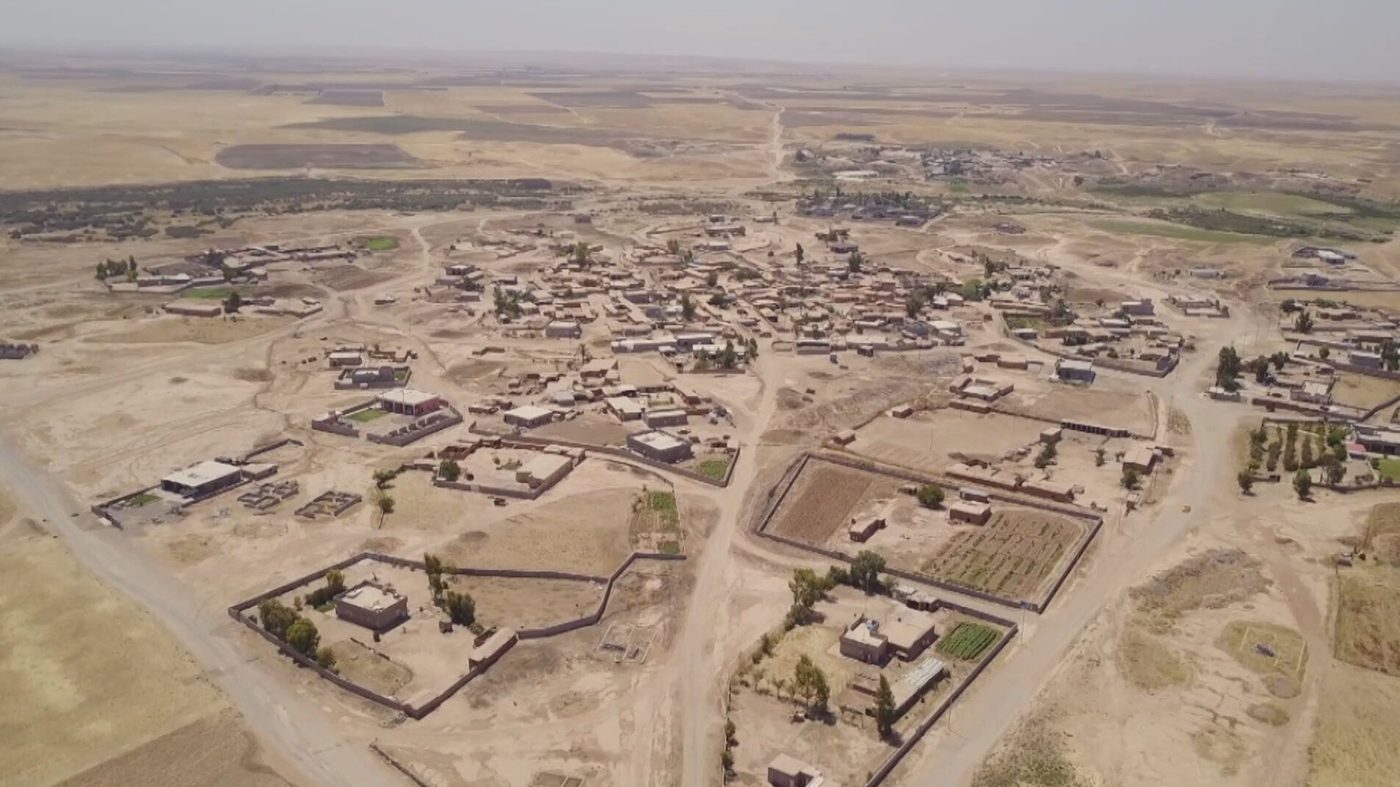
Sarkhalo Village
Peaceful rural village in the Shwan hills, celebrated for wild mountain herbs, fresh milk, and spring wildflowers.
Wild Thyme, Dairy & Rolling Green Knolls
 Village Photo
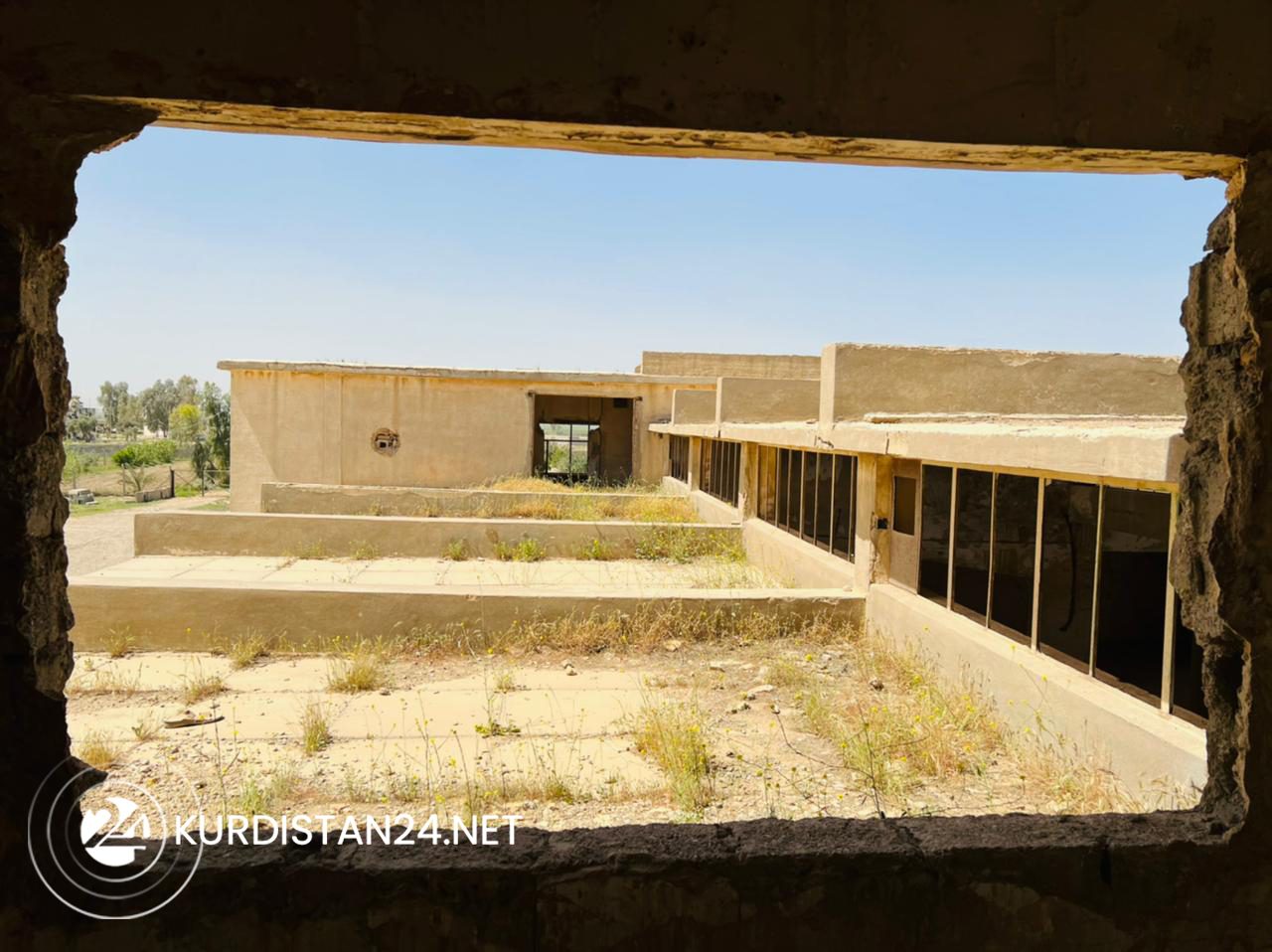
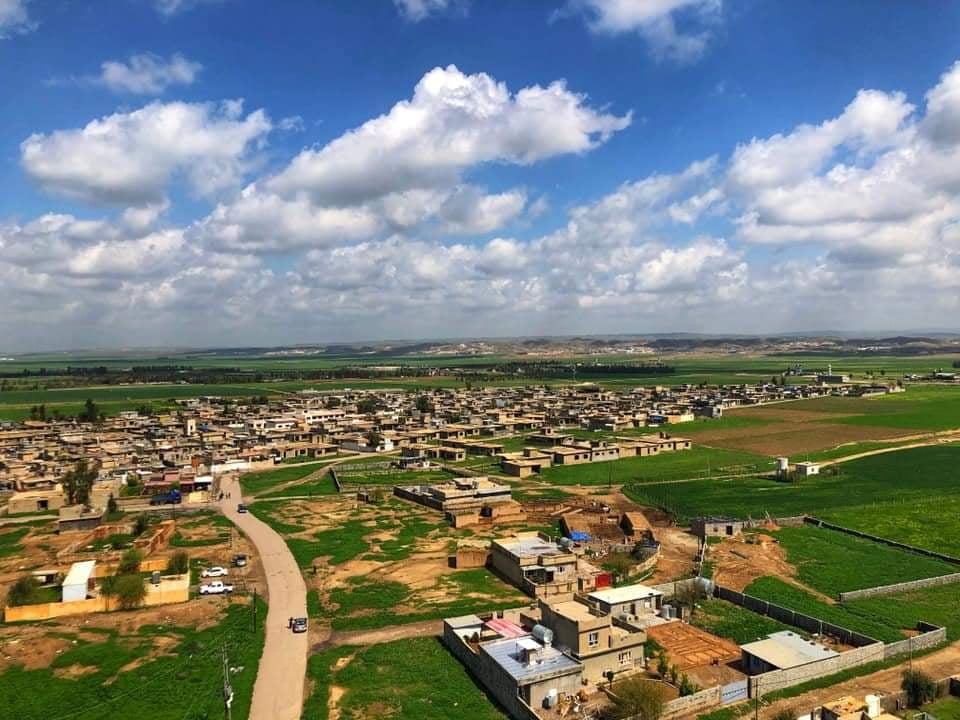
Topzawa Village
Historic village southwest of Kirkuk situated in fertile agricultural plains, known for wheat and barley fields.
Golden Wheat Fields & Historic Countryside
 Village Photo
Yarimja Village
Ancient rural community with archaeological tell layers dating back to the Bronze Age.
Ancient Archaeological Tells & Farms
Landmarks & Attractions
Must-see historical sites, mountain resorts, and natural sanctuaries in Kirkuk Governorate.
Kirkuk Citadel (Qelay Kerkûk)
Ancient 4,000-year-old citadel mound rising high above the city with historic arches and minarets.
Baba Gurgur (The Eternal Fire)
Natural burning flame that has burned continuously for over 2,500 years in the desert.
Qaysari Covered Market
Historic Ottoman-era covered bazaar boasting 365 shops and intricate brick vaulted domes.
Tomb of Daniel & Hananiah
Ancient religious shrine located inside the Citadel venerated by all faiths.
Ancient Daquq Bridge
Historic stone arched bridge over Chay Daquq dating back centuries.
Khasa River Promenade
Scenic city river promenade cutting through the center of Kirkuk.
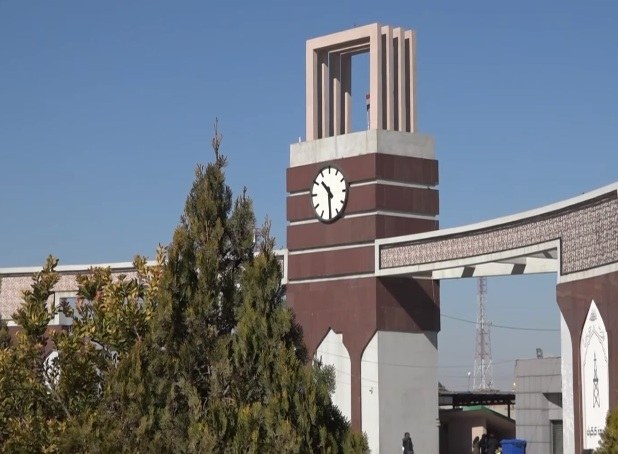
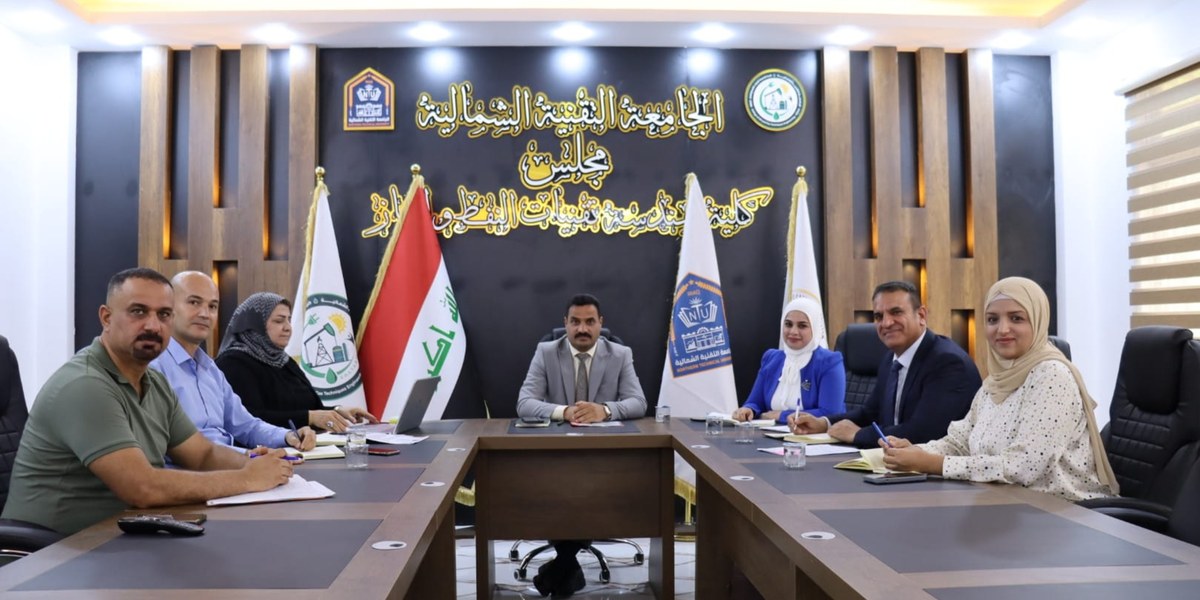
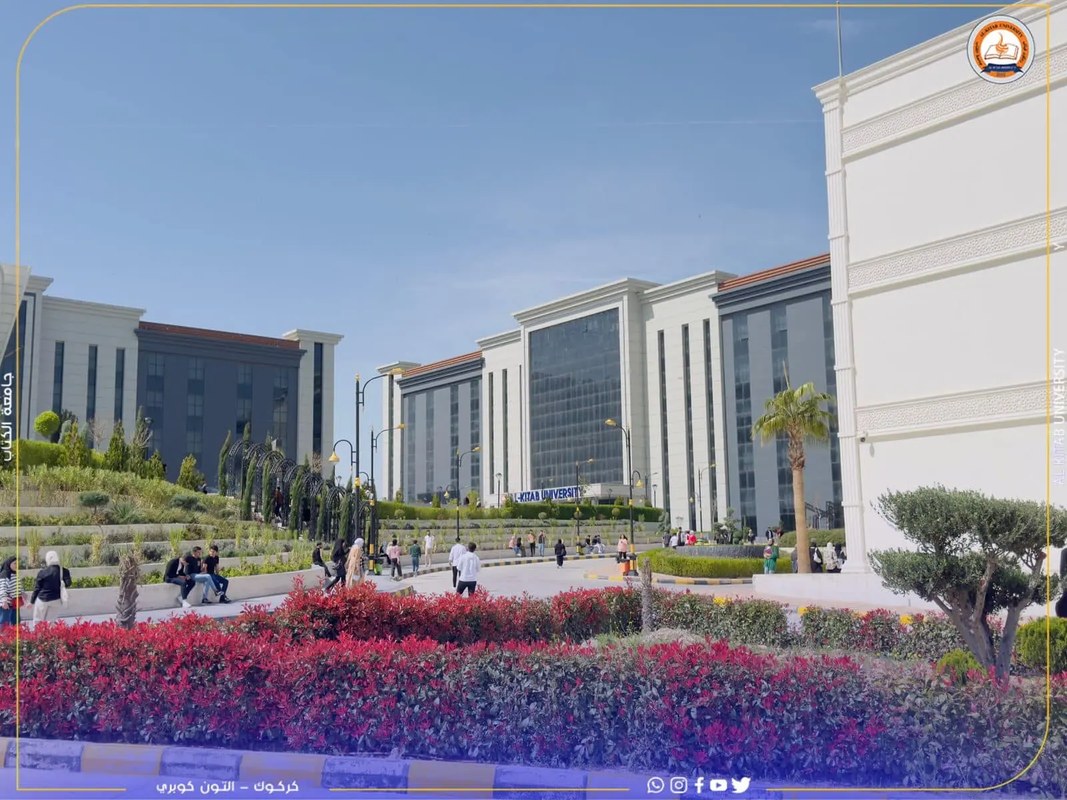
Universities & Colleges of Kirkuk
Prominent public universities, technical institutes, and academic centers located in this governorate.
Gastronomy of Kirkuk
Signature culinary specialties, mountain spices, and local delicacies native to this governorate.
Kirkuk Dolma with Sumac
Savory stuffed grape leaves and onions prepared with extra tangy sumac and dried sour cherries.
Kirkuk Turshi (Pickles)
World-famous spicy pickled vegetables aged in seasoned vinegar with coriander and wild herbs.
Pirde River Masgouf Fish
Fresh Lesser Zab river carp roasted vertically on wooden pegs with tamarind glaze.
Interconnected Heritage of Kirkuk
Explore how Kirkuk connects to ancient history, traditional culture, architecture, and language in Kurdistan.
Other Governorates of Kurdistan
Continue your journey across all 5 major metropolitan and mountain regions.
No comments yet. Be the first member to start the discussion!