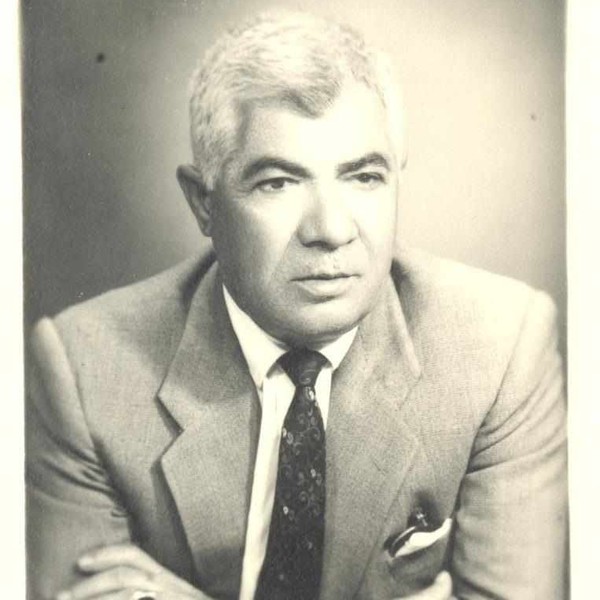
Ali Mardan was born in 1904 in the historic citadel city of Kirkuk, the cradle of Mesopotamian musical modal synthesis. Possessing a voice of astonishing timbre, spiritual resonance, and microtonal precision, Ali Mardan mastered the oud and the intricate science of Eastern musical modes (Maqamat) from early childhood under the guidance of Kirkuk and Takya masters.
Recognizing that centuries of oral Kurdish folk songs, classical romances, and heroic ballads were at risk of extinction, Ali Mardan became the director and foundational pillar of the Kurdish Section of Baghdad Radio upon its founding in 1939. Over four decades, he painstakingly transcribed, systematized, and recorded over 800 authentic Kurdish maqamat, bastas, and folk ballads. He introduced classical orchestral arrangements, uniting musicians from Erbil, Sulaymaniyah, Duhok, and Mahabad.
His renditions of Maqam Ajam, Rast, Bayat, and the distinctly Kurdish modes (Awshar, Hijaz-i Kurdi, and Lorke) remain the definitive aesthetic canon of Kurdish musical heritage. Ali Mardan passed away in 1981, universally revered as the "Father of Kurdish Maqam".
Systematized, arranged, and recorded over 800 authentic Kurdish maqams and traditional songs on radio.
Directed music broadcasts from 1939, launching the careers of dozens of legendary Kurdish artists.
Formalized microtonal scales and modal transitions unique to Kurdish vocal musicology.
Bridged dialectal and regional musical traditions into a unified Kurdish national sonic identity.
Ali Mardan is revered as the undisputed patriarch of Kurdish classical music. The Ali Mardan Music Institute in Kirkuk and concert halls across Kurdistan preserve his recordings, ensuring that his immortal melodies continue to inspire future generations.