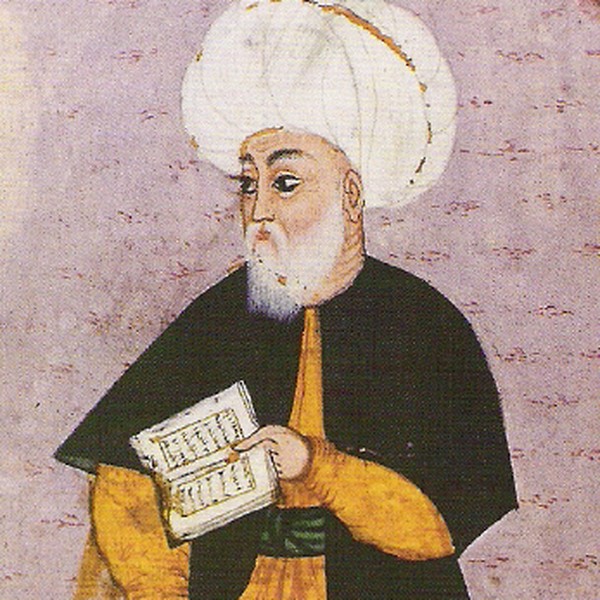
Muhammad ibn Suleyman, known by his pen-name Fuzûlî, was born around 1494 in the regional orbit of Kirkuk and Baghdad, originating from the Bayat clan. Endowed with astonishing intellectual genius, Fuzûlî became equally peerless in three major languages of the Islamic realm: Azerbaijani Turkish, Persian, and Arabic, composing complete poetic divans in each.
Fuzûlî's literary reputation rests upon his unparalleled ability to transmute the agonizing longing of human romantic love into celestial Sufi illumination. His magnum opus, "Layla and Majnun" (Leylî vü Mecnûn), is universally acknowledged as the greatest poetic treatment of the tragic romance ever composed in any Turkic tongue. In Kirkuk, where Kurdish and Turkmen cultures have cross-pollinated for centuries, Fuzûlî's ghazals, qasidas, and quatrains were memorized, sung by local maqam chanters, and copied by classical scribes.
He also penned philosophical allegories such as "Beng ü Bâde" (Hashish and Wine) and theological texts, leaving a legacy of universal literary elegance that transcends geopolitical boundaries.
Authored the definitive poetic masterpiece of mystical love in over 3,000 rhymed couplets.
Published three distinct masterwork divans in Azerbaijani Turkish, Persian, and Arabic.
Crafted brilliant satirical and allegorical treatises on mysticism, politics, and society.
His lyrics provided foundational poetic texts performed by generations of Kirkuk maqam masters.
Fuzûlî is celebrated as a monumental bridge of regional cultural heritage. A prominent public statue, literary squares, and library halls in Kirkuk bear his name, honoring his eternal contributions to Middle Eastern lyrical beauty.