01
The Pristine Freshwater Ecosystems and Rivers of Kurdistan
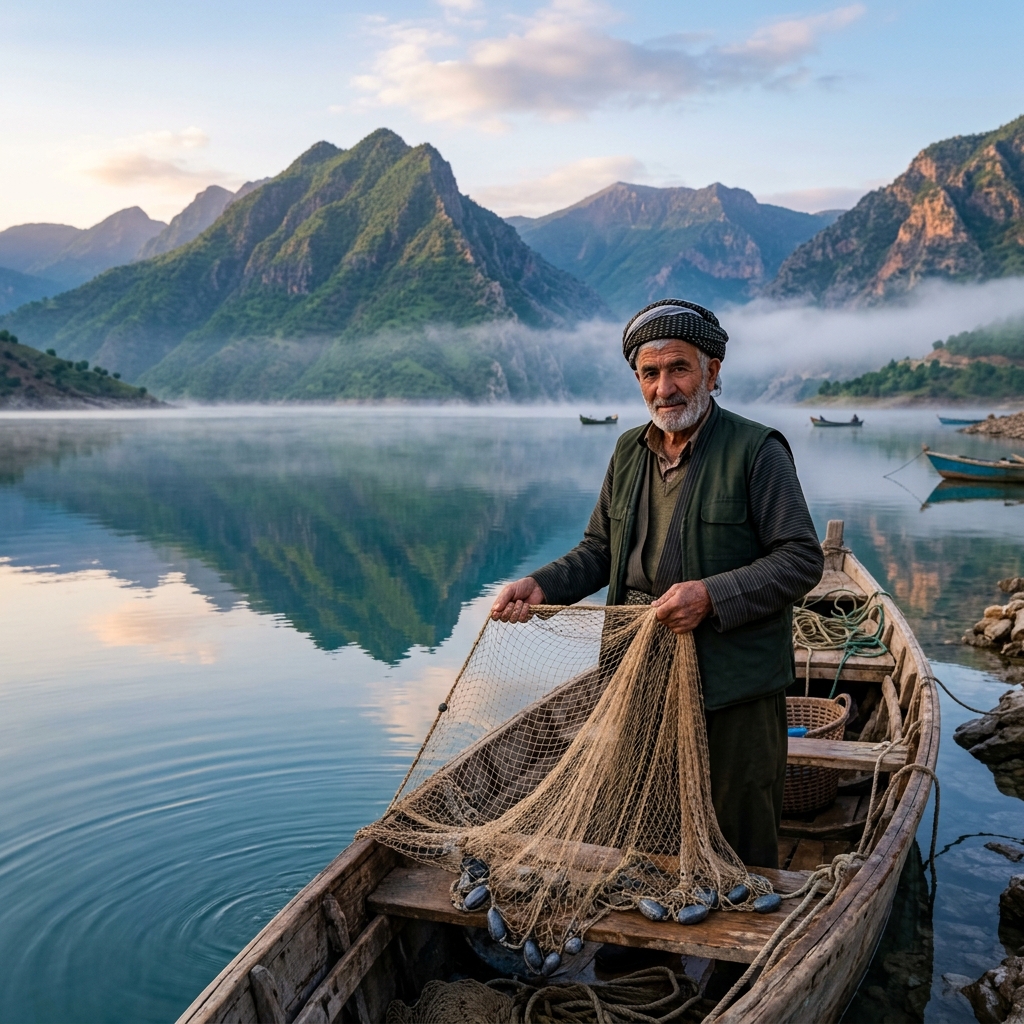
While the soaring limestone massifs of the Zagros mountains define Kurdistan’s iconic geography, the region is equally blessed with abundant, pristine freshwater rivers and vast reservoir lakes. The Great Zab (Zêyê Mezin), Little Zab, Sirwan, Khabur, and Tigris rivers—fed continuously by melting alpine glaciers and cold mountain springs—meander through deep canyons and fertile valleys. The Kurdish fisherman (Masîgir) has navigated these crystalline currents for generations, possessing an intimate understanding of river hydrology, seasonal fish migrations, and aquatic ecology. Traditional fishing skiffs are coated with natural water-resistant resins, allowing fishermen to navigate rapids and shallow river bends where modern motorized boats cannot venture, preserving ancient riverway knowledge. Traditional fishing skiffs are coated with natural water-resistant resins, allowing fishermen to navigate rapids and shallow river bends where modern motorized boats cannot venture, preserving ancient riverway knowledge.
02
Prized River Giants: The Mesopotamian Carp (Şebût) and Alpine Trout
The undisputed prize of Kurdish freshwater fishing is the legendary Şebût (Barbus grypus), a massive, powerful river carp native to the Tigris and Euphrates river basins that can grow to over twenty kilograms. Highly prized for its firm, delicately sweet white meat, the Şebût is a culinary centerpiece in markets across Kurdistan. In rushing, ice-cold mountain streams near Choman, Rawanduz, and Amadiya, fishermen also harvest wild brown and rainbow mountain trout (Qizilala), celebrated for its subtle flavor and culinary prestige. Along the scenic banks of the Great Zab and Little Zab, artisanal fishing cooperatives maintain traditional conservation practices, observing strict seasonal breeding moratoriums to protect native carp and trout stocks. This ancestral stewardship preserves the ecological purity of Kurdistan’s freshwater rivers and sustains local family livelihoods. Along the scenic banks of the Great Zab and Little Zab, artisanal fishing cooperatives maintain traditional conservation practices, observing strict seasonal breeding moratoriums to protect native carp and trout stocks. This ancestral stewardship preserves the ecological purity of Kurdistan’s freshwater rivers and sustains local family livelihoods.
03
Dawn on Lake Dukan and the Ancient Art of the Cast Net
A fisherman’s working day begins in the silent mist before dawn on the mirror-like waters of Lake Dukan or Lake Darbandikhan. Standing balanced at the prow of a traditional wooden skiff, the Masîgir casts the circular hand-tied net (Tewr) with a fluid, sweeping spin that blossoms over the water’s surface and sinks gently to ensnare schooling fish. By sunrise, wooden fishing boats return to bustling lakeside docks, where fresh catches are sold directly to eager families, local fishmongers, and riverside restaurants.
04
The Revered Feast of Riverside Masgouf and River Conservation
The pinnacle of Kurdish river culinary culture is authentic Masgouf. Fresh river carp is split along the spine, seasoned with wild mountain sumac, sea salt, and pomegranate glaze, and skewered upright on wooden pegs to roast slowly beside glowing oak wood embers. Today, Kurdish fishing associations work closely with environmental protection agencies to prevent overfishing, protect natural spawning sanctuaries, and clean river waterways, ensuring sustainable fisheries for future generations. During riverside harvest festivals, fishing communities celebrate with open-air feasts, storytelling of legendary river catches, and traditional flute music echoing across the waters of Dukan and Darbandikhan. During riverside harvest festivals, fishing communities celebrate with open-air feasts, storytelling of legendary river catches, and traditional flute music echoing across the waters of Dukan and Darbandikhan.