01
The Legendary Art of the Dengbêj Epic Oral Tradition
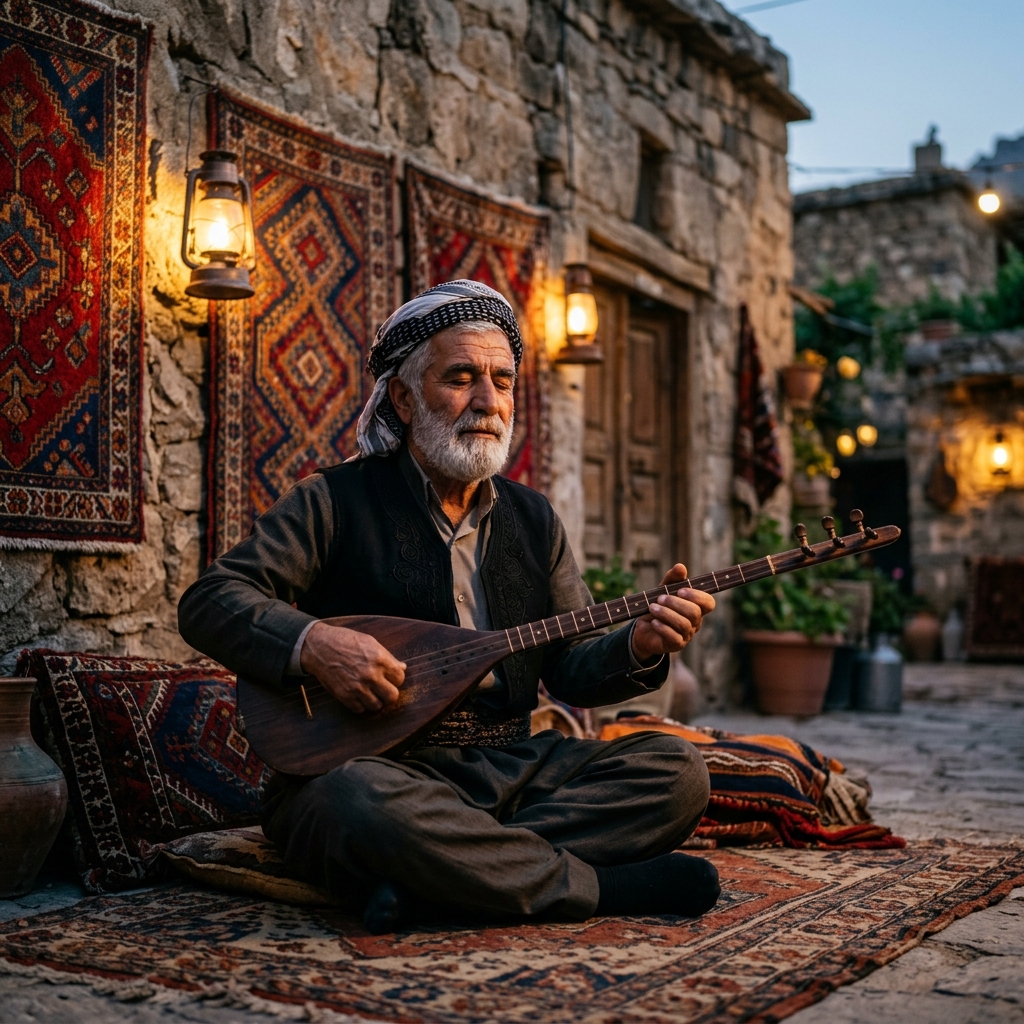
Kurdish musical heritage is one of the oldest, richest, and most emotionally powerful acoustic traditions in world civilization. At its beating spiritual center stands the Dengbêj—the master bard who recites epic, unrhymed historical sagas (Klam) entirely a cappella, without any instrumental accompaniment. Relying on astonishing powers of oral memory, the Dengbêj preserves the historical memory of tragic mountain romances such as Mem û Zîn and Siyabend û Xecê, pastoral migrations, and heroic defenses of mountain homelands, sustaining the collective consciousness of the Kurdish people across centuries. Kurdish Maqam modes, such as Behyat, Rost, and Seba, resonate with ancient Zagros quarter-tones that evoke deep human longing (Hesret), spiritual devotion (Eşk), and the euphoric triumph of Newroz spring rebirth. Kurdish Maqam modes, such as Behyat, Rost, and Seba, resonate with ancient Zagros quarter-tones that evoke deep human longing (Hesret), spiritual devotion (Eşk), and the euphoric triumph of Newroz spring rebirth.
02
Mastery of Ancient Zagros Acoustic Instruments
Kurdish instrumental music is centered around handmade acoustic instruments crafted from mountain woods. The long-necked Tanbur (Teman), with its resonant mulberry-wood body and nylon strings, produces hypnotic, ethereal microtones central to Yarsani and Sufi mystical devotions. The thunderous Daf (frame drum) adorned with interlocking brass rings drives ecstatic spiritual ceremonies in Sufi Tekyes, while the soulful shepherd’s reed pipe (Bilûr), the piercing double-reed Duzale, and the joyful Zurna echo through mountain canyons with raw emotional power. The sacred vocal tradition of Heyran in Badinan and Lawik in Soran expresses the raw poetry of Kurdish mountain life. Master musicians continue to train young apprentices in the oral transmission of these ancient modes, ensuring that the acoustic resonance of the Tanbur, Daf, and Bilûr flutes continues to echo through mountain gorges for centuries to come. The sacred vocal tradition of Heyran in Badinan and Lawik in Soran expresses the raw poetry of Kurdish mountain life. Master musicians continue to train young apprentices in the oral transmission of these ancient modes, ensuring that the acoustic resonance of the Tanbur, Daf, and Bilûr flutes continues to echo through mountain gorges for centuries to come.
03
From Historic Tea-House Divans to Prestigious Symphony Halls
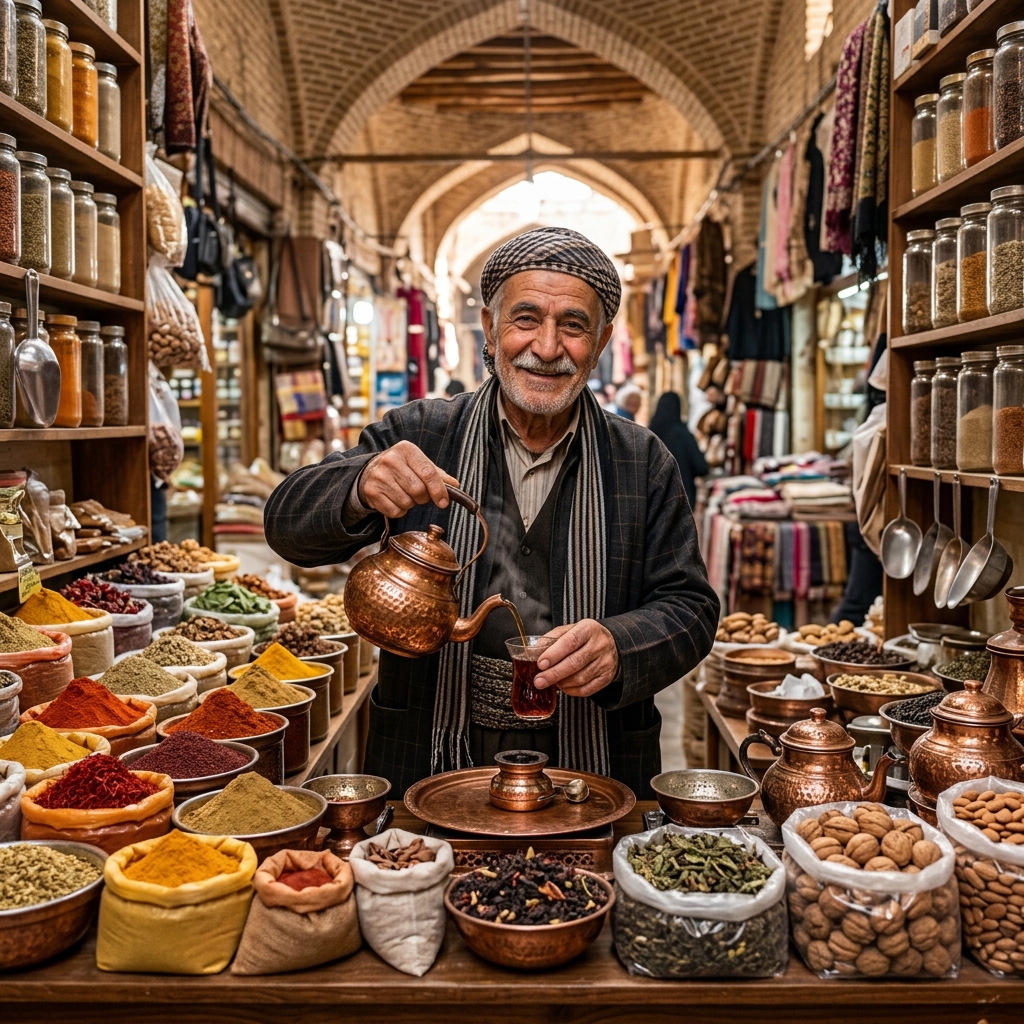
Kurdish music flourishes across diverse performance settings. In atmospheric bazaar tea houses (Çayxane) and village courtyards, masters gather to sing intimate Heyran and Lawik ballads. On the global stage, internationally celebrated Kurdish ensembles—such as The Kamkars, master kemanche virtuoso Kayhan Kalhor, and Kurdish national symphony orchestras—have performed at Carnegie Hall, London’s Royal Albert Hall, and UNESCO assemblies, introducing the intricate modal systems (Maqamat) of Kurdistan to global acclaim.
04
Contemporary Fusion and the Electrifying Rhythm of Newroz
A new generation of Kurdish musicians is blending traditional folk instruments with modern orchestral arrangements, jazz, and indie electronic soundscapes. Yet during Newroz, when hundreds of thousands of people join hands to dance the Govend around roaring mountain bonfires, it is the ancient, visceral resonance of the Dahol drum and the soaring Zurna that unites young and old in a thrilling celebration of freedom and cultural rebirth. Master luthiers continue to handcraft instruments from seasoned mountain mulberry, walnut, and apricot woods in historic artisan quarters, tuning each instrument to produce the authentic acoustic warmth cherished across Kurdistan. Master luthiers continue to handcraft instruments from seasoned mountain mulberry, walnut, and apricot woods in historic artisan quarters, tuning each instrument to produce the authentic acoustic warmth cherished across Kurdistan.