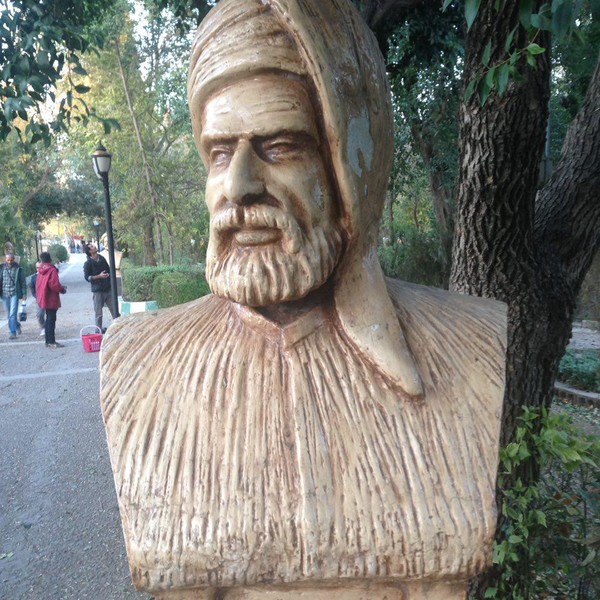
Mullah Khidr Ahmad Shawaisi, universally celebrated by his poetic pen-name Nalî, was born in 1797 in the village of Khak u Khol near Sulaymaniyah. Educated across the celebrated theological colleges of Qaradagh, Sanandaj, and Sulaymaniyah, Nalî mastered linguistics, Arabic grammar, Persian literature, astronomy, and Islamic metaphysics.
Nalî executed a profound literary revolution: while classical Kurdish literature in the north was composed in Kurmanji and Gorani, Nalî established the Central Kurdish (Sorani) dialect as a supreme literary idiom of extraordinary elegance, syntactic precision, and metaphysical depth. Alongside Kurdi and Salim, he formed the immortal "Baban Poetic Trinity" (Sêkuchkey Baban).
Following the fall of the Baban Principality in 1851, Nalî was forced into painful exile in Damascus, Mecca, and Istanbul. His celebrated poetic exchange with Salim—lamenting the ruin of Sulaymaniyah and the dispersal of its enlightened princes—stands as the most sublime patriotic epistolary masterpiece in Kurdish cultural history.
Elevated the Central Kurdish dialect into a high literary medium of unprecedented philosophical precision.
Spearheaded the 19th-century classical Kurdish poetic renaissance alongside Salim and Kurdi.
Engineered complex Arabic-Persian metric rhythms seamlessly into native Kurdish linguistic phonetics.
Composed the definitive national elegy reflecting the trauma of the Baban Principality's demise.
Nalî is universally revered as the supreme titan of Kurdish poetry. In Sulaymaniyah, central avenues, educational institutes, and academic centers bear his name, and his Dîwan is studied in every university literature department across the homeland.