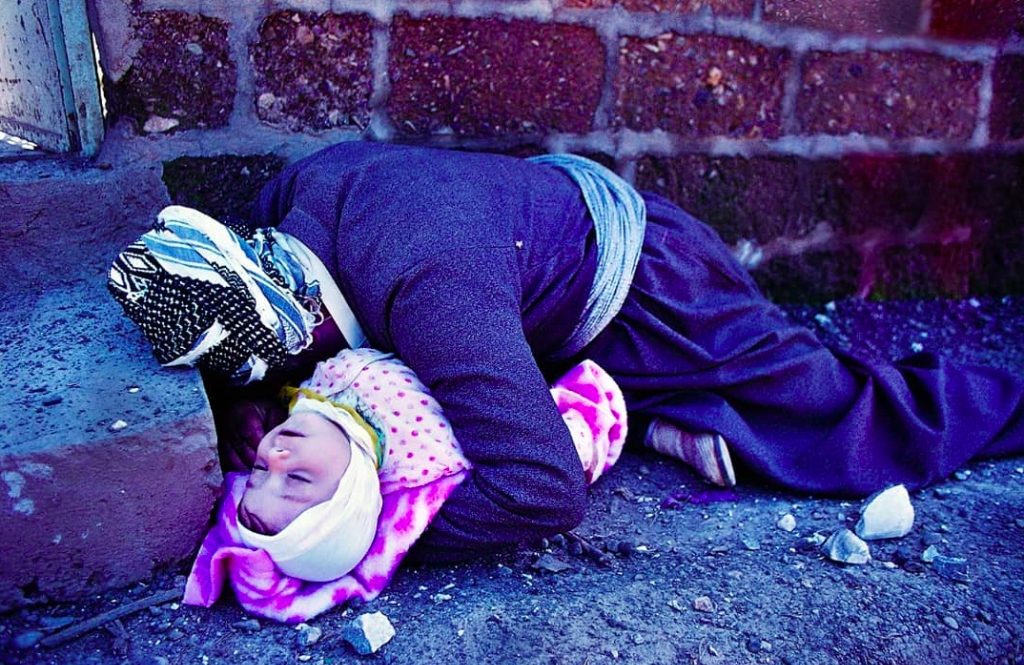
Omar Khawar was a peaceful, hardworking resident and municipal employee in the city of Halabja. Known among his neighbors for his quiet kindness, community service, and profound love for his family, Omar was a devoted father caring for his infant son, Karwan.
On the morning of 16 March 1988, Iraqi Ba'athist aircraft launched a devastating aerial chemical bombardment across the residential streets of Halabja, dropping lethal canisters of mustard gas, sarin, and nerve agents. As toxic clouds settled through the streets, Omar Khawar scooped up his infant baby boy, attempting desperately to sprint through the deadly vapor toward safety. Collapsing upon his home's stone threshold, Omar threw his entire body over his baby, wrapping his arms around him in a final, heartbreaking attempt to shield the child with his own breath and chest.
Captured minutes later by international photojournalists including Kaveh Golestan and Ramazan Öztürk, the harrowing photograph of Omar Khawar shielding his lifeless baby shocked the global conscience. The image became the definitive icon of the Halabja Genocide, galvanized international recognition of chemical weapons atrocities, and stands forever as an eternal monument to paternal love and the innocent suffering of the Kurdish nation.
The iconic photograph forced world assemblies and the United Nations to confront chemical warfare atrocities.
Serves as the worldwide emblem of the 5,000 martyrs and the survival of the Kurdish people.
Immortalized in bronze sculptures at the entrance of Halabja and international human rights shrines.
Revered globally across cultures as the ultimate embodiment of paternal sacrifice in the face of death.
A towering bronze statue of Omar Khawar cradling baby Karwan stands at the threshold of the Halabja Memorial Monument. His memory is honored worldwide on March 16th, reminding humanity that the resilience of love transcends weapons of mass destruction.