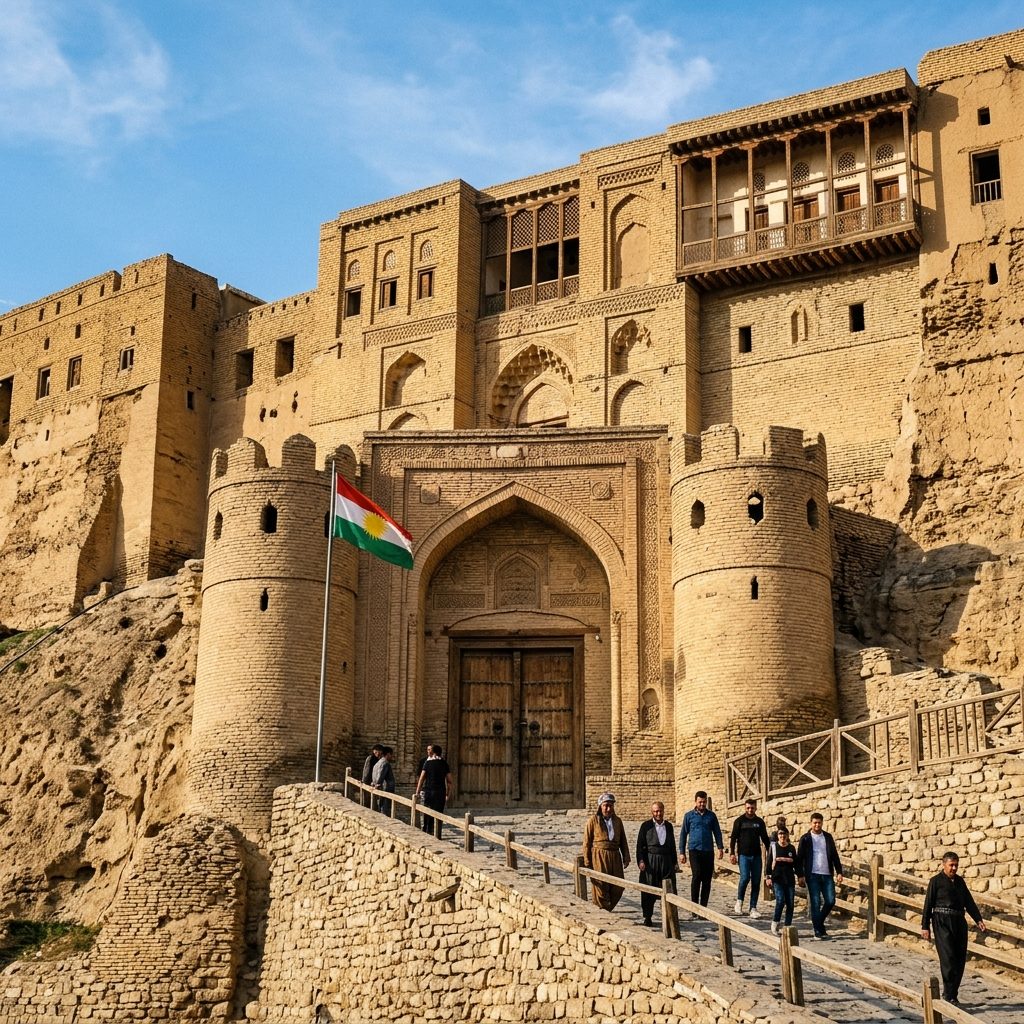
Queen Helena reigned as the sovereign monarch of the ancient Kingdom of Adiabene (حەدیاب / Arbela), centered at present-day Erbil, in the first century of the Common Era. Celebrated for her wisdom, independence, and deep moral conviction, Helena guided Adiabene through complex geopolitical tensions between the Roman and Parthian empires.
Around 30 CE, Queen Helena and her son, King Izates II, embraced Judaism, making Adiabene one of the few royal courts in antiquity to patronize the monotheistic faith. When severe famine devastated Jerusalem and the eastern Mediterranean during the reign of Claudius Caesar (c. 45–46 CE), Queen Helena dispatched royal emissaries with massive treasury funds to Alexandria to buy grain and to Cyprus to purchase dried figs, distributing sustenance universally to save thousands from starvation.
She subsequently resided in Jerusalem, where she constructed the Monumental Tomb of the Kings—the largest ancient rock-cut hypogeum complex in Jerusalem, renowned for its rolling-stone entrance. Chronicled by Jewish-Roman historian Flavius Josephus and the Jerusalem Talmud, Queen Helena is remembered as a paragon of sovereign charity and international diplomacy.
Governed the ancient realm of Adiabene with its capital at Erbil, sustaining peace and commerce.
Funded and dispatched humanitarian fleets of grain and dried fruit rescuing thousands from starvation.
Commissioned the largest ancient hypogeum royal rock-cut tomb complex in Jerusalem.
Recorded in the writings of Flavius Josephus, Pausanias, and the Talmud as an archetype of righteous leadership.
Queen Helena’s historical legacy anchors Erbil as an ancient capital of global diplomacy and humanitarian conscience. Her ancient palace foundations and family lineage are commemorated in historical scholarship and archeological exhibits throughout Kurdistan and internationally.