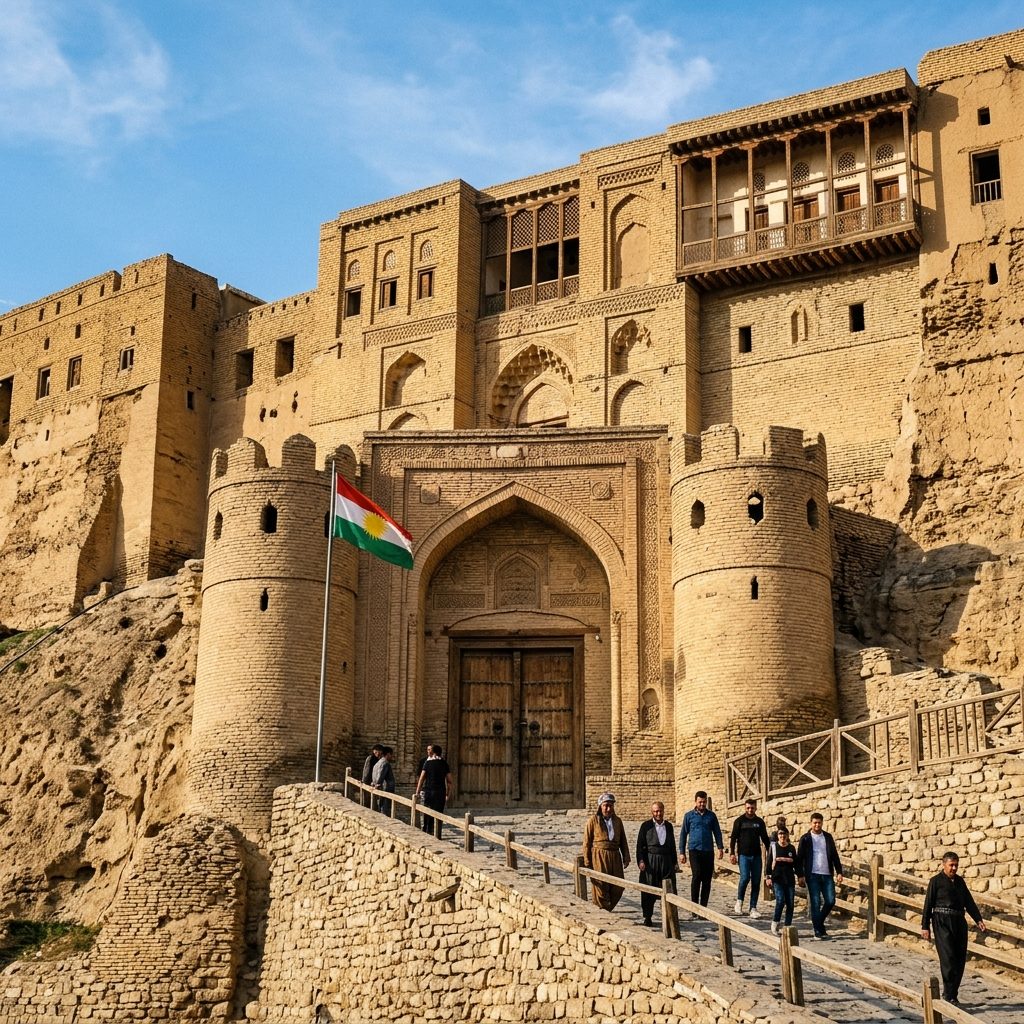
Muzaffar al-Din Gökböri was one of the most visionary and benevolent rulers in the medieval history of the Middle East. Assuming the governance of Erbil (Arbela) in 1190, Gökböri transformed the historic citadel city into a flourishing metropolis of commerce, architectural grandeur, and humanitarian care.
Gökböri was renowned for founding comprehensive social welfare institutions centuries ahead of their time: he constructed four major public hospitals staffed with physicians, dedicated hospices for the blind and chronically ill, free orphanages, and guest complexes for traveling scholars. In 1190, he commissioned the majestic Mudhafaria Minaret (known locally as Minarey Choli), a 36-meter octagonal brick masterpiece adorned with kufic calligraphy and turquoise glazed tilework.
A supreme military strategist and key ally and brother-in-law of Sultan Saladin (Salah ad-Din al-Ayyubi), Gökböri commanded the vanguard of the Muslim armies at the historic Battle of Hattin (1187). In Erbil, he instituted the first nationwide public Mawlid festivities, inviting poets, jurists, musicians, and ambassadors from Baghdad, Mosul, and Damascus.
Erected the iconic 36-meter minaret and grand Friday mosque complex in lower Erbil.
Built 4 free civic hospitals and specialized hospices providing universal healthcare in Erbil.
Led the vanguard division alongside Saladin in one of history's most decisive military engagements.
Instituted the world's first universal public festival of Mawlid, establishing Erbil as a cultural hub.
The majestic Mudhafaria Minaret remains the quintessential architectural icon of Erbil alongside the ancient Citadel. His humanitarian ethos of universal public healthcare and civic philanthropy continues to inspire the medical and municipal institutions of the Kurdistan Region's capital.