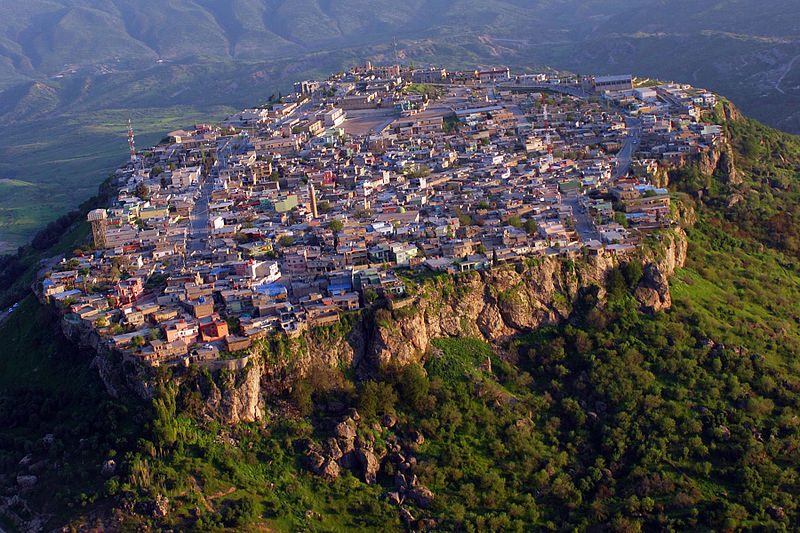
Sultan Hussein Wali ascended the throne of the Badinan Principality in 1534 during a pivotal epoch in Middle Eastern history, when the Ottoman and Safavid empires contested supremacy across Mesopotamia and Anatolia. Rather than becoming a subservient buffer, Sultan Hussein transformed Badinan into an enlightened, fortified, and semi-independent principality anchored atop the impregnable limestone plateau of Amedi (Amadiya).
Recognizing that military resilience alone could not preserve his realm's sovereignty, Sultan Hussein launched a monumental academic and civilizational Renaissance. He founded the renowned Qubahan Academy (قوبەهان), an advanced polytechnic theological academy equipped with comprehensive libraries, astronomical observation terraces, and lecture halls. Scholars, mathematicians, jurists, and philosophers from across the Kurdish principalities, Persia, Damascus, and Baghdad journeyed to Amedi to study under the sovereign's patronage.
Beyond higher learning, Sultan Hussein implemented significant infrastructure, commerce, and architectural projects across Badinan. He ordered the extensive restoration and structural reinforcement of Pira Delal (The Great Delal Bridge) spanning the Khabur River in Zakho, securing vital trade routes between Anatolia and Mesopotamia. He also minted his own silver and bronze coinage inscribed with the principality's emblem, affirming Badinan's economic autonomy. His 42-year reign is universally chronicled in Sharafnama and Kurdish historiography as the pinnacle of peace, scholarship, and justice in Badinan.
Established one of the Middle East's premier institutes for mathematics, astronomy, jurisprudence, and theology in Amedi.
Rebuilt and reinforced the historic 16-meter stone arch bridge over the Khabur River, opening major regional trade corridors.
Minted distinctive silver coinage asserting Badinan's financial independence and commercial supremacy.
Enhanced defensive stone bastions, cisterns, and monumental gates guarding the mountain plateau capital.
The preserved ruins of the Qubahan Academy and the restored arches of Pira Delal stand today as monumental physical testaments to Sultan Hussein Wali’s enlightened governance. In Duhok and Amedi, schools and cultural forums bear his name, celebrating an era when Kurdish statecraft harmonized strategic military independence with scientific and architectural triumphs.